
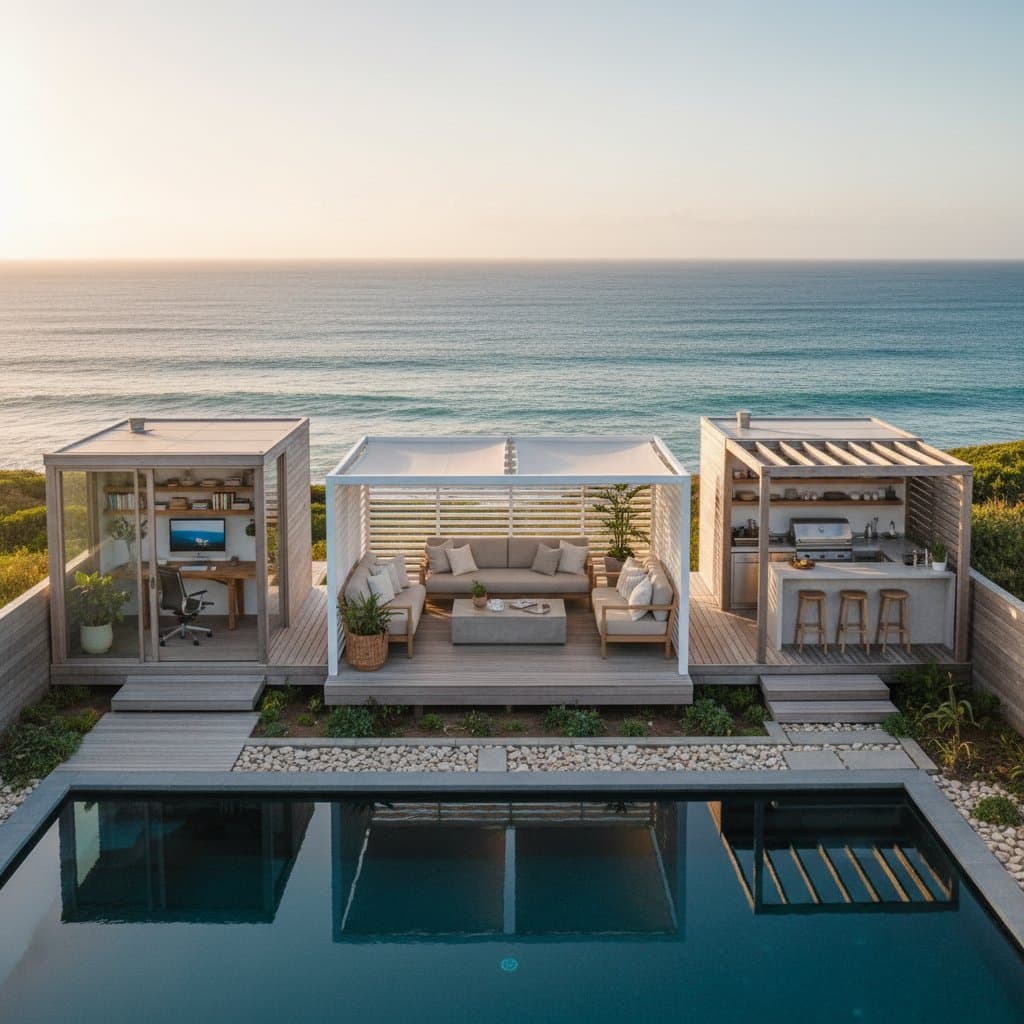
7 Smart Ways to Elevate Coastal Living with $8K Modular Outdoor Rooms
Coastal living emphasizes comfort, a deep connection to the sea, and seamless outdoor enjoyment. Homeowners often seek ways to expand their living spaces without undertaking expensive or disruptive remodels. Modular outdoor rooms provide an effective alternative, delivering style and functionality for approximately $8,000.
These prefabricated structures install quickly and adapt to various needs, from casual lounges to productive workspaces. They incorporate durable materials that withstand salty air and frequent moisture exposure. By integrating such a room, property owners can enhance their home's appeal and create areas that invite relaxation and social gatherings.
The following sections outline seven practical approaches to incorporate modular outdoor rooms. Each idea focuses on blending coastal aesthetics with everyday utility, ensuring the space feels like an extension of the home rather than an add-on.
Functional Features for Modern Coastal Living
1. Create a Modular Lounge for Relaxation
A modular lounge transforms an ordinary outdoor area into a serene retreat. Select units with ample space for plush seating arrangements, such as deep-seated sofas and lounge chairs upholstered in marine-grade fabrics. Incorporate rattan or teak accents to evoke a beachside hammock feel, paired with adjustable LED lighting that dims for evening use.
Weather-resistant materials ensure longevity in humid environments. Sheer, UV-protected curtains allow breezes to circulate while offering subtle privacy from neighbors or passersby. This setup encourages daily unwinding, whether reading a book or enjoying sunset views.
Pro Tip: Integrate built-in storage benches to safeguard cushions and throws from dew or sudden showers, maintaining a tidy appearance year-round.### 3. Design a Seaside Office Pod
For those embracing remote work, a seaside office pod combines productivity with panoramic views. Customize the modular unit with floor-to-ceiling windows that maximize natural light and ocean vistas, alongside ergonomic built-in desks and adjustable shelving for monitors and files. Soundproofing panels minimize distractions from ambient coastal noises like surf or seabirds.
Installation typically completes within a few days, allowing immediate use without prolonged construction disruptions. Electrical outlets and data ports integrate seamlessly for reliable connectivity. This configuration supports focused work sessions while fostering a sense of escape from urban routines.
Pro Tip: Incorporate rooftop solar panels to power devices sustainably, reducing energy costs and aligning with eco-conscious coastal living.
[Image: Modular seaside office with large window and desk]
Design Ideas to Enhance Style and Flow
4. Connect Indoor and Outdoor Spaces
Seamless transitions between interiors and exteriors amplify the sense of spaciousness in coastal homes. Place the modular room directly adjacent to existing sliding glass doors or wooden decks, ensuring easy access for daily movement. Matching materials, such as slip-resistant composite decking in neutral tones, create visual continuity and prevent abrupt shifts in texture.
This arrangement expands usable square footage without altering the main structure. It invites natural light deeper into the home and encourages fluid entertaining, from indoor dinners flowing to outdoor cocktails. Thoughtful placement also optimizes views, framing the ocean as a backdrop to living areas.
[Image: Deck extension connecting modular room to main house]
5. Use Coastal Colors and Textures
The essence of coastal design lies in palettes and materials that mirror the surrounding environment. Apply light washes of soft blue, crisp white, and weathered gray to the modular room's exterior and interior walls, promoting brightness and cooling the space in warm climates. These hues reflect sunlight effectively, keeping interiors comfortable without excessive air conditioning.
Incorporate tactile elements like handwoven seagrass rugs, polished seashell accents, and flowing linen drapes to add depth and organic warmth. Such details evoke the tranquility of nearby beaches while providing practical comfort. Layering textures prevents the space from feeling stark, enhancing its inviting quality.
[Image: Coastal color palette with light walls and natural textures]
Maintenance and Planning Tips
6. Choose Durable, Low-Maintenance Materials
Harsh coastal conditions demand resilient construction to avoid frequent repairs. Select modular rooms framed in powder-coated aluminum, which resists oxidation better than traditional wood or steel. Pair this with fiber-cement siding and epoxy-sealed floors that repel moisture and inhibit mold growth.
Marine-grade hardware, including hinges and locks, ensures components endure high winds and salt exposure. These selections not only lower long-term costs but also preserve the room's aesthetic integrity over seasons. Regular inspections identify minor issues early, extending overall durability.
Pro Tip: Perform routine cleaning with a solution of fresh water and mild, non-abrasive soap to dissolve salt residues, followed by a thorough rinse to prevent buildup.
7. Plan for Multi-Season Comfort
Versatility across weather variations makes modular rooms a worthwhile addition. Install high-efficiency ceiling fans with reversible blades to circulate air in summer and distribute warmth in winter. Insulated wall and roof panels regulate temperatures, creating a buffer against humidity fluctuations and external noise from tides or storms.
Modular designs facilitate future modifications, such as adding weatherproof blinds or ventilation systems. This adaptability supports evolving family needs, from summer play areas to cozy fall reading nooks. Prioritizing these elements ensures consistent enjoyment regardless of the forecast.
Implementing Your Coastal Upgrade
Evaluate your daily routines and property layout to select the most suitable modular room configuration. Consult local suppliers for units that comply with zoning and permit requirements, ensuring a smooth integration. With an initial investment of around $8,000, these spaces deliver enduring value by enhancing comfort, boosting property appeal, and enriching coastal experiences through practical, stylish expansions.