
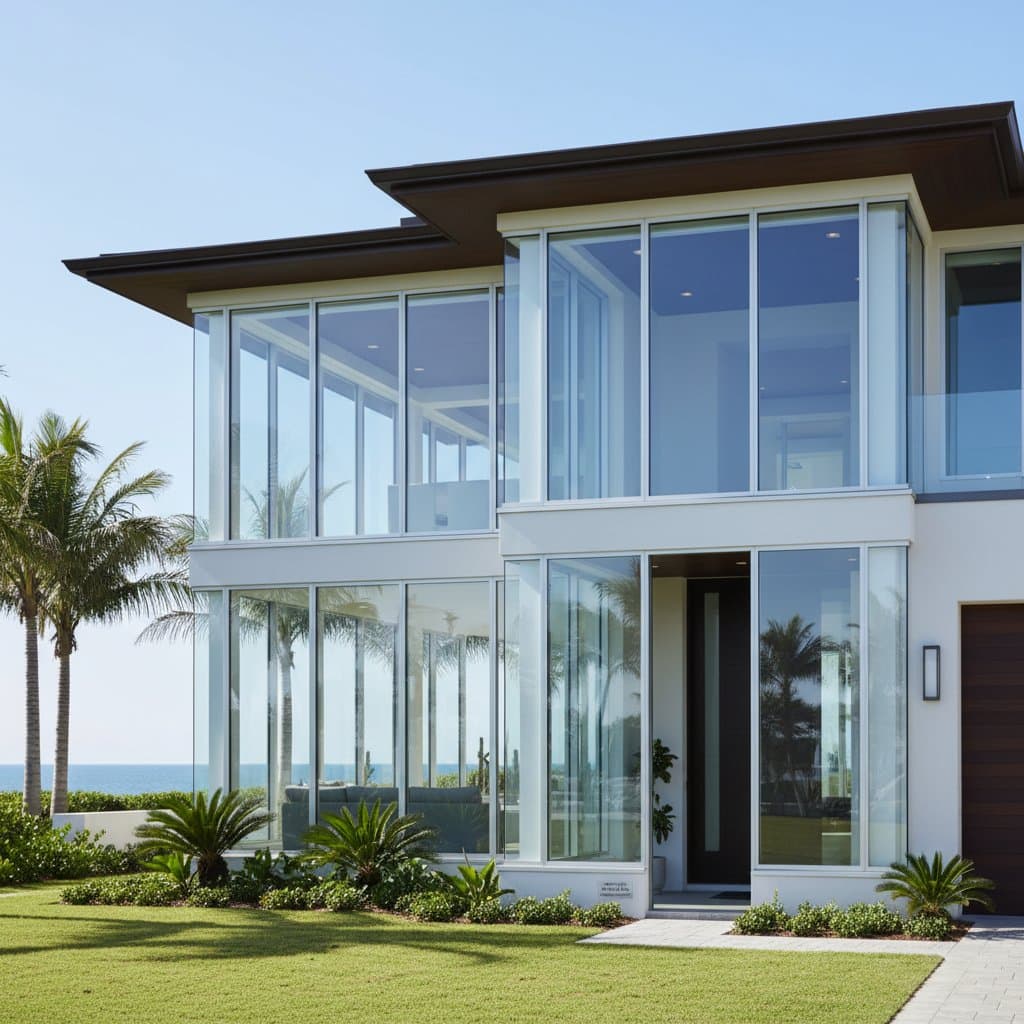
Transparent Panels Replace Shutters in New Building Codes
Imagine a fierce coastal storm approaching, with rain driving horizontally and winds battering the exterior. Homeowners no longer need to wrestle with cumbersome metal shutters. Instead, they can observe the weather through durable, clear panels that safeguard the property while preserving natural light.
These transparent storm panels represent a significant advancement in coastal protection. They deliver equivalent resistance to wind and flying debris as traditional metal or plywood options, yet they offer superior visibility, reduced weight, and simplified use. Updated building codes now require these systems for new constructions and renovations in coastal areas to achieve impact protection without relying on opaque coverings.
Key takeaway: Installed transparent storm panels range from $18 to $35 per square foot, varying by material and configuration. They ensure ongoing transparency, robust storm resistance, and an unobtrusive appearance. Homeowners seeking expert assistance should obtain estimates from qualified specialists in coastal window fortifications.
Factors Influencing Costs
The expense for installing transparent storm panels generally falls between $18 and $35 per square foot, leading to total costs of $7,500 to $14,000 for an average coastal residence. Several elements determine the final price.
-
Material Selection
Common choices include polycarbonate for its balance of strength and affordability, alongside acrylic and laminated glass hybrids for higher-end applications. Polycarbonate materials alone cost $14 to $22 per square foot, whereas laminated glass options exceed $30 per square foot. -
Window Dimensions and Configuration
Expansive picture windows or sliding glass doors demand reinforced panels, elevating both material and labor requirements. Standard-sized windows prove easier to measure, cut, and secure. -
Mounting Mechanisms
Removable track systems offer lower initial costs but necessitate manual setup prior to storms. Permanent framing provides quick deployment and enhanced durability, though it raises the overall investment. -
Labor Requirements
Skilled installation charges $60 to $120 per hour, influenced by project intricacy and site access. A standard home installation spans 1 to 3 days. -
Regulatory Fees
Coastal authorities often mandate permits and inspections for storm protection, incurring $150 to $400 in additional charges. -
Custom Features
Options such as tinting for glare reduction, UV barriers, advanced sealing, or sound insulation layers contribute to higher expenses.
When preparing a budget, consider long-term savings from reduced maintenance and energy efficiency. Evaluate material durability against local weather patterns to optimize value.
Polycarbonate Panels
Polycarbonate stands as the preferred material for most installations due to its flexibility and impact resistance. It withstands extreme forces without shattering, making it ideal for hurricane-prone regions.
Best for: Budget-conscious projects requiring high performance.
Advantages:
- Exceptional shatter resistance
- Lightweight for easy handling
- Cost-effective compared to glass alternatives
Drawbacks:
- Prone to scratching over time
- May yellow with prolonged UV exposure
Acrylic Panels
Acrylic panels deliver exceptional clarity and longevity, resisting discoloration more effectively than basic polycarbonate. Their rigidity allows for a smooth, glass-like surface that enhances architectural appeal.
Best for: Properties prioritizing visual elegance and precision.
Advantages:
- Outstanding optical transparency
- Reduced weight relative to glass
- Suitable for semi-permanent applications in moderate climates
Drawbacks:
- Greater susceptibility to cracking under impact
- Demands precise installation to avoid stress points
Photo: Grace Cary / Getty Images
Comparing DIY and Professional Installation
Removable transparent panels suit moderately skilled individuals for basic setups, but code-compliant permanent systems demand professional expertise to ensure structural integrity.
DIY Installation
- Difficulty Level: Moderate
- Required Tools: Drill, level, safety eyewear, corrosion-resistant screws, sealant, and measuring tape
- Estimated Time: 2 to 3 hours per opening
- Critical Step: Conduct accurate measurements and mark hole positions meticulously to avoid fitting errors
Pros:
- Eliminates labor fees
- Allows scheduling flexibility
- Provides a rewarding accomplishment
Cons:
- Potential for inadequate sealing against elements
- Risk of invalidating manufacturer guarantees
- Involves physical exertion and elevated work
Professional Installation
- Difficulty Level: Advanced
- Estimated Time: 1 to 3 days for complete coverage
- Scope: Encompasses precise framing, regulatory compliance checks, and robust sealing
Pros:
- Guarantees adherence to building standards
- Includes workmanship assurances
- Achieves efficient and secure results
Cons:
- Increases total expenditure
In windborne debris or flood-designated zones, professional involvement remains essential. Experts verify that panels satisfy stringent criteria for impact tolerance, secure anchoring, and overall stability.
Step-by-Step Guide to Installing Removable Transparent Panels
For polycarbonate-based removable systems, adhere to these procedures to achieve reliable protection.
-
Measure Openings Accurately
Document the width and height of each window or door to the nearest eighth of an inch, accounting for frame tolerances. -
Prepare Mounting Holes
Position marks around the perimeter at 12-inch intervals. Drill pilot holes with a bit marginally smaller than the screw diameter to prevent splitting. -
Install Tracks or Fasteners
Align components with the marked points and fasten using rust-resistant screws. Apply silicone sealant to edges for impermeable barriers. -
Position the Panels
Insert the clear sheets into tracks or align over fasteners. Verify even placement and tight closure. -
Fasten Securely
Use wing nuts or clips, tightening uniformly to avoid distortion from excessive force. -
Conduct Final Checks
Ensure panels contact frames seamlessly. Test with a water spray to detect any gaps.
Post-storm, disengage the panels, cleanse with mild soap solution, and store horizontally in a protected area to maintain shape.
Ensuring Longevity Through Maintenance
With consistent care, transparent panels endure 15 to 25 years of service. Implement these practices to preserve performance.
- Clean surfaces biannually using a soft cloth and non-abrasive cleaner.
- Examine frame seals yearly for deterioration or gaps.
- Substitute corroded hardware promptly, particularly in marine environments.
- Keep unused panels in indoor storage to avert deformation from heat or moisture.
- Refresh UV-protective treatments periodically to sustain transparency.
Address minor abrasions with specialized polishing compounds. Promptly replace any panels showing haze or fractures to uphold protective capabilities.
Frequently Asked Questions
Do transparent storm panels comply with hurricane regulations?
Yes. Certified models endure winds over 150 miles per hour and resist large projectile impacts. Verify product certifications prior to selection to confirm suitability.
Is retrofitting possible for existing windows?
Yes, in the majority of scenarios. Removable tracks attach to current frames without window replacement. Permanent setups might involve minor frame adjustments.
Can these panels lower energy consumption?
They often do. Integrated UV and thermal layers improve insulation, blocking summer heat and retaining indoor warmth in cooler periods.
Are year-round installations safe?
Yes. Panels tolerate continuous exposure, although seasonal removal facilitates cleaning and airflow for some users.
Do traditional shutters or plywood remain necessary?
No. Approved transparent panels serve as complete substitutes under revised codes when rated and installed correctly.
Steps to Upgrade Your Coastal Protection
Adopting transparent panels elevates storm readiness beyond mere compliance, integrating seamless security with daily comfort. Homeowners enjoy unobstructed vistas, abundant daylight, and hassle-free defense against severe weather.
Assess your property's exposures and vulnerability first. Consult licensed contractors experienced in impact-rated installations for tailored proposals.
Upon completion, the transformation becomes evident: refined window aesthetics, illuminated interiors, and simplified preparation for coastal challenges.