
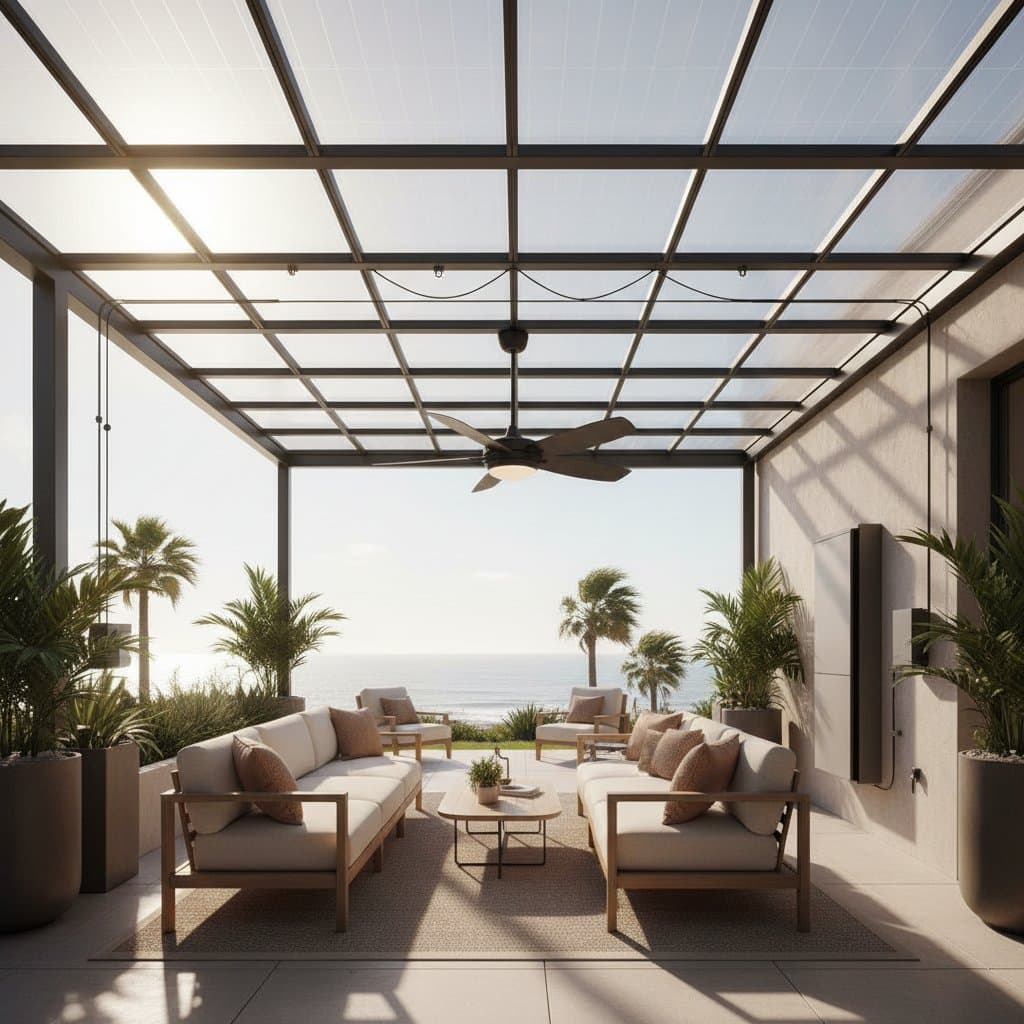
Transparent Solar Panels: Generating Power for Bright Patios
Homeowners often seek ways to enhance outdoor spaces with sustainable features. Transparent solar panels provide a solution by capturing sunlight to produce electricity while allowing natural light to filter through. This technology maintains the openness and comfort of patios, making it suitable for those who prioritize both aesthetics and environmental responsibility.
These panels represent an advancement in solar technology. They install easily on structures such as patio covers or pergolas. Users benefit from reduced energy costs without compromising the visual appeal of their outdoor areas.
Key Benefits
- Transparent solar panels produce electricity while preserving clear views and ample daylight.
- They suit installations on patio covers, pergolas, and sunrooms where design plays a central role.
- Energy production leads to savings that recover installation expenses over several years.
- Robust construction endures harsh outdoor elements, including coastal humidity and salt exposure.
- Eco-focused individuals find these panels ideal for upgrading living spaces sustainably.
Transparent solar patio covers merge innovative engineering with architectural elegance. They shield against direct sun while transforming absorbed rays into usable power for household needs. This dual purpose elevates everyday outdoor experiences.
Understanding Transparent Solar Technology for Patios
Transparent solar panels integrate into patio covers, pergola roofs, or overhead canopies made of glass or similar materials. During daylight hours, the panels absorb solar energy and direct it to an inverter for conversion into alternating current. This process supplies electricity to home systems or storage units.
The design focuses on balancing energy capture with light permeability. Photovoltaic materials embedded in the panels target ultraviolet and infrared wavelengths, leaving visible light to pass through. As a result, the space below remains illuminated and inviting.
Detailed Process of Energy Generation
- Sunlight strikes the surface of the panels mounted on the patio structure.
- Specialized photovoltaic cells absorb non-visible light spectrum components.
- The absorbed energy creates a direct current that travels to the inverter.
- The inverter transforms this current into standard household electricity.
- The power integrates into home wiring, powers devices, or recharges batteries.
- Surplus electricity returns to the utility grid or remains stored for nighttime use.
To optimize performance, orient the installation toward south-facing exposure in the Northern Hemisphere. This alignment ensures maximum sunlight capture throughout the day. Regular maintenance, such as gentle cleaning, preserves efficiency and clarity.
Transparent Versus Traditional Solar Panels
Selecting the right solar option requires comparing features and applications. Transparent panels excel in scenarios where light and views matter most. Traditional panels prioritize maximum energy output in less visible locations.
| Feature | Transparent Solar Panels | Traditional Solar Panels |
|---|---|---|
| Visibility | See-through or lightly tinted | Fully opaque |
| Primary Applications | Patios, skylights, and architectural elements | Rooftops and ground-based arrays |
| Light Transmission | Permits visible light to pass | Completely blocks sunlight |
| Efficiency Level | Moderate, around 5-10% | Higher, often 15-22% |
| Aesthetic Integration | Modern and unobtrusive | More utilitarian appearance |
| Ideal Scenarios | Design-driven outdoor enhancements | High-output dedicated systems |
Figure 1: A transparent solar pergola over an outdoor dining area, diffusing soft light while generating power.
Investment and Long-Term Value
The expense of transparent solar patio covers depends on factors like coverage area, panel quality, and additional components. Initial costs exceed those of standard panels due to specialized materials. However, the combination of shade provision and energy generation justifies the investment.
Professional assessments help tailor systems to specific needs. Larger installations yield greater returns through increased power production. Incentives such as federal tax credits further reduce effective costs.
Cost Components
| Component | Estimated Cost Range |
|---|---|
| Panels and Structural Materials | $150 - $250 per square foot |
| Installation Labor and Electrical Work | $3,000 - $10,000 |
| Inverter and Optional Battery Storage | $1,000 - $6,000 |
| Design Consultation and Permits | $500 - $2,000 |
A typical setup for a 200-square-foot patio might total $15,000 to $35,000. Customization for features like integrated lighting influences the final price. Financing options, including loans or leases, make adoption accessible.
Return on Investment
Annual energy output varies by location and size but often ranges from 500 to 2,000 kilowatt-hours for mid-sized systems. In sun-rich areas, this translates to bill reductions of several hundred dollars yearly. Payback periods typically span 7 to 12 years, after which the system provides free energy.
Local utility programs may offer net metering, crediting excess production. Durability ensures 20-25 years of service, extending value beyond initial recovery. Homeowners report enhanced property appeal, potentially increasing resale value.
Figure 2: Coastal residence with a transparent solar patio cover illuminating evening gatherings through stored energy.
Advantages and Limitations
Transparent solar patio covers offer compelling benefits for modern lifestyles. They align with goals of sustainability and style. Understanding drawbacks aids informed decisions.
| Advantages | Limitations |
|---|---|
| Produces renewable energy on-site | Requires higher initial financial outlay |
| Preserves natural illumination | Achieves lower efficiency rates |
| Enhances contemporary outdoor design | Demands skilled professional setup |
| Resists weather, including corrosion | Offers fewer customization choices |
| Lowers ongoing utility expenses | Benefits from periodic surface cleaning |
The advantages dominate for those integrating sustainability into aesthetics. Limitations prove manageable with proper planning and maintenance.
Frequently Asked Questions
What Power Output Should I Expect from Transparent Solar Panels?
Production hinges on panel dimensions, local sunlight, and technology efficiency. These panels typically yield 20-50% less than opaque counterparts but suffice for lighting, fans, or partial home offset. Consult installers for site-specific projections.
Can These Panels Serve as the Primary Home Energy Source?
They contribute significantly but seldom power an entire residence alone. Pairing with roof-mounted systems creates comprehensive coverage. This hybrid approach maximizes reliability and output.
Do Transparent Solar Panels Endure Outdoor Conditions?
Construction includes tempered glass and weatherproof seals. They withstand rain, high winds, and ultraviolet degradation. Coastal installations benefit from corrosion-resistant frames.
Is Retrofitting Possible for Existing Patios?
Many structures support upgrades if they meet load requirements. Engineers evaluate weight capacity and stability. Retrofitting avoids full reconstruction while adding solar functionality.
How Does Transparency Affect Appearance?
Options range from fully clear to subtle tints for improved efficiency. Frosted variants soften light without obstructing views. Samples from manufacturers help select the best fit.
Steps to Implement Transparent Solar on Your Patio
Transitioning to transparent solar begins with evaluation. Measure your patio's dimensions and assess sunlight patterns using tools like solar path finders. This data informs system sizing and placement.
Engage certified installers with experience in transparent applications. Review portfolios and request references from similar projects. Discuss integration with existing electrical systems to ensure seamless operation.
Explore financing and incentives through resources like the Database of State Incentives for Renewables and Efficiency. Finalize designs with visualizations to confirm aesthetic harmony. Post-installation, monitor output via apps for ongoing optimization.
Transparent solar panels redefine outdoor possibilities. They deliver power discreetly while fostering bright, inviting spaces. Homeowners gain independence from traditional energy sources, embracing a future where sustainability enhances daily life.