
7 Proven Strategies for Thermal Glass Windows to Reduce Beach Home AC Bills by 50%
Coastal living provides stunning views and relaxing environments, yet it presents challenges such as elevated humidity, corrosive salt air, and intense sunlight that elevate indoor heat levels. Standard glass windows permit significant solar heat gain, which increases reliance on air conditioning and inflates utility expenses. Thermal glass windows address these issues through innovative features like advanced glazing and insulating layers, enabling homeowners to maintain comfortable interiors while substantially lowering energy consumption.
These windows represent a strategic upgrade for properties in beachside locations. They minimize heat infiltration, filter ultraviolet radiation, and stabilize indoor climates. Consequently, air conditioning operates less frequently, resulting in noticeable reductions in costs. This guide outlines seven effective methods to leverage thermal glass for enhanced energy efficiency in coastal residences.
Core Energy Efficiency Advantages of Thermal Glass
1. Heat-Reflective Glazing Blocks Solar Gain
Thermal glass incorporates heat-reflective glazing, typically a microscopically thin metallic film applied to the surface. This coating redirects infrared radiation from sunlight back outdoors, limiting the warmth that penetrates the interior.
Homeowners benefit from selecting low-emissivity (low-E) coatings optimized for marine environments, which reject heat without diminishing visible light transmission. Such options maintain bright, inviting spaces while preventing overheating during peak sun exposure.
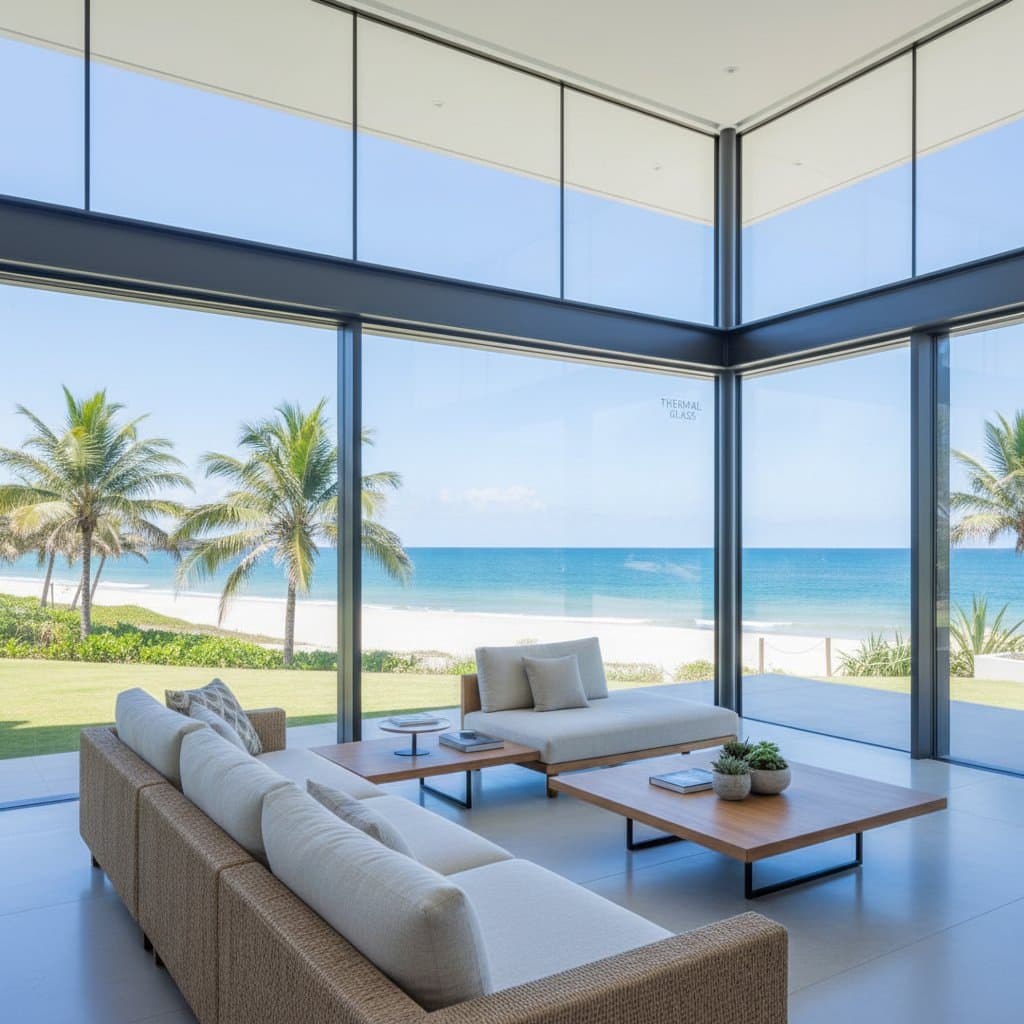
[Image: Sunlight reflecting off thermal glass windows in a beachfront home]
2. Multi-Pane Designs Insulate Against Temperature Fluctuations
Double- or triple-pane thermal glass features multiple layers separated by sealed pockets of inert gas, such as argon or krypton. These gases exhibit low thermal conductivity, creating a barrier that restricts convective heat flow between the panes.
In practice, this insulation can decrease air conditioning demands by as much as 50 percent in sun-drenched coastal settings. The effect proves particularly valuable on extended clear days, where ocean winds alone fail to counteract radiant heat from windows.
3. Ultraviolet Filtration Preserves Comfort and Protects Interiors
Advanced thermal glass blocks nearly 99 percent of harmful ultraviolet rays, reducing solar heat buildup and preventing degradation of furnishings, flooring, and fabrics. This filtration contributes to even room temperatures, especially in areas exposed to prolonged direct sunlight or sea-facing orientations.
Integrate this feature with neutral-toned curtains or blinds to amplify heat deflection. The combination enhances overall thermal performance without sacrificing the aesthetic appeal of natural illumination.
Strategic Design and Installation for Coastal Durability
4. Select Resilient Frame Materials for Harsh Environments
Exposure to salt-laden air accelerates deterioration in conventional window frames. Opt for corrosion-resistant options like vinyl, fiberglass, or aluminum-clad wood to ensure longevity and airtight seals.
Vinyl frames deliver cost-effective, minimal-upkeep solutions with inherent insulating properties. Fiberglass provides exceptional structural integrity and thermal resistance, ideal for high-wind zones. Aluminum-clad wood combines classic aesthetics with protective outer layers against moisture and salinity.
Pairing these frames with thermal glass yields a robust system that withstands coastal rigors while optimizing energy retention.
5. Position Windows to Balance Light and Thermal Control
Evaluate solar paths during the planning phase to customize glazing performance. Windows on south- and west-facing elevations typically require enhanced reflective properties due to afternoon sun intensity.
Consult a certified installer to apply varying coatings across exposures, such as high-performance tints for sunlit sides and clearer variants for north-facing or shaded areas. This tailored approach preserves daylight for vibrant interiors while curbing excess heat.
Ongoing Maintenance and Financial Analysis
6. Preserve Integrity Through Regular Seal Inspections
The efficacy of thermal glass depends on intact perimeter seals and inter-pane barriers. Conduct biannual examinations for signs of failure, including interstitial condensation, drafts, or frame warping.
Address any detected issues promptly through professional resealing or pane replacement. Proactive care sustains the windows' ability to impede heat transfer, thereby supporting consistent reductions in air conditioning expenditures.
7. Evaluate Upfront Investments Against Sustained Returns
Installation costs for thermal glass windows generally range from several hundred dollars per unit, influenced by dimensions, pane count, and frame type. Although initial outlays appear substantial, payback periods often span just three to five years via energy savings.
Additional advantages include diminished noise infiltration, reduced ultraviolet-induced wear, and lower repair frequency from environmental exposure. These factors elevate property value and resident satisfaction over the long term.
[Image: Technician installing double-pane thermal glass window in a coastal home]
Complementary Measures to Amplify Cooling Performance
Implement these enhancements alongside thermal glass to achieve greater efficiency:
- Apply light-colored, reflective exterior paints to walls, minimizing surface heat absorption.
- Install cellular shades or thermal curtains that provide an extra insulating layer during peak heat hours.
- Clean window tracks and sills quarterly to prevent debris from compromising seals.
- Prune overhanging foliage strategically to promote airflow without obstructing views.
Such integrations compound the benefits, fostering a more temperate and economical living space.
Frequently Asked Questions
How do thermal glass windows lower air conditioning expenses in seaside properties?
They limit heat ingress via specialized coatings and gas-filled chambers, allowing homes to remain cool with reduced mechanical cooling.
What distinguishes low-E glass from reflective variants?
Low-E glass employs a subtle emissivity-reducing film to repel infrared heat while transmitting light. Reflective glass uses a more pronounced metallic layer to visibly mirror sunlight, both advancing thermal regulation.
Does thermal glass demand unique cleaning protocols?
Standard glass cleaners suffice; employ soft cloths and mild solutions to avoid damaging specialized coatings.
What is the expected lifespan of thermal glass windows?
Properly installed and maintained units endure 20 to 30 years, retaining their insulating capabilities throughout.
Achieving Optimal Comfort in Coastal Settings
Thermal glass windows deliver a seamless integration of visual appeal, thermal regulation, and durability tailored to beachfront demands. Through effective heat management and protective features, they transform intense sunlight into an asset rather than a burden. Homeowners gain serene, efficient spaces that celebrate seaside living without the strain of escalating energy demands.