
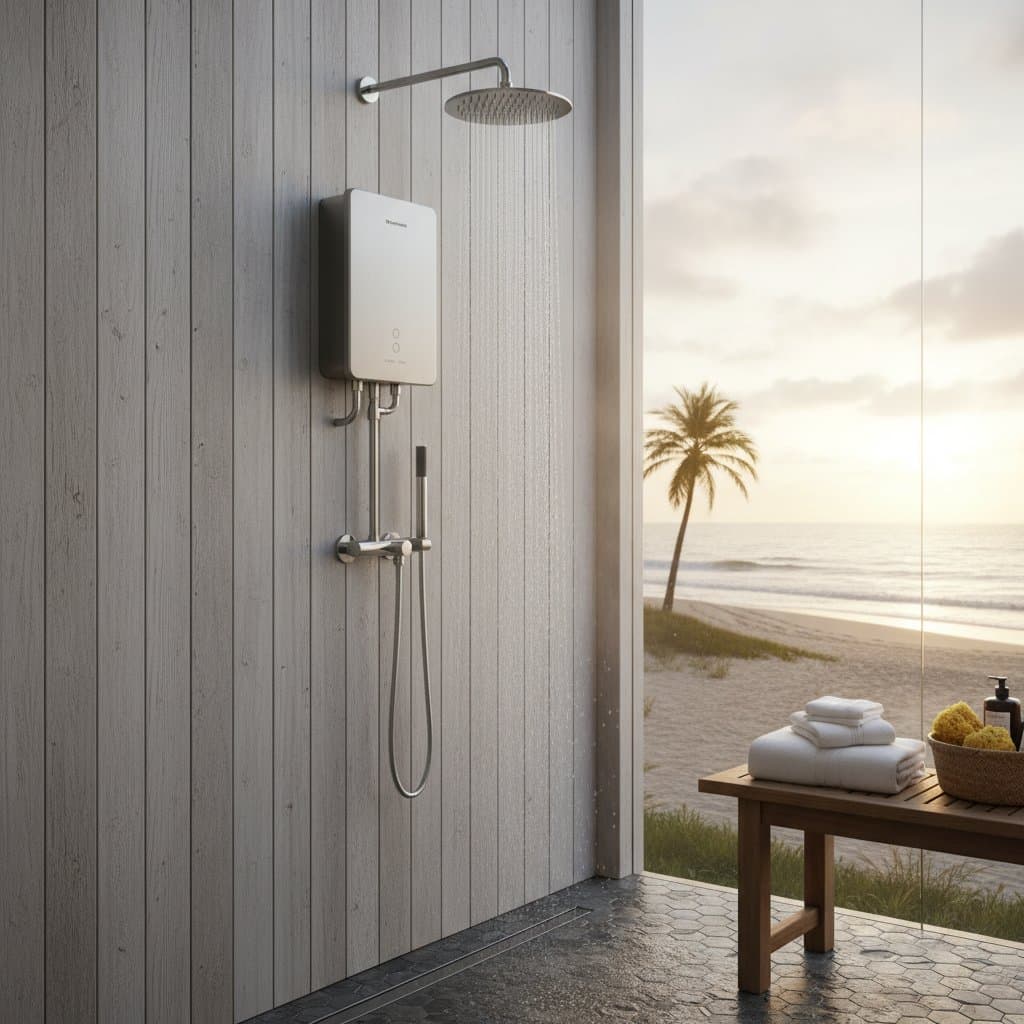
Instant Heat Enhances Coastal Outdoor Showers
Imagine concluding a day at the beach, with salt clinging to your skin and sand covering your feet, then stepping into an outdoor shower where warm water flows immediately. A tankless water heater, positioned discreetly nearby, provides this on-demand comfort, turning a basic rinse into a refreshing experience that aligns with seaside living.
Outdoor showers complement beach homes by offering quick access to cleanliness after ocean activities. Integrating a tankless water heater elevates this feature through continuous hot water supply, improved energy efficiency, and a streamlined appearance that suits exterior environments.
Key consideration: Expect installation costs for a tankless water heater in an outdoor shower setup to range from $1,200 to $3,500, influenced by unit capacity, manufacturer, and project specifics. This investment delivers reliable, efficient heating that enhances daily coastal routines.
For those avoiding self-installation, obtain estimates from qualified professionals experienced in exterior plumbing and water heating systems.
Article Overview
- Cost Breakdown
- Heater Types and Features
- Installation: DIY or Professional
- Cost-Reduction Strategies
- Maintenance Essentials
- Frequently Asked Questions
Heater Types and Features
Tankless water heaters for outdoor use vary by power source, each offering distinct advantages suited to different home configurations and usage patterns.
Gas-Powered Tankless Heaters
Ideal for: Properties with established natural gas or propane lines.
These units provide rapid and steady heating, maintaining performance across several water outlets simultaneously. They suit families with high demand or regular showering needs. Installation demands appropriate venting and expert connection to comply with safety regulations.
Advantages:
- Support flow rates reaching 8 gallons per minute
- Excel in regions with lower incoming water temperatures
- Endure 20 years or more with routine care
Disadvantages:
- Necessitate gas infrastructure
- Involve elevated upfront expenses
Image Credit: Jodi Jacobson / Getty Images
Electric Tankless Heaters
Ideal for: Compact areas or residences lacking gas service.
Electric models feature a small footprint, operate silently, and install with relative ease. They work well for isolated outdoor showers or secondary structures like guest houses. A primary constraint involves reduced flow during concurrent use of multiple appliances.
Advantages:
- More affordable initial purchase
- Straightforward wall mounting and servicing
- Eliminate the need for exhaust systems
Disadvantages:
- Potentially require electrical panel enhancements
- Exhibit moderate heating speed with cold inlet water
Image Credit: Bill Oxford / Getty Images
Cost Breakdown
Several elements determine the total expense of installing a tankless water heater for an outdoor shower. Unit prices alone span $500 to $1,500, based on capacity and fuel type. Labor adds $700 to $2,000, depending on site preparation and utility connections.
Additional factors include materials for mounting and enclosure, which may cost $100 to $500, and any required upgrades to gas lines or electrical wiring, potentially adding $300 to $1,000. In coastal zones, corrosion-resistant components increase costs by 10 to 20 percent.
To budget effectively, assess your home's current setup and consult local contractors for precise quotes. This approach ensures alignment with both financial and functional goals.
Installation: DIY or Professional
Deciding between self-installation and hiring experts hinges on technical skills, local codes, and safety priorities.
DIY installation suits experienced individuals with basic plumbing knowledge, particularly for electric models in accessible locations. Gather tools like pipe cutters, wrenches, and voltage testers, and follow manufacturer guidelines meticulously. However, gas units demand certified handling due to combustion risks.
Professional installation guarantees compliance and reliability, especially for complex setups involving venting or electrical modifications. Expect the process to take one to two days, with experts managing permits and inspections. This option minimizes errors and preserves warranties.
Recommendation: Opt for professionals if your project involves gas lines, structural alterations, or if you reside in an area with stringent building regulations.
Cost-Reduction Strategies
Achieve savings on a tankless water heater installation through deliberate planning and selections.
- Position near utilities: Locate the unit close to existing water and power sources to limit piping and wiring lengths, thereby lowering material and labor fees.
- Select efficient units: Prioritize models with energy factor ratings above 0.90 to decrease ongoing operational costs and qualify for potential rebates.
- Favor electric for modest needs: Electric heaters prove economical for single-shower applications, avoiding gas infrastructure investments.
- Opt for basic enclosures: Standard stainless steel or polymer housings shield the unit adequately without the expense of bespoke designs.
- Combine with other projects: Integrate the installation during broader home renovations, such as deck repairs or plumbing overhauls, to share labor expenses.
- Explore incentives: Investigate utility company programs or tax credits for energy-efficient appliances, which can offset 10 to 30 percent of costs.
Implementing these steps can reduce total outlay by up to 25 percent while maintaining quality.
Maintenance Essentials
Exposure to coastal elements accelerates wear on outdoor equipment, making consistent care essential for performance and durability.
- Descaling routine: Perform a flush every six months using a vinegar solution to clear scale from hard water, preventing efficiency loss.
- Corrosion checks: Examine connections quarterly for signs of rust, applying protective coatings as needed to extend component life.
- Weather protection: Enclose the unit in a ventilated cover to shield from direct salt exposure and moisture.
- Leak detection: After storms, verify seals and pipes to address issues promptly and avoid water damage.
- Annual inspections: For gas models, arrange expert reviews to assess flame stability, heat exchangers, and safety valves.
Proper maintenance extends unit lifespan to 15 to 20 years, maximizing return on investment through sustained efficiency and minimal repairs.
Frequently Asked Questions
What dimensions are required for an outdoor tankless water heater?
Units typically measure 14 by 20 inches and attach to exterior walls. Provide at least 12 inches of surrounding space for airflow and servicing.
Is it possible to supply multiple outdoor showers from a single unit?
Yes, provided the model supports 6 to 8 gallons per minute. This capacity maintains temperature stability across simultaneous uses.
Does installation require permits?
In most jurisdictions, permits apply to gas and electrical work, necessitating inspections. Verify requirements with your local authority prior to commencement.
What temperature range is optimal?
Settings between 105 and 110 degrees Fahrenheit offer comfort while reducing energy use and scalding risks.
How does salt air affect the heater?
Prolonged exposure promotes corrosion. Select marine-grade construction and periodically rinse the exterior to mitigate buildup.
Are tankless heaters suitable for cold climates?
Gas models handle low inlet temperatures better, but all require freeze protection, such as insulation or drain valves, in cooler areas.
Integrate Comfort into Coastal Living
A tankless water heater equips your outdoor shower for effortless post-beach refreshment, delivering reliable warmth that enhances everyday seaside enjoyment. This addition not only streamlines routines but also promotes sustainable home practices. Consider how such an upgrade fits your lifestyle to fully embrace coastal convenience.