
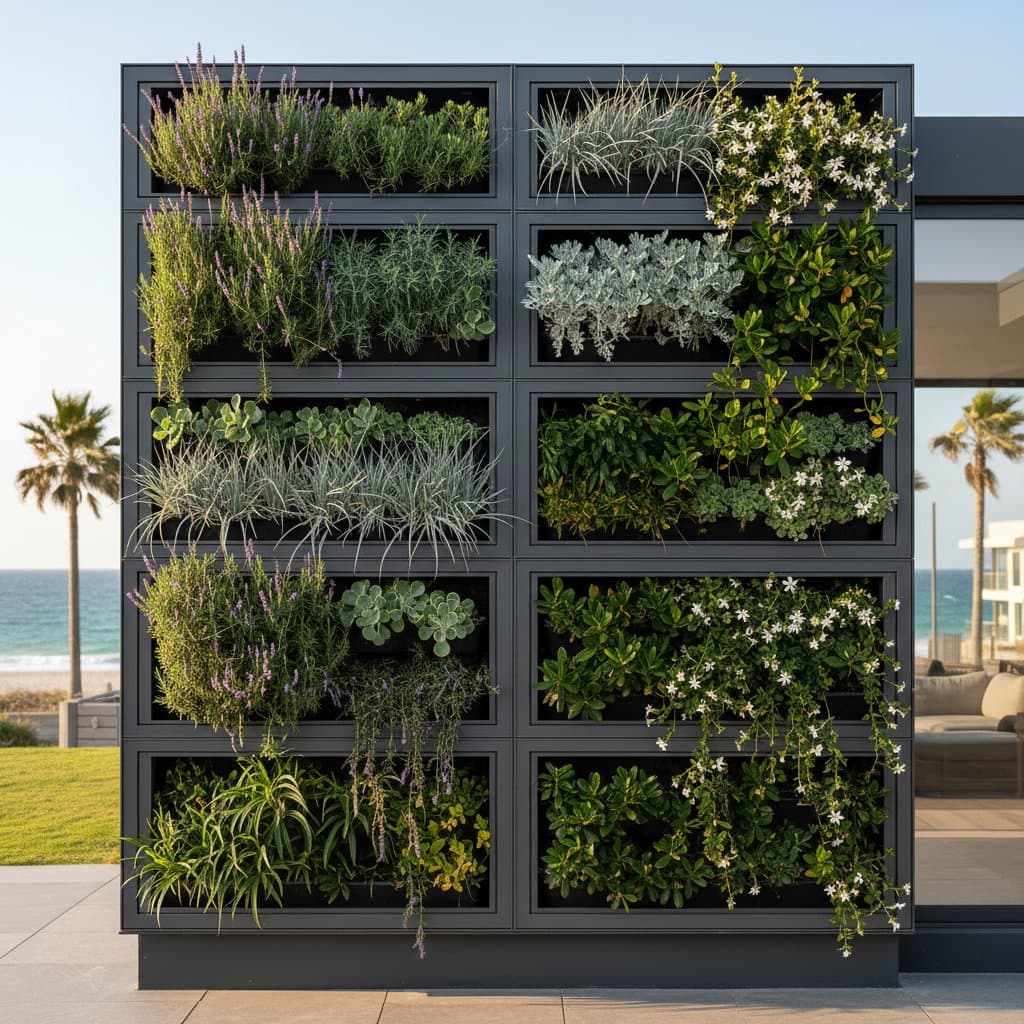
Coastal Living Walls That Defy Salt Air Damage
Picture a vibrant cascade of greenery enveloping your seaside patio, undeterred by the persistent salty breeze. These vertical gardens integrate nature seamlessly into coastal environments, transforming challenging conditions into opportunities for beauty. By selecting appropriate plants, structures, and care strategies, homeowners can cultivate thriving displays that enhance outdoor living spaces.
Key Benefits:
- Build durable living walls resistant to coastal salt exposure
- Identify proven salt-tolerant plants suited for vertical setups
- Select materials and systems that resist corrosion and ensure longevity
- Implement straightforward maintenance practices for sustained health
- Draw inspiration from versatile designs for patios, balconies, and facades
Seaside properties encounter specific hurdles in landscaping. Salt-laden winds, relentless gusts, and bright sunlight often overwhelm conventional plants and fixtures. A thoughtfully constructed living wall overcomes these issues, delivering the refreshing foliage characteristic of San Diego's shoreline without the threat of deterioration.
The Impact of Salt Air on Plants and Structures
Inhaling ocean air offers a refreshing experience, yet its salt content poses significant risks to vegetation and built elements. As spray evaporates, salt residues accumulate on foliage and hardware. This buildup dehydrates plant cells, resulting in scorched edges, wilting, or premature shedding. On metallic parts, it hastens oxidation, weakening frames and causing premature breakdowns.
Effective coastal designs incorporate protective measures:
- Resilient vegetation that manages salt through internal storage or surface expulsion
- Durable substrates such as galvanized steel, powder-coated aluminum, or UV-resistant polymers
- Strategic configurations that form sheltered zones via layered planting and angled placements
These approaches ensure that green installations remain vigorous through seasonal shifts.
Building a Resilient Coastal Living Wall
Assembling a vertical garden in a marine setting requires attention to aesthetics alongside robustness. Begin by evaluating site specifics, including available area, light patterns, and prevailing wind directions. This foundation supports selections that promote both visual appeal and endurance.
Selecting a Sturdy Framework
Prioritize frameworks constructed from marine-grade stainless steel or high-density polyethylene. These options withstand corrosive elements far better than standard iron or wood. Modular grids facilitate individual module swaps, simplifying repairs and updates without full disassembly.
Optimizing Water Management
Efficient hydration prevents both drought stress and water waste in salty conditions. Install precision drip lines that target root zones, reducing surface wetting that could exacerbate salt adhesion. Position collection trays at the base to recapture runoff, avoiding ground-level erosion or facade discoloration.
Preparing an Ideal Substrate
Employ aerated mixes combining expanded perlite, peat alternatives like coconut fiber, and slow-release nutrients. Such blends hold essential moisture while allowing excess salts to flush away during watering cycles. Their lightweight nature eases installation on elevated surfaces and supports root oxygenation.
Mitigating Wind Effects
Position installations against walls or fences that offer natural buffering from onshore winds. Integrate windbreaks like bamboo screens or dense lower-tier plantings to diffuse airflow. This setup safeguards tender shoots and maintains overall stability during storms.
Image Suggestion: Detailed view of arranged salt-tolerant succulents in a patterned coastal installation.
Innovative Designs for Seaside Properties
Vertical gardens adapt to diverse coastal settings, from compact urban balconies to expansive waterfront estates. Consider these tailored concepts to integrate greenery effectively:
- Shower Enclosure Enhancement: Surround an exterior rinse area with layered ferns and drought-resistant sedums, evoking a tranquil retreat amid ocean sounds.
- Terrace Divider: Employ trellised panels with salt-hardy climbers like bougainvillea to provide seclusion, while permeable designs permit breezes and views.
- Portal Greenery: Mount a compact herb array by the entrance, featuring lavender and oregano that release aromas carried on coastal drafts.
- Aquatic Border: Line pool edges with a blend of agaves and ornamental grasses, delivering contemporary elegance with inherent drought tolerance.
- Terrace Mosaic: Compose interlocking panels into abstract forms, where seasonal blooms introduce dynamic color against evergreen bases.
Image Suggestion: Compact terrace with herb-focused vertical planting facing the sea.
Top Salt-Tolerant Plants for Vertical Coastal Gardens
Selecting the right species forms the core of a successful living wall. Focus on natives or adapted varieties that handle saline stress, poor soils, and variable moisture. Below are recommended options, each with specific care notes for optimal performance.
-
Drosanthemum species (Ice Plant): These low-growing succulents feature fleshy leaves that store water and tolerate full salt exposure. Plant in sunny spots with infrequent deep watering; they spread to fill panels quickly.
-
Carpobrotus edulis (Hottentot Fig): Trailing vines produce edible fruit and vivid flowers. Ideal for cascading effects; trim annually to control growth and prevent overcrowding.
-
Agave attenuata (Fox Tail Agave): Architectural rosettes add sculptural interest. Position in partial shade to avoid leaf burn; water sparingly, allowing soil to dry completely between sessions.
-
Limonium perezii (Sea Lavender): Delicate blooms in purple hues emerge reliably. Suited for mid-level placements; fertilize lightly in spring to boost flowering without salt sensitivity.
-
Festuca glauca (Blue Fescue): Compact grass tufts offer textural contrast. Thrives in windy sites; divide clumps every two years to maintain vigor.
-
Rosmarinus officinalis (Rosemary): Upright shrubs provide aromatic foliage and pollinator appeal. Prune to shape; harvest tips for culinary use, enhancing practical value.
Incorporate a mix of these for biodiversity, ensuring even distribution across heights and habits. Monitor for pests like aphids, which salt stress can invite, and treat with horticultural soap solutions.
Maintenance Strategies for Long-Term Success
Sustaining a coastal living wall demands consistent yet minimal intervention. Schedule bi-weekly inspections to remove debris and check for salt crusts on leaves. Gently rinse foliage with fresh water monthly to dilute accumulations, using a soft spray to avoid dislodging soil.
Adjust irrigation based on rainfall patterns; automated timers connected to rain sensors optimize usage. In winter, reduce watering and protect against frost with breathable covers if temperatures dip below 40 degrees Fahrenheit. Annual soil refreshment replaces compacted media, replenishing nutrients depleted by saline leaching.
These routines preserve plant health and structural integrity, allowing the garden to evolve naturally over time.
Image Suggestion: Time-lapse sequence showing seasonal changes in a mature coastal living wall.
Realizing the Rewards of Coastal Greenery
A well-executed living wall delivers more than visual charm; it fosters a serene connection to the surrounding seascape. Residents often report reduced stress from the soft rustle of leaves mingling with wave sounds, alongside improved air quality from natural filtration. Such installations also boost property appeal, blending functionality with San Diego's iconic coastal aesthetic.
Ultimately, these green features empower homeowners to harmonize with their environment. Through informed choices in plants and systems, vertical gardens become enduring testaments to resilient design, inviting daily enjoyment in the heart of ocean proximity.