
How Glass Doors Triple Natural Light in Coastal Beach Homes
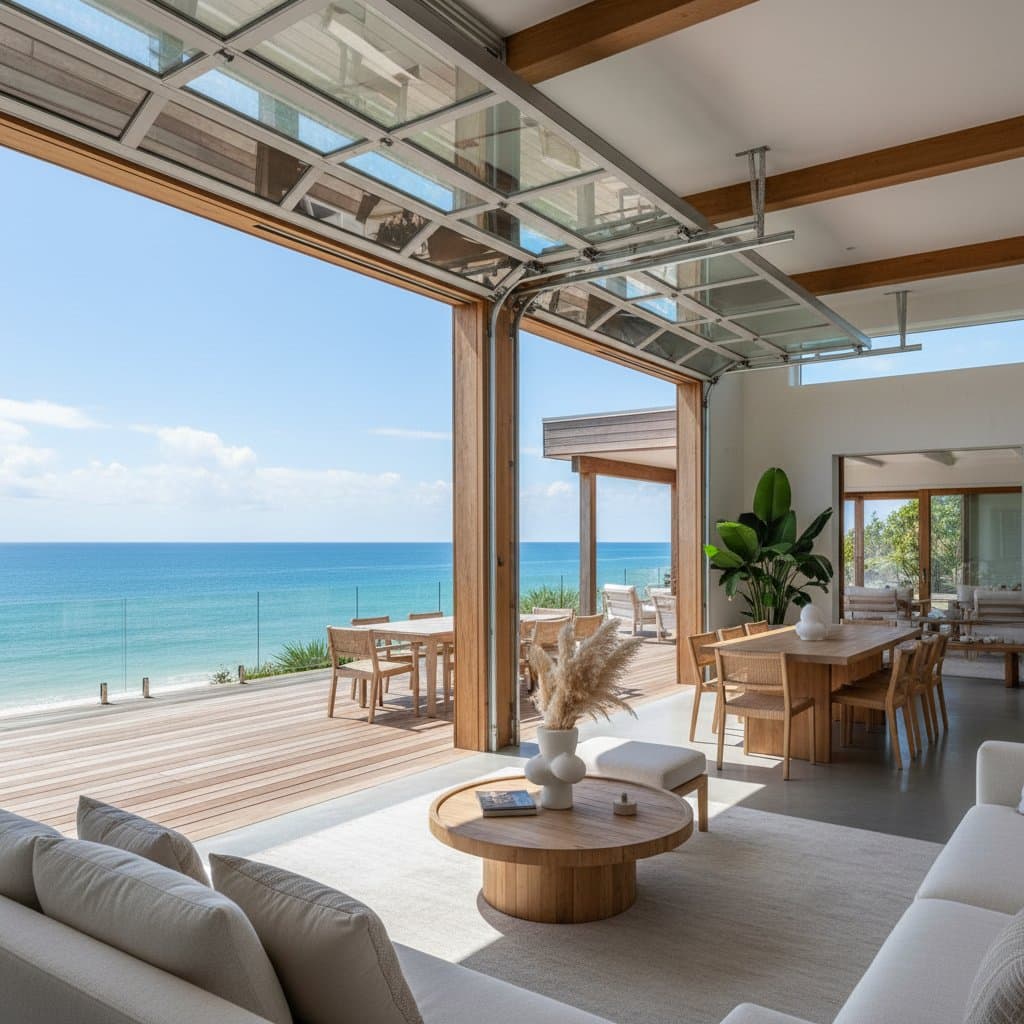
Picture entering a seaside residence where sunlight floods across gleaming floors and the ocean shimmers through transparent panels. The atmosphere expands, illuminates, and invigorates. Glass doors in coastal settings achieve more than mere linkage between interior and exterior realms. They intensify natural illumination, accentuate marine panoramas, and instill a light, contemporary ambiance.
This piece details the ways glass doors substantially augment light within seaside dwellings, identifies suitable varieties for saline environments, and harmonizes aesthetics with functionality. Readers gain insights into pricing, care routines, and guidance on engaging specialists.
Key takeaway: Placement of glass doors in a seaside property generally incurs costs from $2,000 to $9,000, influenced by dimensions, frame composition, and bespoke elements. The outcome yields a more luminous, expansive area intimately tied to the external environment. Solicit estimates from highly regarded regional experts to revitalize the aesthetic and sensation of a beachfront abode.
In this article
- Cost factors
- Types and options
- DIY versus professional installation
- Strategies for cost reduction
- Maintenance and longevity
- FAQs
Cost factors
Glass doors designated for seaside properties span $2,000 to $9,000 for complete installation, averaging approximately $5,500. Several primary elements dictate the final expense:
- Door configuration: Sliding variants range from $2,000 to $5,000, whereas folding or stacking configurations may ascend to $8,000 or higher.
- Frame composition: Aluminum prevails for its resistance to rust, although wood-covered or fiberglass alternatives introduce coziness at a modest premium.
- Glass specifications: Impact-resistant or dual-layered panes bolster resilience and thermal performance, typically appending $800 to $1,200.
- Installation and regulatory fees: Seaside projects frequently demand weather-resistant measures and adherence to regional ordinances, contributing an additional $500 to $1,000.
For expansive, garage-inspired glass doors in contemporary seaside designs, anticipate expenditures nearer to $3,000 to $7,000, particularly when positioned on terraces or recreational zones. These systems demand meticulous evaluation of site-specific wind loads and humidity levels to ensure structural integrity over time.
Types and options
Sliding glass doors
Sliding doors rank as a preferred choice in coastal locales. They optimize sightlines, conserve interior space, and facilitate smooth passageways. Ideal application: Compact patios or confined areas. Such doors exhibit robustness, simplify upkeep, and often incorporate mesh screens for airflow control. Select models with reinforced tracks to withstand sandy debris and frequent use.
Photo: PC Photography / Getty Images
Folding and stacking doors
These configurations permit broad apertures to merge internal and external domains seamlessly. Individual panels accordion or retract into neat assemblies. Ideal application: Expansive portals and hospitality zones. Although pricier, they eliminate divisions entirely, allowing unhindered access to coastal winds and vistas. Opt for weather-stripped edges to minimize drafts in variable seaside climates.
Photo: Cavan Images / Getty Images
Glass garage doors
Glass-infused garage doors emerge as a rising preference in seaside trends, suitable for both utilitarian garages and habitable extensions. They deliver an industrial-chic appearance while saturating interiors with daylight. Ideal application: Beachfront properties serving as creative ateliers or visitor quarters. Prioritize aluminum framing for saline tolerance and heat-tempered glass for security against impacts.
Photo: YinYang / Getty Images
Additional considerations include integrating smart automation for effortless operation, which enhances convenience in humid conditions prone to swelling or sticking mechanisms.
DIY versus professional installation
An adept individual with carpentry experience might manage a basic single-panel sliding door, provided accurate measurements and essential implements are at hand. Allocate 6 to 8 hours for the task, ideally with assistance. Required items encompass a spirit level, power drill, caulking compound, and moisture-barrier sheeting.
Complex multi-panel or accordion setups necessitate expert intervention. Precision calibration averts water infiltration, crucial amid coastal gusts. Professionals guarantee airtight seals and conformity to municipal standards, mitigating risks of premature deterioration or safety violations. In high-wind zones, certified installers often incorporate supplemental anchoring to fortify against storms.
Strategies for cost reduction
- Predefined dimensions: Bespoke sizing elevates expenses by 20 to 30 percent. Adhere to conventional apertures where feasible to trim fabrication fees.
- Frame selections: Aluminum proves more economical than fiberglass or wood-overlaid options while offering superior anti-corrosive properties.
- Incentive programs: Investigate regional incentives for thermally superior glass installations, potentially offsetting hundreds in outlays.
- Project consolidation: When updating multiple doors or fenestrations, aggregate efforts to secure discounted workmanship charges.
- Timing considerations: Schedule during lulls in contractor workloads for potential markdowns on services.
Further economies arise from sourcing from wholesalers who specialize in marine-grade components, ensuring quality without retail markups.
Maintenance and longevity
Saline atmospheres challenge metals and glazing alike, rendering consistent attention essential. Flush frames and rails biweekly with potable water to dislodge crystalline residues. Employ silicone-infused grease on sliding components to inhibit oxidative wear. For pane cleaning, utilize a gentle detergent blend, eschewing ammonia formulas that erode protective films.
With glass garage doors, conduct biannual examinations of mechanisms. Hinges and tension elements require rust-preventive treatments for reliable function. Seaside-rated coatings and nautical hardware prolong service life, often warranting 20 to 30 years of performance under diligent care. Address minor scratches promptly with polishing kits to preserve clarity and curb further degradation.
FAQs
How do glass doors influence utility expenses?
Contemporary glass doors featuring dual or triple glazing diminish thermal conduction. Low-emissivity films assist in maintaining cooler interiors, thereby potentially decreasing cooling expenditures in warm coastal regions.
Are permits required for such installations?
Affirmative, numerous seaside jurisdictions mandate approvals for external door substitutions owing to criteria for wind resistance and shatterproofing. Consult local regulations prior to commencement to avoid fines or rework.
What lifespan can one expect from coastal glass doors?
With appropriate materials and maintenance, these installations endure 15 to 25 years. Factors like exposure to direct salt spray may shorten this interval without protective measures.
Maximizing Light and Views in Your Seaside Space
Glass doors convert seaside residences into vibrant havens that embrace solar rays and oceanic expanses. Select from streamlined sliders or imposing glass partitions to craft an environment that breathes openness, vitality, and profound harmony with the shore.