
Introduction to the Outdoor Sauna Boom
Coastal regions witness a remarkable transformation in residential amenities. Installations of outdoor saunas have increased by 300% over recent years, driven by a desire for enhanced wellness and luxurious outdoor spaces. Homeowners along shorelines, from California beaches to Atlantic coasts, adopt these structures to elevate daily living.
These saunas serve multiple purposes. They provide therapeutic heat sessions that alleviate stress and improve circulation. Beyond health benefits, they boost property values by an average of 10% to 15%, according to real estate trends in coastal markets. The appeal lies in their ability to merge relaxation with breathtaking ocean vistas, turning backyards into private sanctuaries.
Installation costs vary based on design and materials, typically spanning $8,000 to $25,000. Custom builds command higher prices due to specialized features like panoramic windows. Yet, the investment yields substantial returns, with many owners reporting up to 75% ROI through increased home appeal and personal enjoyment.
Key Benefits for Coastal Homeowners
Outdoor saunas align perfectly with the demands of seaside living. They extend usable outdoor space throughout the year, even in cooler months. Regular use supports detoxification and muscle recovery, essential for active coastal pursuits like surfing or hiking.
Property enhancement stands out as a primary advantage. Real estate experts note that unique amenities like saunas differentiate listings in competitive markets. Buyers seek homes that offer immediate wellness options, making saunas a strategic upgrade.
Environmental integration adds another layer. Modern designs incorporate sustainable elements, such as solar-powered heaters, reducing ecological impact. This harmony with nature enhances the overall coastal experience, fostering a sense of tranquility amid ocean sounds.
Challenges and Solutions in Coastal Settings
Building an outdoor sauna near the ocean presents unique hurdles. Salt air, high humidity, and strong winds demand robust construction. Addressing these factors ensures longevity and performance.
-
Material Selection: Opt for cedar or redwood, which resist moisture and insects naturally. Avoid untreated metals that corrode quickly in saline environments.
-
Foundation Stability: Coastal soils shift due to tides and erosion. Engineers recommend reinforced concrete bases elevated above flood levels for secure anchoring.
-
Ventilation and Insulation: Proper airflow prevents mold in humid conditions. Install adjustable vents and use breathable insulation like mineral wool to maintain efficiency.
-
Location: Proximity to the shoreline necessitates elevated platforms and windbreaks. Select spots shielded from direct salt spray to protect components.
-
Size and Layout: Smaller units suit compact patios, measuring 6 by 8 feet. Larger configurations, up to 12 by 16 feet, accommodate families with separate changing areas or lounges.

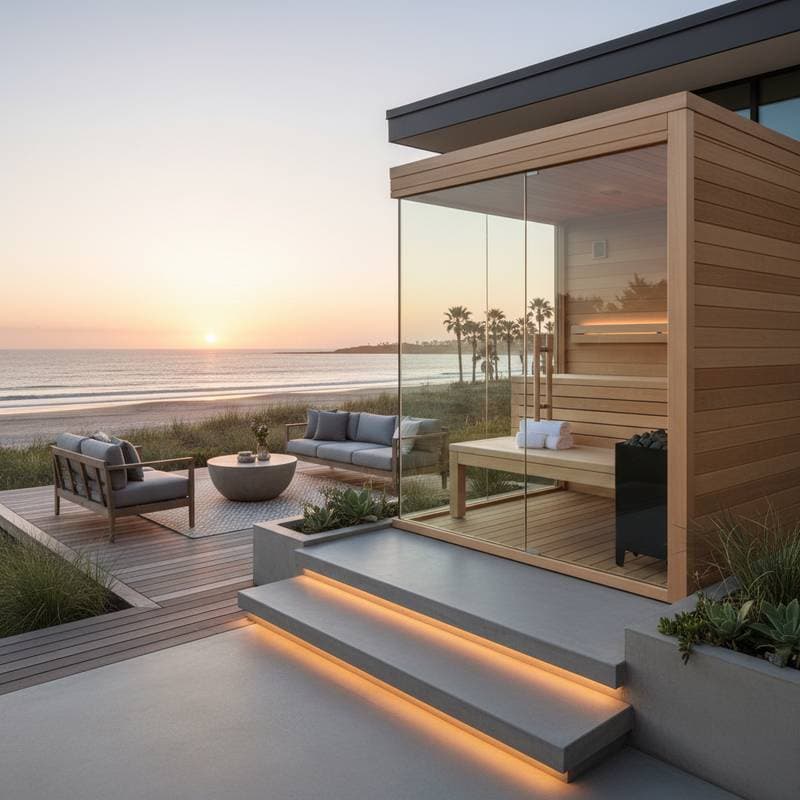
Glass-front sauna with ocean view deck
These solutions mitigate risks while maximizing benefits. Professional assessments during planning phases identify site-specific needs, ensuring compliance with local building codes.
Planning and Budgeting Tips
Effective planning forms the foundation of a successful sauna project. Begin by defining objectives, such as solo relaxation, family wellness, or guest entertainment. This clarity guides decisions on size, features, and placement.
Budgeting requires careful allocation. Total expenses include materials, labor, and permits, often totaling $10,000 to $30,000 for coastal installations. Factor in ongoing costs like electricity, which remain low with energy-efficient models.
Smart Budgeting Steps
-
Allocate 10 to 15% of the budget for site preparation, including grading and utility trenching.
-
Solicit quotes from at least three licensed contractors experienced in marine environments.
-
Consider modular prefabricated units for cost savings and easier assembly, starting at $7,000.
-
Select durable, low-maintenance materials like treated thermowood to minimize future expenses.
-
Integrate complementary features, such as rain showers or built-in benches, to create a comprehensive outdoor oasis.
DIY options exist for budget-conscious owners, with kits under $6,000. However, professional installation proves essential in coastal areas to handle weatherproofing and electrical compliance. Permits may add $500 to $2,000, depending on municipal regulations.
Design Ideas for Coastal Integration
Design choices elevate outdoor saunas from mere utilities to architectural highlights. Seamless integration with surroundings enhances curb appeal and usability. Focus on themes that echo the natural coastal palette of blues, sands, and greens.
Popular Design Themes
-
Scandinavian Minimalism: Employ straight lines, pale woods, and expansive glass panels that frame ocean horizons. This style promotes openness and simplicity.
-
Rustic Coastal: Use reclaimed driftwood or stone accents to mimic beach textures. Pair with native landscaping for an organic blend.
-
Modern Luxury: Incorporate polished concrete floors, ambient LED strips, and app-controlled heaters. These elements add sophistication to contemporary homes.
Customization options abound. Add infrared panels for gentler heat or chromotherapy lighting for mood enhancement. Panoramic designs with fold-out decks extend the space, ideal for sunset sessions.
Landscaping ties the sauna to its environment. Plant salt-tolerant shrubs around the base for privacy. Pathways of crushed shell or pavers lead to the entrance, creating an inviting approach.
FAQs About Outdoor Saunas in Coastal Homes
| Question | Answer |
|---|---|
| How long does installation take? | Prefabricated models install in two to four days. Custom projects extend to two to four weeks, accounting for permitting and site work. |
| Are outdoor saunas safe near the ocean? | They prove safe with corrosion-resistant materials like marine-grade stainless steel and silicone seals that block salt intrusion. Regular inspections maintain integrity. |
| Do saunas increase energy bills? | Efficient electric heaters consume minimal power, typically under $30 monthly for three sessions per week. Wood-fired alternatives suit off-grid preferences. |
| Can I install one on a deck? | Decks support saunas if reinforced to bear 100 pounds per square foot. Apply waterproof membranes to prevent moisture damage below. |
| What maintenance is required? | Perform annual applications of protective sealants, inspect vents for blockages, and wipe interiors with mild solutions. These steps preserve condition year-round. |
Maximizing Wellness and Value in Your Coastal Retreat
An outdoor sauna enriches coastal living by combining health benefits with aesthetic elevation. Positioned near pools or cliffs, it redefines relaxation and social gatherings. The 300% installation surge reflects its role as a versatile investment, delivering enduring joy and financial returns.