
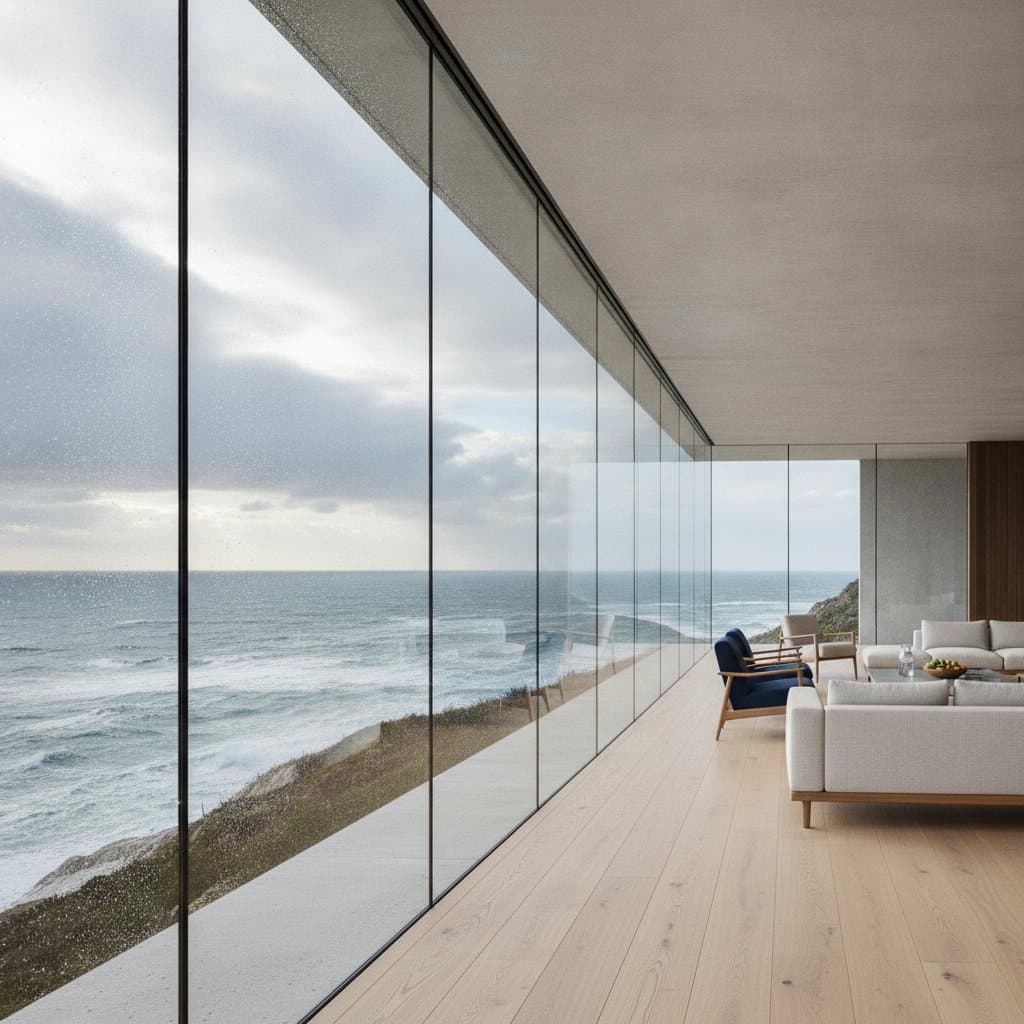
Why Coastal Homes Choose Storm-Rated Glass Walls
Coastal homes face constant exposure to wind, salt air, and shifting weather. Homeowners near the ocean prioritize protection while preserving their views. Storm-rated glass walls deliver strength and beauty in equal measure. These systems safeguard against strong winds and flying debris. They also maintain open, light-filled living spaces that enhance long-term property value and daily comfort.
What Are Storm-Rated Glass Walls?
Storm-rated glass walls consist of large panels built to resist high winds and debris impacts. Manufacturers use impact-resistant laminated glass, reinforced frames, and specialized seals to maintain the building envelope during severe weather. The laminated layers hold together if cracked and prevent shards from scattering.
Installers fit these systems as sliding walls, folding panels, or fixed sections to match architectural needs. Average installed costs range from 120 to 200 dollars per square foot based on design, size, and frame material.
| Feature | Description | Benefit |
|---|---|---|
| Impact Resistance | Multiple laminated layers | Protects against debris |
| Wind Rating | Tested for high pressure | Reduces storm damage |
| UV Protection | Coating blocks rays | Preserves interior finishes |
| Energy Efficiency | Double or triple glazing | Keeps home comfortable |
| Aesthetics | Expansive glass panels | Enhances natural light and views |
Why Coastal Homes Need Impact-Resistant Walls
Constant Exposure to Coastal Weather
Coastal regions produce frequent wind gusts and salt spray that degrade standard glass. Storm-rated systems withstand these conditions and reduce maintenance needs. They also prevent leaks along the Pacific coast where temperature shifts and moisture occur regularly.
Protection Against Flying Debris
Strong winds turn branches and outdoor objects into projectiles. Storm-rated glass absorbs direct hits without breaking apart. The laminated construction keeps the barrier intact and shields both occupants and interiors.
Noise Reduction
Laminated glass dampens outside noise from shorelines or marinas. This feature creates quieter indoor environments without additional soundproofing measures.
Cost Factors for Storm-Rated Glass Walls
Several elements determine final pricing for these installations.
- Size and configuration affect cost because larger multi-panel systems require more materials.
- Frame material influences price with aluminum offering durability and wood-clad options adding warmth at higher expense.
- Glass type increases cost when double or triple lamination improves insulation and strength.
- Installation complexity rises with custom openings or curved designs that need specialized labor.
- Design integration often requires engineering upgrades for structural corners or frameless transitions.
Typical Cost Range
| Type | Cost per Square Foot | Notes |
|---|---|---|
| Basic Sliding Glass Wall | 120 - 150 | Aluminum frame, standard glazing |
| Premium Folding System | 150 - 200 | Wider openings, upgraded seals |
| Custom Architectural Wall | 200+ | Curved or structural glass |
These figures cover materials and installation yet vary by location and project specifics.
Key Benefits of Storm-Rated Glass for Coastal Homes
Safety and Durability
Homeowners select these walls primarily for protection. The systems resist breakage under pressure and keep wind and water out through bonded laminated layers.
Energy Efficiency
Modern impact systems include double glazing and low-emissivity coatings. These features stabilize indoor temperatures and lower energy costs in humid coastal climates.
Visual Appeal
Large glass walls admit abundant natural light and connect indoor spaces to outdoor areas. They turn coastal homes into bright retreats where ocean views form part of the interior experience.
Insurance and Resale Value
Insurance providers often reduce premiums for impact-resistant glass. Buyers view these installations as desirable upgrades that strengthen market appeal.
Maintenance and Longevity
Storm-rated glass walls last for decades with routine care. Clean surfaces with mild soap and water to retain clarity. Inspect seals and hardware twice each year to preserve performance. Aluminum and fiberglass frames resist corrosion in salt air.
Tips for Choosing the Right System
- Review local building codes for required wind ratings and select products tested to meet or exceed those standards.
- Compare frame materials because aluminum provides strength while fiberglass offers superior corrosion resistance.
- Request warranty details that cover both glass and frames for comprehensive protection.
- Hire experienced contractors familiar with coastal conditions to ensure correct installation.
- Explore customization options such as tints, frosted finishes, or UV coatings to align with design goals.
FAQs About Storm-Rated Glass Walls
| Question | Answer |
|---|---|
| Do storm-rated glass walls prevent all damage? | They greatly reduce risk but no glass is completely unbreakable. |
| Can they be used for entire exterior walls? | Yes, when engineered correctly they can replace solid walls. |
| Are they energy efficient? | High-quality systems with insulated glass perform as well as top-tier windows. |
| Is maintenance difficult? | Basic cleaning and periodic hardware checks keep them in excellent shape. |
| Do they reduce UV damage inside the home? | Yes, most include UV-blocking layers that protect furniture and flooring. |
| Can I retrofit existing walls? | Many systems can replace older sliding doors or windows with structural adjustments. |
Protecting Coastal Views Year Round
Storm-rated glass walls let homeowners enjoy panoramic ocean views while maintaining safety during unpredictable weather. Proper selection and installation deliver lasting strength, comfort, and style for coastal living.