
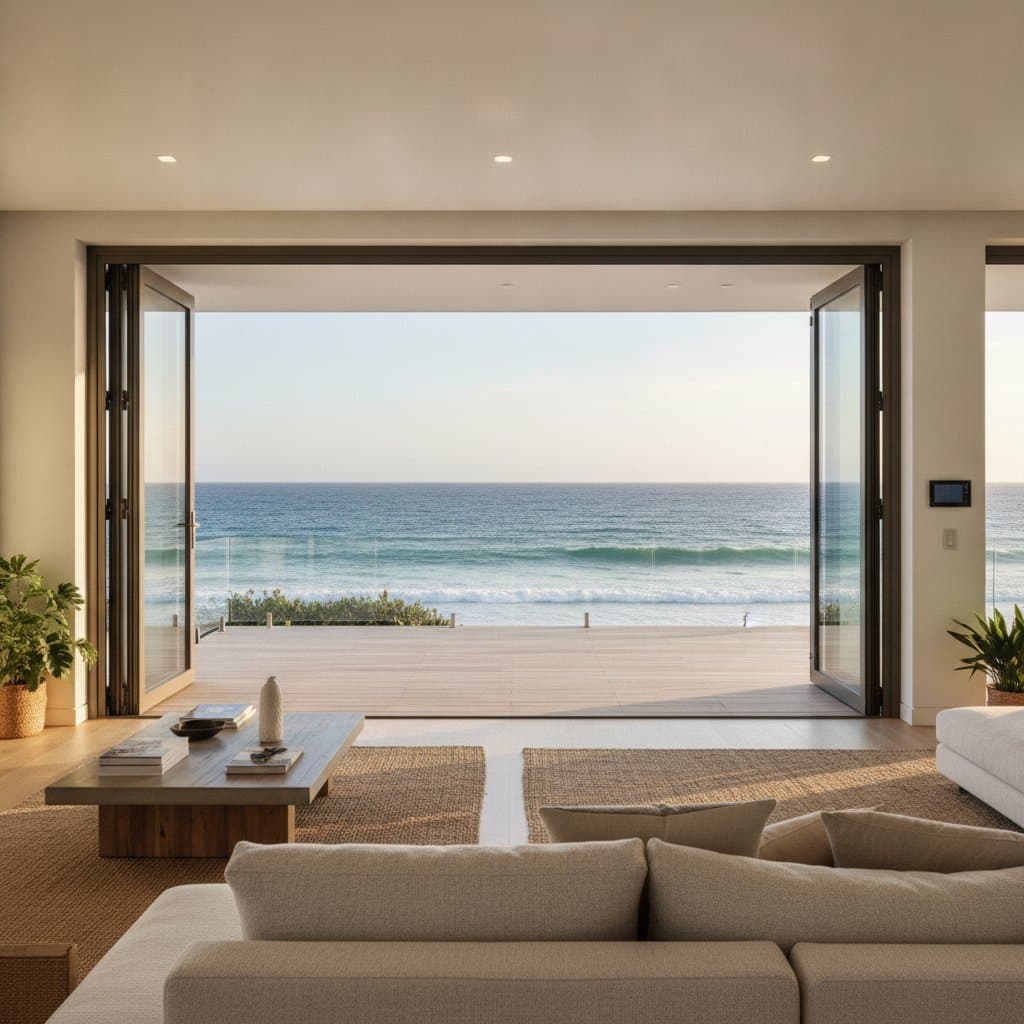
11 Storm-Proof Bifold Door Ideas to Maximize Coastal Home Views
Living near the coast offers some of the most beautiful scenery imaginable. The sound of waves, the salty breeze, and the golden glow of the horizon create a sense of calm that few other places can match. Yet coastal living also brings challenges, especially when it comes to protecting your home from storms and high winds. Storm-proof bifold doors provide an ideal solution if you want to enjoy sweeping views while keeping your home secure.
Imagine opening an entire wall to the ocean and letting the breeze flow through your living space. You can close it quickly when the weather changes. Bifold glass walls make this possible by blending indoor comfort with outdoor beauty. Hurricane-rated designs eliminate concerns that glass doors might fail against the elements. These doors combine strength, energy efficiency, and elegance.
This guide explores practical ideas for installing and enjoying storm-proof bifold doors in coastal homes. You will learn how to choose materials, design layouts, and maintain durability while maximizing those views. The ideas apply whether you are renovating a beach cottage or building a luxury coastal retreat.
Structural and Material Choices
Hurricane-Rated Frames for Maximum Security
Storm-proof bifold doors rely on robust frames to keep everything stable. Hurricane-rated frames withstand extreme wind pressure, flying debris, and water infiltration. Most are made from heavy-duty aluminum with reinforced corners and interlocking panels.
Compare models by looking for systems tested under coastal building standards. These doors often include concealed hinges, multi-point locks, and compression seals that keep moisture out during storms. Check the seals and locking mechanisms regularly to ensure they remain tight. Proper maintenance preserves the door strength and performance.
Impact-Resistant Glass for Safety and Clarity
The glass determines how well bifold doors stand up to storms and daily wear. Impact-resistant glass, often laminated with a plastic interlayer, stays intact even if shattered. Your home remains protected from high winds and flying debris.
Select from clear, tinted, or low-emissivity coatings depending on lighting and privacy preferences. Low-E coatings reduce heat gain and keep indoor areas cooler on sunny days.
Corrosion-Resistant Hardware and Tracks
Coastal air contains salt that can corrode metal over time. Use stainless steel or marine-grade aluminum hardware for your bifold door system. These materials resist rust and maintain smooth operation after years of exposure.
Tracks should include built-in drainage channels to prevent water accumulation. Regular cleaning keeps the rollers moving freely so the doors glide open and close with ease.
Thermally Broken Frames for Energy Efficiency
Thermally broken frames include an insulating barrier between interior and exterior metal components. This design prevents heat transfer and condensation, which can occur in humid coastal environments.
The combination of hurricane-rated strength with thermal insulation delivers safety and comfort. These frames also reduce energy costs by keeping indoor temperatures consistent throughout the year.
Extra Tips for Coastal Bifold Door Planning
- Check local building regulations before installation to confirm compliance with coastal wind and water resistance requirements.
- Work with experienced installers who specialize in hurricane-rated systems, as proper alignment and sealing are key to long-term performance.
- Consider overhangs or awnings to shield doors from direct rain exposure and reduce UV wear on materials.
- Clean glass regularly with mild soap and water to maintain clarity and prevent salt buildup.
- Lubricate tracks and locks at least twice a year to ensure smooth function.
Frequently Asked Questions
How much do storm-proof bifold doors cost?
Prices vary depending on size, materials, and features, but most hurricane-rated systems range from around $1,200 to $2,500 per linear foot installed. Custom finishes or automation options may increase the price.
Can bifold doors really withstand hurricanes?
Yes. Hurricane-rated bifold doors are tested under strict pressure and impact standards. The glass and frame systems are engineered to resist high winds and flying debris without breaking or leaking.
What materials are best for coastal environments?
Marine-grade aluminum and stainless steel are top choices. They resist corrosion from salt exposure and maintain their appearance longer than standard metals.
Do bifold doors leak during heavy rain?
A properly installed hurricane-rated system includes compression seals and drainage tracks that prevent water intrusion. Regular maintenance ensures these components remain effective.
Are bifold doors energy efficient?
Yes, especially when built with thermally broken frames and double-glazed glass. These features reduce heat transfer, keeping your home comfortable and energy costs lower.
How do I maintain bifold doors near the ocean?
Clean the tracks and frames regularly to remove salt residue. Inspect seals and lubricate hardware to prevent sticking. A quick rinse after storms helps protect the finish.
Enjoying Coastal Views Year-Round
Installing storm-proof bifold doors transforms how you experience your home. When open, the panels invite the ocean breeze, natural light, and serene sounds of the waves inside. When closed, they create a protective barrier that keeps you secure and comfortable through any weather.
Choose durable materials, maintain your system, and design with both beauty and function in mind. You can enjoy your coastal views every day without worry. Entertain guests, relax with a book by the sea, or admire the horizon. Bifold glass walls make it easier to live the coastal lifestyle to its fullest.
When storms pass and the skies clear, your view remains as stunning as ever, framed perfectly through secure, crystal-clear glass doors that stand strong against the elements.