
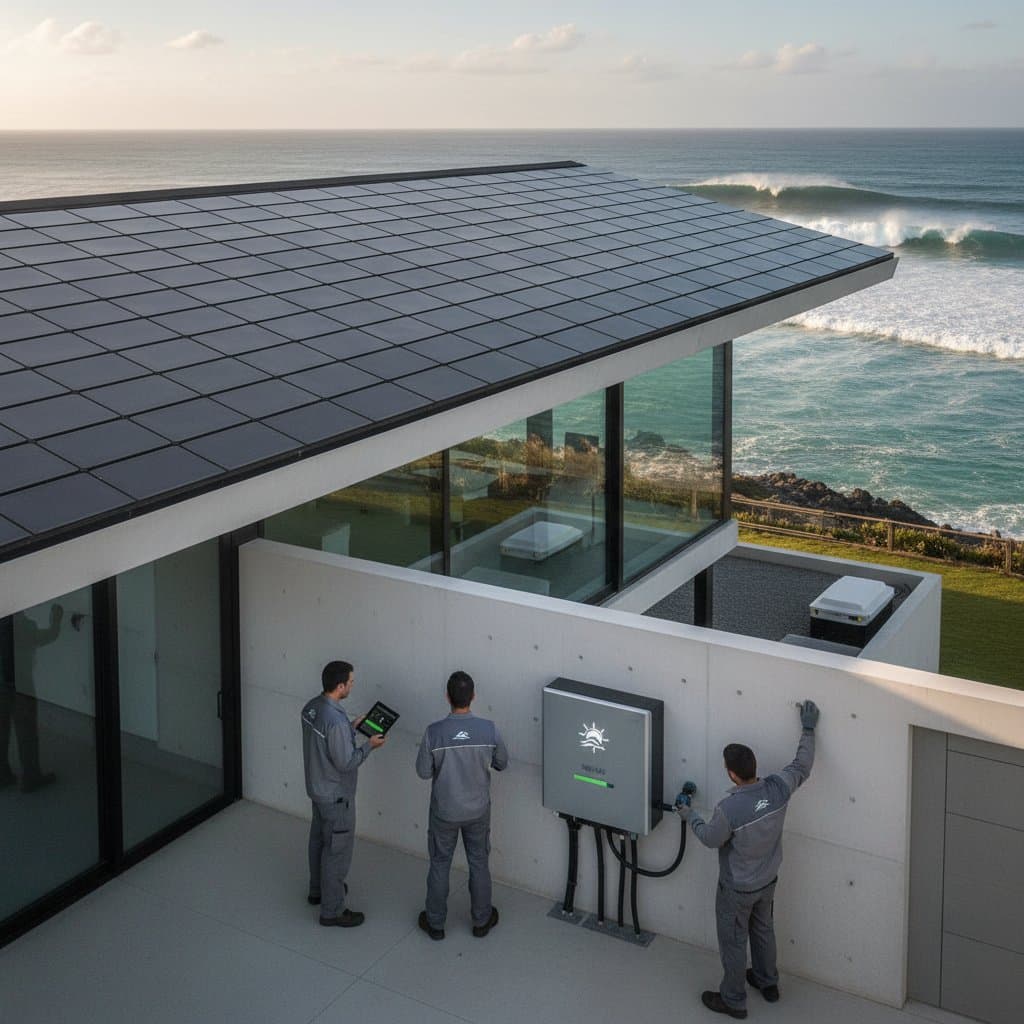
Coastal Homes Reduce Grid Reliance by Up to 85% with Solar Roof Tiles
Imagine a coastal residence illuminated by the sun, its roof shimmering like polished sea glass. Inside, residents enjoy steady comfort without worry over escalating utility costs or impending outages. The key lies in a roof that generates its own power, enabling many coastal properties to decrease dependence on the grid by as much as 85 percent. This approach redefines energy self-sufficiency with elegance and durability.
This guide details the mechanics of solar roof tiles, associated expenses, available varieties, and installation considerations. It also explores cost-saving strategies, advantages tailored to coastal environments, and maintenance practices for optimal performance. Homeowners poised for this transition will find comprehensive guidance to proceed with assurance, secure competitive bids from qualified experts, and optimize financial incentives.
Key takeaway: Solar roof tiles typically range from $35,000 to $75,000 for an average coastal home, potentially cutting grid energy consumption by 80 percent or greater. Integrating battery storage elevates this to 85 percent or beyond. Beyond financial returns, this choice enhances resilience against hurricanes and grid failures.
Cost Factors
Solar roof tiles generally range from $35,000 to $75,000, influenced by roof dimensions, pitch, and household energy demands. For a standard mid-sized coastal property, the average falls around $52,000. This figure encompasses materials, labor, permits, and electrical connections.
Elements Affecting Total Cost
1. Roof Size and Configuration:
Expansive or intricate roofs demand additional tiles and cabling, extending labor hours and material quantities.
2. Tile Technology:
Crystalline silicon options deliver higher efficiency yet command premium prices compared to thin-film alternatives. Greater efficiency translates to more electricity generated per square foot.
3. Labor and Regional Regulations:
Coastal areas enforce rigorous wind and waterproofing requirements, potentially elevating labor expenses by 10 to 15 percent.
4. Battery Storage Integration:
Incorporating a residential battery adds $10,000 to $18,000 initially, yet facilitates the 85 percent independence threshold.
5. Permits and Inspections:
Anticipate $500 to $2,000 for municipal approvals, utility linkages, and compliance checks, varying by locality.
6. Incentives and Rebates:
Federal and state initiatives may cover 20 to 30 percent of expenses. Certain coastal programs provide rebates for storm-resistant solar setups.
Projected Savings Over Time
Annual electricity bill reductions often span $1,500 to $3,000. Across two decades, these accumulate to $40,000 to $60,000. In regions prone to storms, the primary value emerges in uninterrupted power during grid disruptions.
DIY Installation Versus Professional Service
Traditional solar panels might suit a dedicated weekend effort for experienced individuals, but solar tiles present greater complexity. These installations necessitate specialized electrical knowledge, waterproofing proficiency, and exact compliance with codes.
Assessing DIY Viability
Difficulty Level: Advanced
Estimated Duration: 5 to 10 days for complete coverage
Essential Competencies: Electrical wiring, roofing techniques, safety equipment handling, and familiarity with local ordinances
For those without credentials as a licensed electrician and roofer, self-installation poses substantial risks. Errors could result in water infiltration, electrical dangers, or inspection rejections. Such oversights might invalidate manufacturer warranties.
Benefits of Professional Installation
Certified installers manage permits, system design, and performance verification. They guarantee adherence to coastal wind and corrosion specifications. Numerous providers extend warranties, performance assurances, and app-based monitoring.
Solicit bids from vetted solar roofing specialists in your vicinity to evaluate options in materials and coverage terms. A reliable professional assists in selecting integrated tiles or retrofit solutions aligned with your financial and performance objectives.
Coastal-Specific Considerations
Proximity to the sea introduces environmental challenges that impact solar tile longevity and output.
Managing Salt Exposure
Airborne salt accelerates corrosion on metal components and frames. Opt for tiles featuring anodized aluminum or marine-grade protective layers. Inquire about warranties tailored to coastal corrosion resistance.
Ensuring Wind Durability
Storms along the coast produce intense winds. Select tiles certified for at least 130 mph uplift resistance. Robust underlayment and seals mitigate water entry during severe conditions.
Optimizing Roof Pitch and Direction
Pitches between 25 and 40 degrees facilitate water runoff and enhance solar capture. South-facing orientations maximize daily energy yield for coastal homes.
Incorporating Battery Backup
Outages frequently accompany hurricanes and storms. A 10 to 15 kWh battery sustains essentials like lights, appliances, and devices during blackouts.
Insurance and Permitting Implications
Certain policies grant premiums reductions for renewable enhancements with storm-rated features. Verify all local codes and secure necessary approvals prior to commencing work.
Expert Recommendations for Optimal Results
-
Align with Roof Replacement Cycles: If your existing roof is less than ten years old, delay solar tile integration until renewal to avoid redundant labor.
-
Evaluate Efficiency Specifications: Even minor variations in wattage output can substantially affect cumulative savings.
-
Demand Performance Simulations: Professionals can model yearly production using your site's sunlight patterns and roof details.
-
Select Storm-Resistant Components: Employ reinforced anchors and tempered glass for superior impact protection.
-
Utilize System Monitoring Tools: Integrated applications provide real-time generation data and prompt notifications for any anomalies.
Frequently Asked Questions
How much daily energy do solar tiles generate?
A standard setup yields 30 to 40 kilowatt-hours per day for a mid-sized coastal home. Output varies with local sunlight, roof inclination, and tile efficiency.
Are solar tiles hurricane-resistant?
Premium models adhere to hurricane standards, with wind ratings exceeding 130 mph. Expert installation and sealing are crucial to avert dislodgement or breaches.
Do solar tiles alter roof aesthetics?
Integrated variants mimic conventional shingles or slate, maintaining visual harmony while producing power.
Does salt air diminish efficiency long-term?
Degradation remains limited with corrosion-proof materials. Routine cleaning and yearly checks preserve maximum performance.
Is battery storage essential?
It is optional, though highly beneficial for autonomy. Storage enables nighttime or outage usage of surplus energy, boosting self-reliance from roughly 60 percent to 85 percent.
Steps to Implement Solar Tiles
Adopting solar tiles extends beyond mere upgrades; it secures enduring comfort, protection, and eco-friendliness. Envision your property harnessing renewable energy atop an attractive, resilient roofline.
Initiate the process by obtaining several bids, scrutinizing warranty details, and assessing efficiency metrics. Inspect your roof's state and alignment, identify applicable rebates, and incorporate batteries to achieve full independence.