
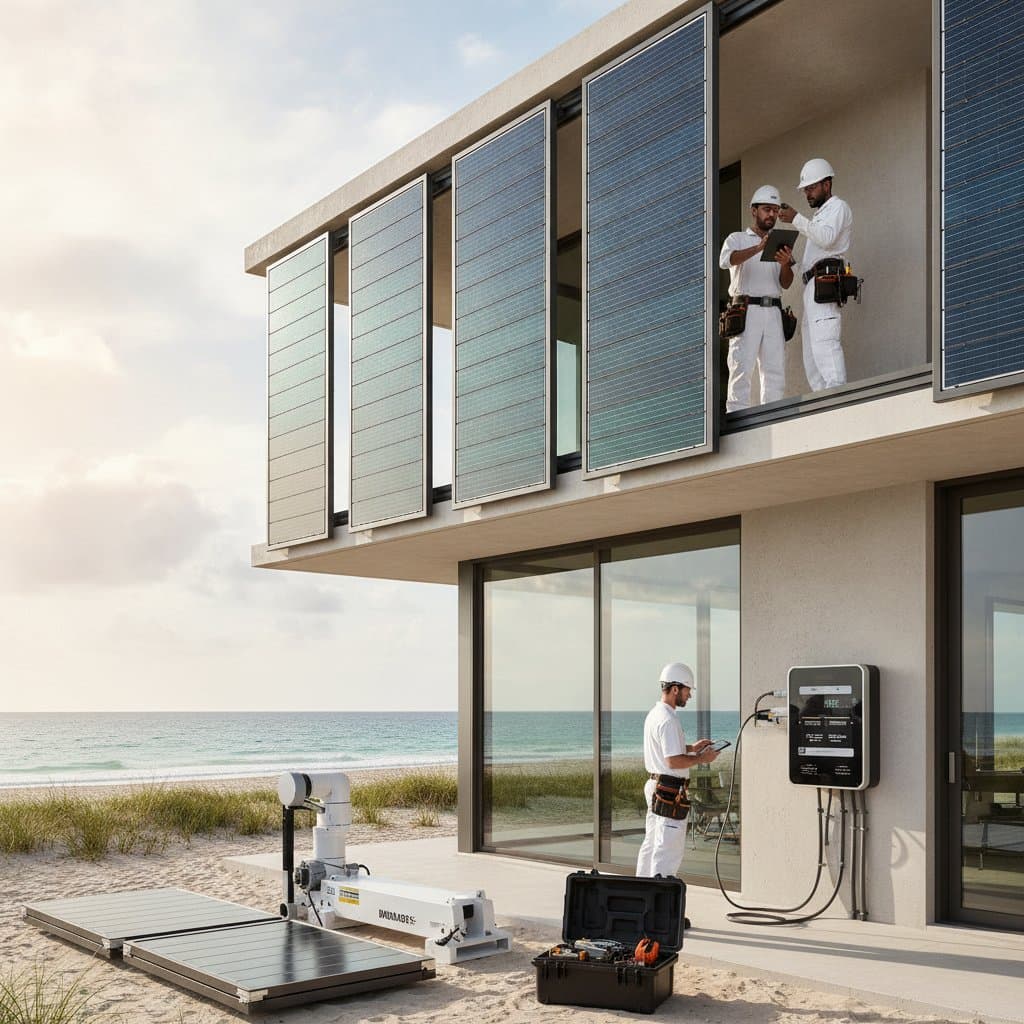
Coastal Homes Gain Efficiency with Solar Storm Shutters
Living by the coast offers unmatched beauty and a relaxing lifestyle. Strong winds, salt air, and intense sunlight create ongoing challenges for property maintenance. Many coastal homeowners seek solutions that protect structures while managing energy expenses. Solar storm shutters address both needs through a single integrated system.
This guide covers how these shutters function, the advantages they offer coastal properties, and key considerations for installation. Readers will find details on energy performance, safety features, and long term value.
Understanding Solar Storm Shutters
Solar storm shutters extend beyond basic window protection. They incorporate photovoltaic cells into reinforced panels that generate electricity while shielding glass from wind and debris. Closed shutters form a barrier during storms. Open shutters capture sunlight for home use.
Dual Functionality Explained
The design unites two capabilities:
- Reinforced aluminum or composite panels resist impact and corrosion.
- Integrated solar cells convert sunlight into electricity that feeds into household circuits.
Owners gain protection and power generation without separate installations.
How They Work
Sunlight strikes the photovoltaic surface and produces direct current. An inverter converts this current for standard household use. Battery storage options allow excess energy to be saved for evening hours or outages. During storms the shutters secure in place yet continue limited generation when light permits.
Why Coastal Homes Benefit the Most
Coastal locations combine high solar exposure with frequent severe weather. This environment favors systems that deliver both shade and resilience.
Energy Efficiency in Warm Climates
South and west facing windows receive extended sunlight. Shutters angled to capture this light reduce air conditioning loads by providing exterior shade. Homeowners note steadier indoor temperatures and lower monthly utility statements throughout the year.
Storm Protection and Property Preservation
High wind events send debris toward windows. These shutters meet regional impact standards while producing renewable power. The combined benefit supports both safety and sustainability goals.
Increased Home Value and Appeal
Properties equipped with renewable features attract buyers who prioritize durability. Solar storm shutters improve exterior appearance and may support eligibility for local rebates or reduced insurance premiums.
Planning Your Installation
Proper preparation ensures reliable performance over time.
Evaluate Your Home’s Exposure
Identify walls with maximum sun access and minimal shade from trees or neighboring structures. A site assessment determines optimal shutter placement for energy yield.
Choose the Right Materials
Select powder coated aluminum or marine grade composites that withstand salt exposure. Panels must carry high wind ratings and sealed edges to prevent moisture intrusion.
Hire a Licensed Contractor
Work with professionals who hold current licenses for both solar and hurricane protection work. Request written estimates, proof of insurance, and references from completed coastal projects.
Understand Maintenance Requirements
Rinse panels with fresh water to remove salt buildup. Inspect tracks and seals quarterly. Arrange an annual professional check of electrical connections and mounting hardware.
Cost and Return on Investment
Initial expenses vary with system size and battery options. Many installations recover costs through reduced electricity bills and available incentives within seven to ten years.
Frequently Asked Questions
What are solar storm shutters made of?
Heavy duty aluminum or composite frames hold sealed photovoltaic cells designed for coastal wind and corrosion conditions.
How much electricity can they generate?
Output depends on panel area, orientation, and local sunlight hours. Typical residential setups offset a measurable share of daily consumption.
Do they work during a power outage?
Battery equipped systems supply stored power to essential circuits when grid service is interrupted.
Are they compatible with existing solar panel systems?
Installers can integrate shutters with roof or ground mounted arrays through shared inverters or separate controllers.
How long do solar storm shutters last?
Quality units maintain structural integrity for twenty five years or more. Photovoltaic performance declines gradually after the initial decade.
Will they require special permits?
Local building departments often require permits. Licensed contractors manage applications and inspections to meet code.
Can they be customized for different home styles?
Manufacturers provide color choices, manual or motorized operation, and smart controls that align with varied architectural designs.
Selecting Your System
Solar storm shutters combine weather resistance with on site power production. Careful material selection and professional installation create lasting efficiency gains and added property resilience.