
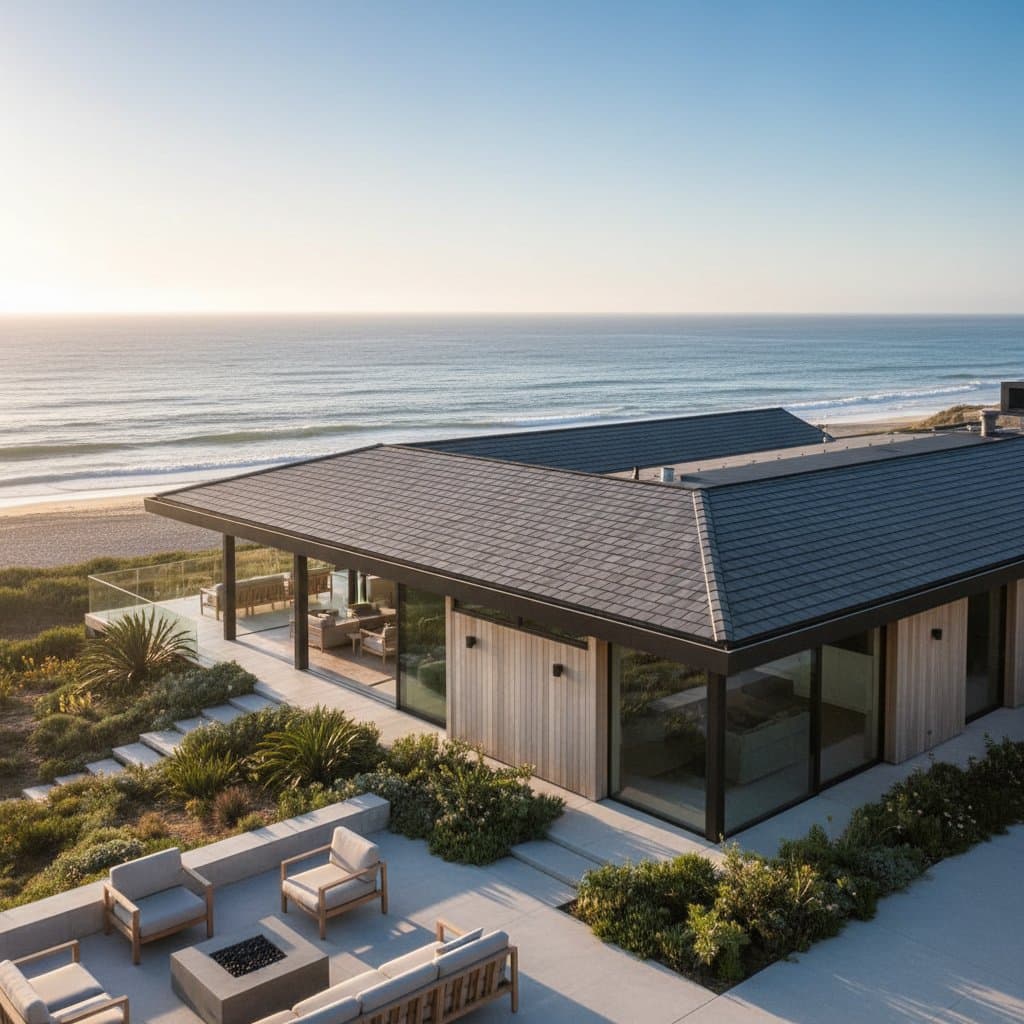
Solar Shingles Offer 6-Year ROI for Coastal Homeowners
Coastal homeowners can recover the cost of solar shingles in approximately six years. These integrated roofing systems generate electricity while protecting against salt air and storms. They also increase property value and reduce monthly utility expenses.
The following sections explain how solar shingles function, why coastal locations accelerate payback, and what steps lead to a successful installation.
Core Advantages
- Average payback period of six years for full roof replacements on coastal properties
- Dual purpose design that serves as both roofing material and power generator
- Resistance to corrosion, high winds, and humidity common near the ocean
- Eligibility for federal tax credits and local rebates that reduce initial outlay
- Higher resale value from documented energy efficiency
- Minimal maintenance requirements over a 25 to 30 year lifespan
Definition and Construction
Solar shingles are photovoltaic units manufactured to match the size and profile of conventional asphalt or composite shingles. They convert sunlight into electricity through embedded cells while forming a watertight roof surface.
Tempered glass and composite layers protect the cells from coastal conditions. Installation replaces the entire roof deck rather than mounting separate panels above existing shingles.
Comparison with Traditional Solar Panels
| Feature | Traditional Panels | Solar Shingles |
|---|---|---|
| Appearance | Mounted above roof plane | Flush with roof surface |
| Durability | Exposed mounting hardware | Integrated weather barrier |
| Installation | Added to existing roof | Complete roof replacement |
| Upfront cost | Lower per watt | Higher, offset by roof savings |
| Visual impact | Noticeable array | Seamless integration |
Coastal homeowners who prioritize appearance often select solar shingles for the clean finish.
Payback Calculation
Payback occurs when cumulative energy savings plus incentives equal the net installation cost. Coastal homes frequently reach this point in six years because of abundant sunlight and elevated electricity rates.
Cost and Timeline Estimates
| Roof Area | Project Cost Range | Expected Payback |
|---|---|---|
| 1,000 sq ft | $15,000 to $22,000 | 7 to 9 years |
| 2,000 sq ft | $25,000 to $35,000 | 6 years |
| 3,000 sq ft | $40,000 to $55,000 | 6 to 8 years |
Obtain multiple contractor bids and confirm current federal and utility incentives before finalizing numbers. Incentives can reduce the effective payback by one year or more.
Coastal Performance Factors
Unobstructed solar exposure and higher cooling loads increase annual energy production. Salt air accelerates corrosion on standard roofing, yet solar shingles incorporate protective coatings that maintain output for decades.
South facing roof planes with moderate pitch deliver the highest yield. Professional site assessments identify shading issues and recommend optimal layouts.
Maintenance Practices
Rinse the surface with fresh water several times each year to remove salt deposits. Trim adjacent trees to prevent shading and debris accumulation. Schedule a system inspection every three years to verify seal integrity and electrical connections.
Warranties typically cover both power output and physical durability, providing long term assurance.
Investment Outcomes
Energy efficient roofs command faster sales and higher prices in coastal markets. Battery storage can be added later to increase grid independence during outages or peak rate periods.
Homeowners who time installation with a scheduled roof replacement avoid duplicate labor costs and realize the full financial benefit sooner.