
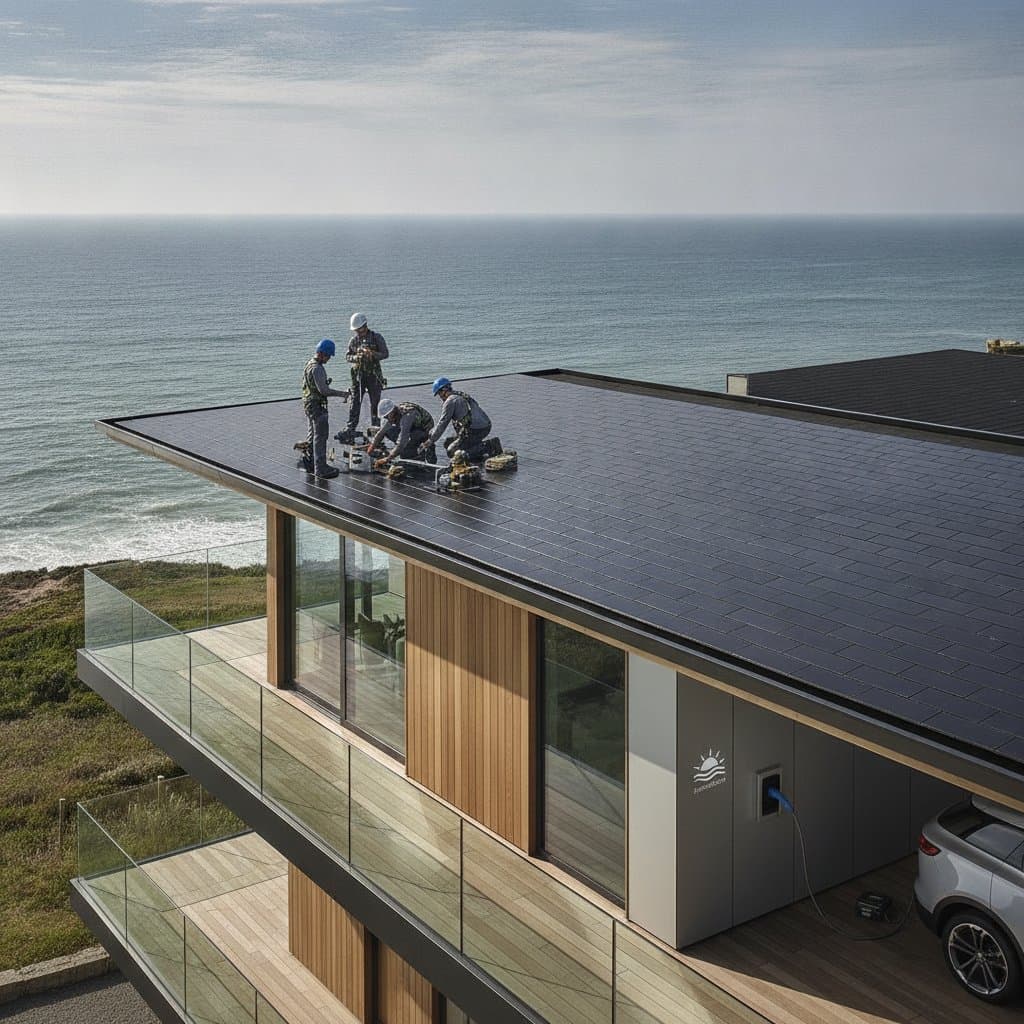
Solar Shingles Deliver Savings for Coastal Homes in 2026
Homeowners along the coast seek roofing solutions that manage energy costs while withstanding harsh marine conditions. Solar shingles integrate photovoltaic cells into standard roofing materials. This approach generates electricity and maintains structural protection.
Defining Solar Shingles
Solar shingles function as both roof covering and power source. Each unit contains photovoltaic cells that convert sunlight into electricity. The design replaces conventional shingles rather than mounting separate panels.
These products match common roofing styles such as asphalt, slate, or clay tile. Integration creates a uniform surface without visible mounting hardware. Coastal properties gain a low profile appearance that suits beach architecture.
Advantages for Coastal Properties
Salt air and high winds accelerate wear on standard roofing and mounted solar arrays. Solar shingles incorporate tempered glass and protective coatings that resist corrosion. Manufacturers test units for sustained performance under gust loads common near shorelines.
Sun exposure remains consistent in coastal zones. The shingles capture this resource to reduce grid dependence. Property owners report improved resilience during storms when systems meet local building codes.
Cost Ranges and Installation Options
Total project costs for a typical coastal residence fall between 20000 and 45000 dollars. Factors include roof size, selected brand, and whether the work coincides with a full roof replacement. Partial installations for smaller homes start near 15000 dollars.
Full roof integrations reach 45000 dollars or more for premium systems. Labor and electrical connections form part of quoted prices. Multiple contractor bids help identify options tested for salt and wind exposure.
Financial Returns and Available Incentives
Monthly electricity expenses often decline by up to 60 percent after installation. Federal tax credits and regional rebates offset initial outlays. Homes equipped with these systems frequently achieve higher resale values.
Energy storage batteries can be added during setup. This addition supports continued operation during grid interruptions. Savings accumulate fastest when installation replaces an aging roof.
Comparison with Traditional Solar Panels
Solar shingles present a seamless surface while traditional panels sit above the roof plane. Shingles demonstrate longer expected service life of 25 to 30 years. Panels typically require additional corrosion resistant hardware in marine environments.
Maintenance for shingles aligns with standard roof inspections. Occasional rinsing removes salt deposits and preserves output. Panels need periodic hardware checks in addition to cleaning.
Steps for Installation and Ongoing Care
A structural assessment precedes any work. Certified contractors then design array layout according to roof orientation and local sunlight patterns. Electrical integration follows roofing work to ensure watertight performance.
Routine inspections focus on seal integrity and debris accumulation. Fresh water rinsing several times each year maintains efficiency. Licensed professionals should perform all service visits.
Addressing Frequent Questions
Solar shingles continue producing power under cloudy skies, although output drops. Installation on older roofs remains possible yet proves most economical during replacement projects. Warranties commonly cover 25 years of performance.
Quality units satisfy coastal wind load requirements. Proper engineering prevents uplift during storms.
Protecting Long Term Property Value
Integrated solar roofing combines energy production with weather protection. Coastal homeowners gain reduced operating costs alongside durable construction. Professional installation and scheduled care sustain these benefits across decades.