
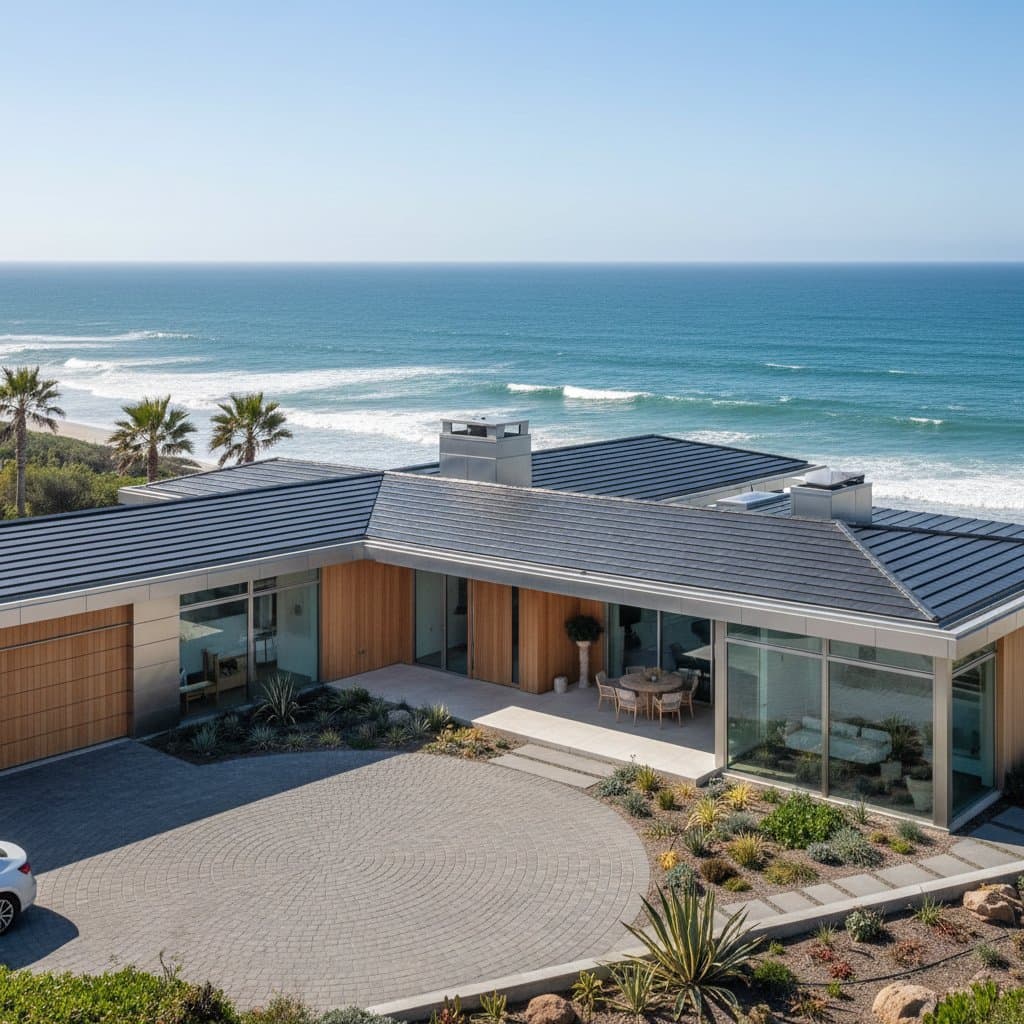
Solar Shingles Integrate Seamlessly with Coastal Home Designs
Picture a coastal residence where the roof generates clean energy without disrupting the serene ocean views. The 2026 models of solar shingles achieve this balance by mimicking traditional roofing materials while harnessing sunlight for electricity production. These innovations suit the architectural nuances of beachfront properties, from modern bungalows to classic seaside cottages.
This comprehensive guide examines the expenses associated with solar shingles, their reliability in marine environments, and their suitability for specific homes. Readers will gain insights into installation approaches, cost-saving measures, and long-term care routines. By the end, individuals can assess if this upgrade aligns with their sustainability goals and budget constraints.
Key Insight: For a typical coastal home, solar shingles installation falls between $20,000 and $50,000. This investment yields lower utility bills and increased resale appeal. Homeowners near shorelines benefit from consulting certified specialists in marine-resistant roofing to navigate unique challenges.
Factors Influencing Solar Shingles Costs
The total expense for solar shingles typically spans $20,000 to $50,000, averaging $35,000 for a standard three-bedroom home with moderate energy needs. Several variables determine the final figure, including roof dimensions, desired power capacity, and selected manufacturer specifications.
Material and Labor Breakdown
Materials alone account for 40 to 60 percent of the budget, depending on the shingle type. High-end options feature advanced photovoltaic cells embedded in durable, weatherproof tiles. Labor charges range from $6 to $10 per watt, encompassing roof integration and electrical connections. In coastal zones, installers often incorporate galvanized fasteners and protective sealants to combat corrosion, which can increase costs by 10 to 15 percent.
Regulatory and Preparatory Expenses
Permitting fees vary by locality, generally adding $500 to $2,000. Coastal regulations may mandate enhanced structural assessments for wind resistance or environmental impact. Roof assessments prior to installation reveal if reinforcements or partial replacements are necessary, potentially saving money by bundling projects.
Incentives and Financing Options
Federal tax credits, such as the Investment Tax Credit, rebate 26 percent of qualified costs through 2026, easing the upfront burden. State programs in sunny regions like California offer additional rebates. Homeowners should calculate payback periods, often 7 to 10 years, based on local electricity rates averaging $0.25 per kilowatt-hour in coastal areas.
Solar shingles demonstrate longevity of 25 to 30 years, with warranties covering 80 percent efficiency retention. Over time, annual savings of $1,500 to $3,000 on energy bills justify the expenditure for most properties.
Weighing DIY Against Professional Installation
Homeowners occasionally explore self-installation to cut expenses, yet this approach demands specialized skills and carries risks.
Assessing DIY Viability
DIY suits only those with proven expertise in electrical systems and roofing techniques. Basic kits include pre-wired shingles and mounting hardware, but improper alignment can reduce output by up to 20 percent. Manufacturers frequently invalidate warranties for non-professional work, leaving owners liable for repairs.
Benefits of Hiring Professionals
Certified installers guarantee adherence to safety standards and optimize system performance. They handle intricate tasks like integrating inverters and securing shingles against gale-force winds common in coastal storms. Projects usually span 3 to 5 days for roofs under 2,000 square feet, with costs offset by precision that prevents future issues.
Selecting the Right Installer for Coastal Conditions
Prioritize contractors with credentials from the North American Board of Certified Energy Practitioners and experience in saline environments. Request portfolios of similar installations and verify insurance coverage. A thorough site evaluation ensures the system withstands humidity levels exceeding 80 percent without degradation.
Professionals also advise on grid-tied versus off-grid setups, tailoring solutions to intermittent power needs during foggy seasons.
Ensuring Longevity Through Proper Maintenance
Solar shingles demand little daily intervention, but proactive care preserves their efficiency in demanding coastal settings.
Routine Cleaning Protocols
Salt accumulation from sea spray can dull photovoltaic surfaces, so quarterly rinses with fresh water and a non-abrasive brush restore optimal absorption. Avoid pressure washers, which risk damaging seals. In high-debris areas, leaf guards prevent blockages that impede airflow and cooling.
Annual System Checks
Inspect electrical components for rust, focusing on junction boxes and conduits designed with marine-grade alloys. Test connections using a multimeter to confirm voltage stability. Software updates for monitoring apps enhance diagnostics, alerting users to anomalies like shading from nearby palms.
Post-Event Evaluations
After hurricanes or heavy rains, survey the roof for dislodged tiles or microcracks. Professional reinspection every five years verifies structural integrity, often covered under extended warranties.
Well-maintained systems sustain 80 to 90 percent efficiency after 20 years, far outpacing conventional panels in aesthetic preservation.
Common Questions About Solar Shingles in Coastal Areas
How effective are solar shingles in overcast coastal conditions?
These shingles perform reliably under indirect light, generating 70 to 80 percent of peak capacity on cloudy days. Advanced thin-film technology captures diffuse rays, ensuring consistent output despite frequent marine layer.
Are solar shingles resilient to salty coastal air?
Yes, with specialized coatings like fluoropolymer films that resist oxidation. Sealed edges prevent moisture ingress, and routine maintenance extends service life beyond 25 years in brackish atmospheres.
What impact do solar shingles have on property appraisals?
Appraisers often add 4 to 7 percent to market value, reflecting energy independence and eco-appeal. In premium coastal markets, this translates to $20,000 to $50,000 in added equity for mid-range homes.
How much energy can solar shingles produce for a coastal household?
A 5-kilowatt system yields 7,000 to 9,000 kilowatt-hours annually, covering 80 percent of average usage. Factors like roof orientation and local insolation rates influence totals.
Steps to Transition Your Coastal Home to Solar Power
Begin by auditing current energy consumption through utility statements to size the system accurately. Contact multiple vetted installers for detailed quotes, emphasizing coastal adaptations. Explore financing via low-interest loans or leases to minimize initial outlays.
Once installed, track performance via integrated apps to refine habits, such as shifting appliance use to peak production hours. This upgrade not only slashes bills but also fortifies your home against rising energy prices and environmental shifts, securing a resilient, stylish future by the sea.