
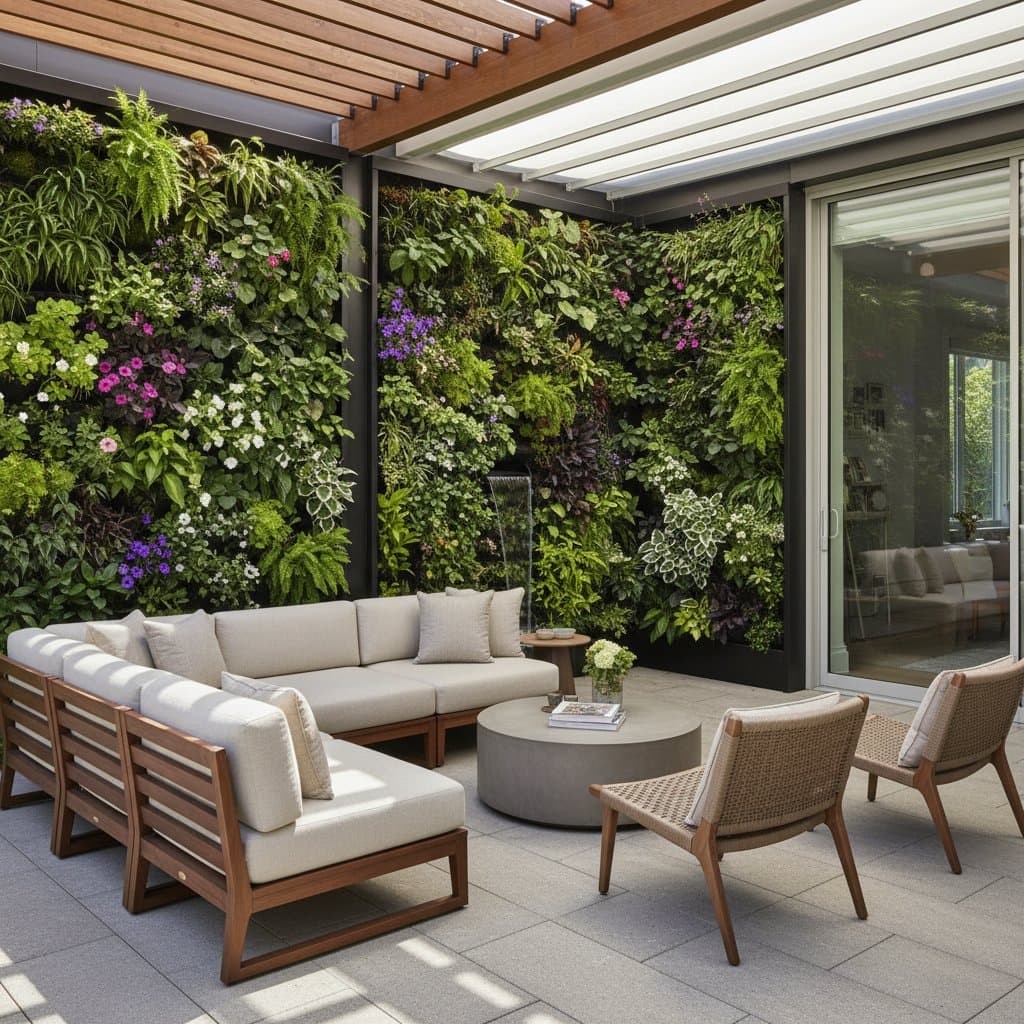
Biophilic Bliss: Living Walls Enhance Outdoor Lounges
Creating a relaxing outdoor lounge that feels both natural and luxurious requires thoughtful integration of greenery. Living walls, also known as vertical gardens, offer an effective solution by covering surfaces with lush plants. These installations add texture, color, and vitality to patios, courtyards, and rooftop spaces while purifying air and increasing property value.
This guide details the mechanics of living walls, their alignment with biophilic design principles, and practical steps for planning, installation, and upkeep in your outdoor area.
Understanding Biophilic Design and Living Walls
Biophilic design emphasizes human connection to nature within constructed spaces. Living walls exemplify this approach by embedding vegetation into vertical structures, transforming blank walls into thriving ecosystems. Rather than scattering potted plants across a patio, these features create immersive green backdrops that foster tranquility.
How Living Walls Work
Living walls consist of a sturdy frame, a waterproof liner, and modular panels or pockets filled with soil or hydroponic media. An automated irrigation system delivers water and nutrients directly to plant roots, ensuring consistent hydration. Installations suit fences, building exteriors, or standalone screens, effectively delineating lounge areas without obstructing views.
Benefits of Living Walls in Outdoor Lounges
Living walls deliver aesthetic and functional advantages that elevate outdoor living:
- They filter airborne pollutants and generate oxygen, promoting cleaner breathing spaces.
- Plants provide thermal insulation, moderating temperatures and dampening external noise.
- Foliage offers subtle screening for privacy, surpassing opaque barriers in natural appeal.
- Unique greenery boosts curb appeal, potentially raising home resale prices by 5 to 15 percent.
- Surrounding vegetation lowers cortisol levels, supporting mental well-being during relaxation.
In temperate coastal regions, these walls flourish across seasons, casting gentle shade on sunny afternoons.
Planning Your Living Wall Project
Effective planning aligns aesthetic vision with practical considerations like site conditions and maintenance needs. Evaluate structural capacity early to prevent complications. Focus on plant compatibility and water efficiency for enduring results.
Choose the Right Location
Assess sunlight exposure to match plant requirements; south- or west-facing walls receive full sun, ideal for sun-loving species. Shaded spots benefit from shade-tolerant options such as ferns or ivy. Verify that the surface withstands the weight of saturated soil, typically 20 to 50 pounds per square foot.
Select Suitable Plant Species
Curate plants based on growth patterns, water needs, and visual contrast to achieve dynamic layering. Opt for drought-resistant succulents in arid settings or aromatic herbs like rosemary for edible elements. Tropical varieties such as pothos provide dense coverage, while climbers like jasmine add blooming accents.
Incorporate a mix of perennials for structure and annuals for color shifts, maintaining vibrancy through changing weather.
Plan the Irrigation and Drainage
Design an irrigation setup with timers and emitters to mimic rainfall patterns, using 1 to 2 gallons per square foot weekly. Integrate gravel layers or channels at the base to channel excess water away, safeguarding foundations. Engage a certified landscaper for complex hydroponic configurations to optimize efficiency.
Installing and Maintaining a Living Wall
While basic setups allow for homeowner involvement, professional oversight ensures safety and longevity for expansive designs. Gather tools like levels, drills, and sealants before starting. Test all components post-installation to confirm reliability.
Step-by-Step Installation Overview
-
Secure the metal or PVC frame to the chosen surface using anchors rated for outdoor loads.
-
Apply a geotextile membrane and waterproof sealant to shield underlying materials from dampness.
-
Mount felt pockets or rigid panels, spacing them to allow root expansion without overlap.
-
Plant seedlings or established starts, firming media around roots and spacing for airflow.
-
Hook up tubing to a reservoir or mains supply, then run a full cycle to detect leaks.
Maintenance involves weekly inspections for wilting or clogs. Prune selectively to encourage bushiness, apply balanced fertilizer quarterly, and refresh soil annually. Promptly address pests with organic sprays to sustain ecosystem balance.
Frequently Asked Questions
What is the average cost of a living wall installation?
Basic kits for 10 square feet range from $200 to $500, covering frames and simple irrigation. Custom projects spanning 50 square feet or more often total $2,000 to $10,000, factoring in labor, premium plants, and smart controls.
How often should a living wall be watered?
Automated systems typically activate two to four times weekly, adjusting for rainfall and evaporation. Hand-water during establishment phases, aiming for moist but not soggy conditions. Sensors can automate adjustments based on real-time humidity.
Can living walls be installed on any surface?
Sturdy, non-porous bases like brick or treated concrete work best, provided they support vertical loads. Avoid untreated wood or fragile drywall; reinforce as needed with brackets. Pre-treat surfaces with sealants for longevity.
How much maintenance does a living wall require?
Expect 1 to 2 hours monthly for pruning, feeding, and system flushes. Automated features minimize effort, but seasonal deep cleans prevent buildup. Healthy walls demand less intervention over time.
Do living walls attract insects?
They may draw pollinators like bees, enhancing biodiversity, but proper plant diversity and spacing deter pests. Companion planting with repellents such as lavender reduces issues. Monitor and use neem oil for outbreaks.
Are living walls suitable for small patios?
Compact modular panels fit spaces as small as 4 by 6 feet, creating focal points without overwhelming. Freestanding options allow flexibility in tight layouts. Start small to test maintenance before scaling up.
Integrating Living Walls into Daily Outdoor Life
Once established, living walls invite seamless incorporation into routines, from morning coffee amid foliage to evening gatherings under starlit greens. They not only beautify but also sustain microclimates that extend usable seasons. Embrace this green upgrade to cultivate a resilient, inviting patio haven that evolves with your lifestyle.