
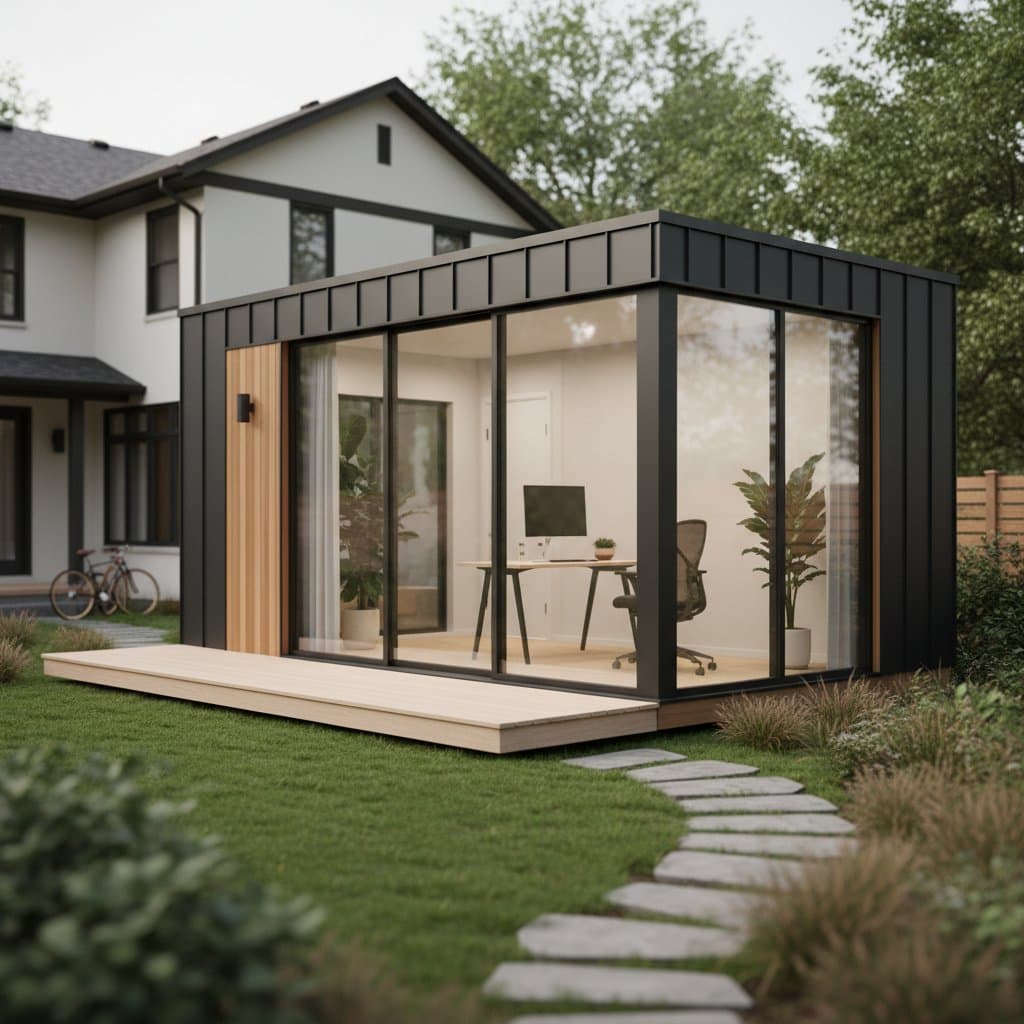
- Rapid assembly: Professional teams complete installation in as little as two to three days, minimizing site disturbance.
- Tailored configurations: Select from various sizes, materials, and layouts to complement existing architecture.
- Budget-friendly approach: Expect costs 30 to 50 percent lower than traditional builds due to reduced labor and no permitting fees.
- Versatile applications: Adapt the space for professional use, recreation, or accommodation needs.
Extending indoor living into the outdoors creates opportunities for dedicated zones that enrich daily routines. Whether establishing a secluded workspace or a welcoming retreat, these rooms integrate seamlessly with natural surroundings.
Why 300 Square Feet Represents an Ideal Size
Building codes in numerous areas permit detached accessory structures up to 300 square feet without requiring comprehensive permits, provided they meet height, setback, and utility restrictions. This threshold balances substantial utility with regulatory simplicity, allowing meaningful additions without oversight complications.
Homeowners appreciate this size for its capacity to accommodate essential features while remaining manageable. For instance, the footprint supports comfortable furnishings and circulation paths, fostering a sense of openness.
Practical Applications for 300 Square Feet
Modular rooms adapt to diverse lifestyles, transforming underutilized yard areas into productive or restorative environments.
- Dedicated home office: Equip with built-in desks, ample lighting, and soundproofing to support focused remote work amid serene views.
- Overnight guest accommodations: Incorporate fold-down bedding, compact storage, and ventilation systems for comfortable stays.
- Creative or wellness studio: Maximize natural illumination through windows to encourage artistic pursuits or mindfulness practices.
- Entertainment hub: Install entertainment systems, seating arrangements, and ambient features like built-in shelving for gatherings.
- Hobby workshop: Organize tools on wall-mounted racks and include workbenches for hands-on projects separate from household areas.
Before proceeding, consult local zoning authorities to confirm exemptions. Modifications such as plumbing installations or fixed electrical connections may trigger permit requirements, altering the project's scope.
Design Flexibility to Suit Any Aesthetic
The modular format excels in offering extensive personalization, ensuring the structure harmonizes with individual preferences and property characteristics. Options range from sleek, modern enclosures with expansive glazing to traditional designs featuring timber accents that merge with garden elements.
This adaptability extends to structural and functional elements, allowing precise alignment with homeowner visions.
Standout Design Elements
Incorporate features that enhance usability and longevity.
- Expansive sliding panels: Facilitate fluid transitions between interior and exterior spaces, promoting ventilation and visual connectivity.
- Thermal insulation layers: Maintain consistent temperatures across seasons, supporting all-weather occupancy.
- Attached outdoor platforms: Create continuous flow from the room to surrounding patios or lawns.
- Sustainable building materials: Utilize reclaimed timber and non-toxic coatings to minimize environmental impact.
- Integrated automation: Connect to systems for automated shading, temperature regulation, and security monitoring.
Manufacturers provide guidance on selecting interior elements like resilient flooring and adjustable lighting, resulting in a cohesive extension of the primary residence.
Photo: A contemporary modular room featuring panoramic windows and an inviting interior seating area.
Ensuring Long-Term Performance
Modular rooms demand straightforward upkeep to preserve their condition and functionality. Regular surface cleaning prevents buildup, while protective sealants shield exteriors from weather elements such as rain and sunlight.
For units with mechanical components, professional servicing once yearly ensures reliability. Address any seals or hinges promptly to avoid minor issues escalating.
Surrounding the structure with thoughtful landscaping integrates it into the landscape. Plant low-maintenance species, install permeable walkways, or add subtle illumination to enhance accessibility and appeal.
Steps to Implement Your Expansion
Achieve a seamless addition by following a structured approach. Begin with a site assessment to verify suitability, then select a reputable provider offering compliant models. Finalize designs and schedule delivery for efficient realization.
Soon, utilize your new 300-square-foot extension for productive endeavors or leisurely pursuits. This method delivers enduring enhancements in space, convenience, and property worth with minimal complexity.