
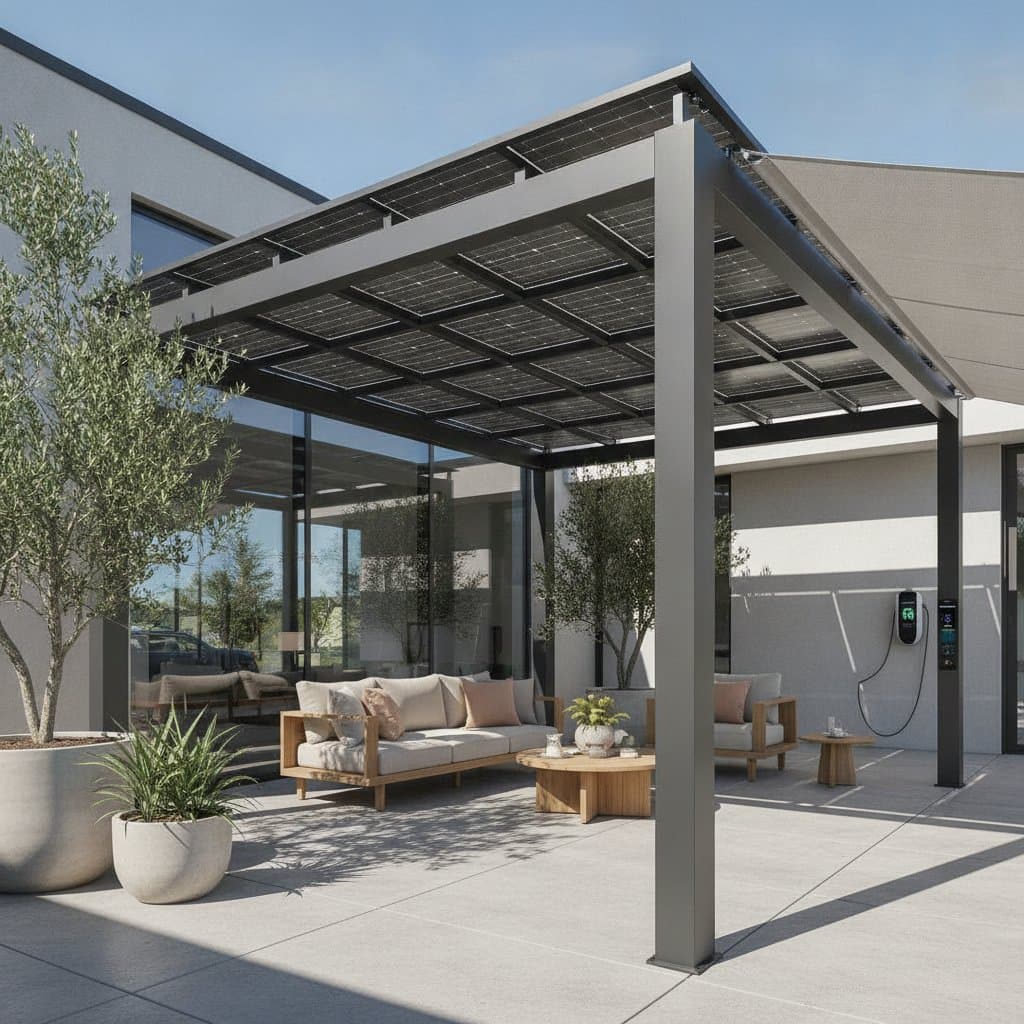
9 Smart Ways to Enjoy Shade While Generating Solar Power on Your Patio
Imagine relaxing on your patio under cool shade while your home produces clean energy. This outcome is achievable with modern solar pergolas and energy generating outdoor structures. Many homeowners seek more shade for comfort. They also want to reduce electricity costs and live sustainably.
Adding solar features to shaded patio designs combines comfort with long term savings. You can protect outdoor furniture, lower energy bills, and enjoy a stylish space. Whether upgrading an existing patio or planning a new one, solar shade structures open creative possibilities.
The following ideas explain how to design, install, and maintain patio shade systems that generate renewable power. These tips address materials, lighting integration, and smart home controls.
Functional Solar Structures
1. Install a Solar Pergola for Dual Benefits
A solar pergola combines the beauty of a wood or metal frame with solar panels mounted on top. It provides comfortable shade while collecting sunlight to generate electricity. Many designs allow partial sunlight to filter through for a dappled effect.
To build one, select a sturdy material such as aluminum or cedar. Position the pergola where sunlight is strongest during the day. Hire a licensed solar installer to integrate panels safely.
Opt for adjustable louvers beneath the panels to control light entry.
2. Convert an Existing Patio Cover
If a patio cover already exists, retrofit it with lightweight solar panels. Solar professionals can evaluate whether the structure handles additional weight. This option often costs less than building a new system.
Check for structural soundness first. Use flexible solar sheets if the roof has a unique shape. Add wiring that connects directly to the home energy system.
This approach maintains patio comfort while converting sunlight into energy.
3. Try a Solar Awning for Compact Spaces
A solar awning suits smaller patios or balconies. These units mount above doors or windows and extend outward for shade. The integrated panels collect energy while keeping the patio cooler.
Solar awnings work well for budget friendly solutions, direct sunlight protection, and supplemental energy for small appliances. Installation difficulty ranges from easy to intermediate based on wall material.
Design and Style Ideas
4. Mix Solar Panels with Climbing Plants
Combine solar panels with climbing vines such as jasmine, bougainvillea, or ivy. The plants soften panel appearance while adding natural insulation. The mix of leafy shade and solar energy creates an eco friendly retreat.
Keep vines trimmed to avoid excessive panel shading. A balanced approach improves both aesthetics and performance.
5. Match Your Home Architecture
Solar pergolas appear in sleek modern aluminum frames and rustic wood designs. Matching the patio structure to home architecture maintains cohesion. Choose finishes that complement exterior paint, roof color, or landscape elements.
For coastal homes, select powder coated metals that resist corrosion.
6. Add Built in Lighting and Fans
Solar generated electricity can power integrated LED lights, ceiling fans, or a small outdoor refrigerator. This feature creates an inviting nighttime space without raising energy bills.
Popular options include dimmable string lighting, motion sensor pathway lights, and remote controlled ceiling fans. Install a small battery backup system to store extra energy for evening use.
Efficiency and Maintenance Tips
7. Keep Panels Clean for Maximum Output
Dust, pollen, and bird droppings block sunlight from panels. Regular cleaning maintains efficiency. Rinse panels with a gentle water spray and mild soap. Avoid abrasive tools that scratch surfaces.
Check panels every few weeks in areas near trees or the coast. Clean panels produce more power and last longer.
8. Monitor Energy Production
Many solar systems include monitoring apps that display daily energy output. Tracking performance identifies issues early and reveals savings. A drop in output may indicate dirt buildup or new plant shading.
Schedule annual inspections from the solar provider to verify secure connections.
9. Blend Solar Power with Battery Storage
A battery system stores excess energy for later use. Stored energy supports lights and devices during cloudy days or nighttime gatherings without grid reliance. It also offers backup during power interruptions.
Compact battery units increase patio self sufficiency even at modest sizes.
Extra Tips for Planning and Comfort
Check local permits before installing solar structures. Some cities require approval for rooftop or patio systems. Orient panels south facing for maximum output in many regions. Add fabrics, cushions, or outdoor curtains to improve the shaded seating area. Ensure rainwater drains away from electrical components and foundations.
Planning Your Next Steps
A shaded patio that produces clean energy delivers comfort along with sustainable value. Evaluate available space and select a structure that fits the lifestyle. Options range from a full solar pergola to a compact awning or retrofitted cover. Each choice provides lasting returns on the investment.