
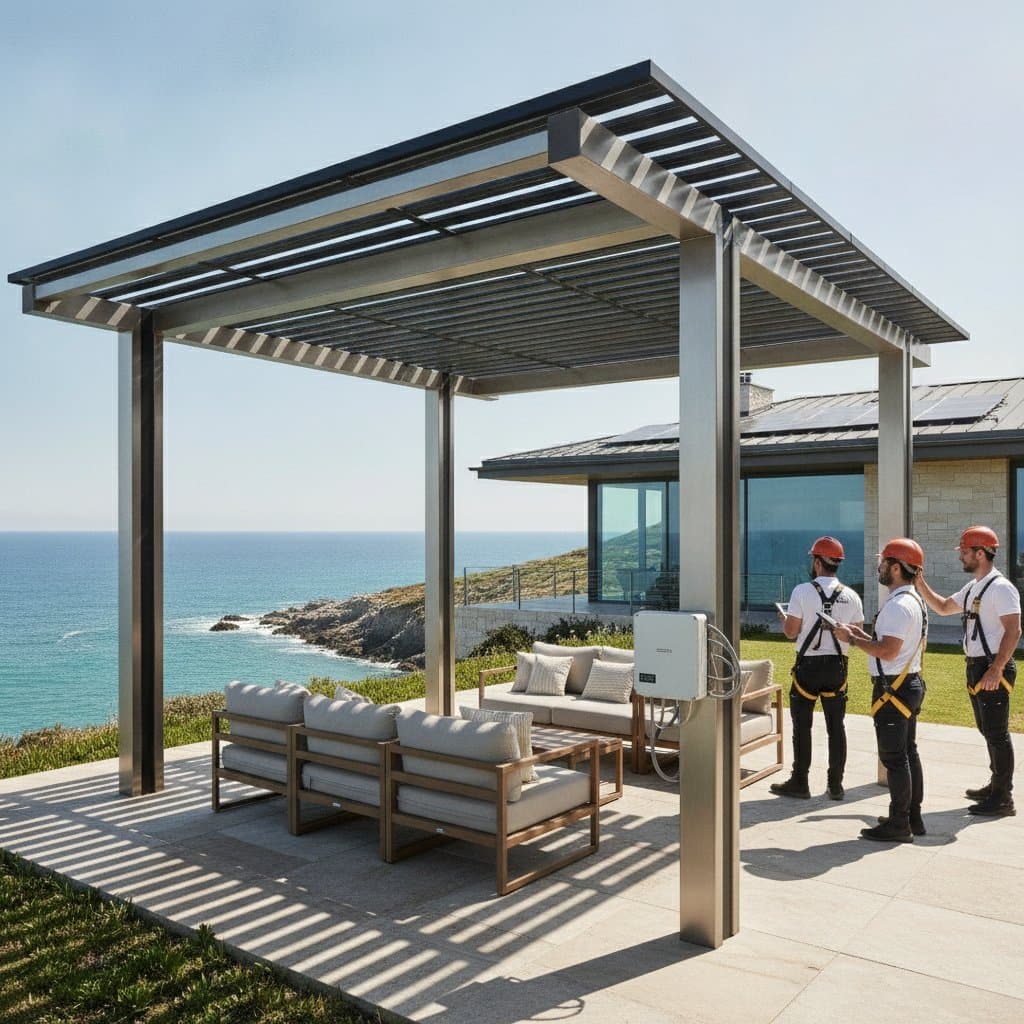
Solar Pergolas Deliver Shade and Power to Coastal Homes
Coastal homeowners love outdoor living. Intense sunlight and high energy demands of seaside properties can make comfort and sustainability a challenge. Solar pergolas offer a solution by providing cool shade while generating clean, renewable power for your home. These smart outdoor structures combine beauty, function, and efficiency.
This guide explains how solar pergolas work. It covers their benefits, installation steps, and key considerations before adding one to your property. You will understand how to transform your patio or backyard into a shaded, energy-producing retreat.
What Is a Solar Pergola?
A solar pergola is a shaded outdoor structure outfitted with solar panels on its roof. It functions as both an architectural feature and a mini solar power system. Instead of placing panels directly on your roof, this design integrates them into a free-standing or attached pergola. The panels collect sunlight, convert it into electricity, and feed it into your home electrical system or a battery storage setup.
Coastal climates offer plentiful sunlight. This dual-purpose design delivers shade for outdoor comfort and produces enough power to offset part of household energy consumption.
Why Solar Pergolas Suit Coastal Homes
Coastal environments bring unique challenges such as intense sun, salty air, and fluctuating temperatures. A solar pergola handles these conditions while improving home value and livability.
Protection and Comfort
A solar pergola provides reliable shade. It makes patios, decks, and poolside areas more comfortable. The panels act like a solid roof yet still allow airflow. This reduces temperature buildup and protects furniture from harmful UV rays.
Energy Independence
Homes along the coast often face high cooling costs. Producing your own solar energy reduces dependence on the grid and lowers monthly bills. Actual savings vary by region and system size. Many homeowners see significant reductions in electricity costs over time.
Sustainability and Resilience
Generating clean energy reduces your carbon footprint. Solar pergolas also support energy resilience in areas prone to outages. Connection to a battery backup system allows power for essential devices during blackouts.
Architectural Appeal
Modern solar pergolas come in a range of styles and finishes. Aluminum or composite frames resist salt corrosion. Wood-look finishes maintain a natural aesthetic. This blend of design and technology enhances curb appeal and complements coastal home architecture.
Planning Your Solar Pergola Project
Installing a solar pergola requires thoughtful planning. Each decision from structure design to electrical integration affects performance, cost, and long-term satisfaction.
Step 1: Determine Your Energy Goals
Start by estimating household electricity usage. If solar panels already exist, decide whether the pergola will supplement or replace them. Consider specific goals such as powering outdoor lighting, offsetting full-home usage, or charging an electric vehicle.
Step 2: Evaluate Your Site
A qualified solar installer assesses sunlight exposure, orientation, and potential shading from nearby trees or structures. Coastal homes usually benefit from south-facing placement with minimal obstructions. Check soil stability and wind exposure before finalizing location and anchoring plans.
Step 3: Set a Budget
Solar pergolas vary widely in cost. Smaller systems might start around the price of a luxury patio cover. Larger, fully integrated systems cost significantly more. Prices depend on materials, system capacity, and installation complexity. Budget for permits, electrical work, and potential upgrades to the main service panel.
Actual costs vary based on location, materials, and project scope. Request multiple quotes and confirm local incentives before making a decision.
Step 4: Choose Materials and Style
Select durable, weather-resistant materials that withstand coastal conditions. Common options include powder-coated aluminum for lightweight rust resistance, steel frames with protective coatings for strength, and composite or treated wood for a natural look. The pergola can feature open beams, slatted panels, or fully covered roofing depending on desired shade and weather protection.
Step 5: Work With Experienced Professionals
Solar pergola installation combines structural engineering and electrical expertise. Choose contractors with proven experience in both solar energy systems and outdoor construction. Verify licenses and insurance for both solar and general contracting. Request references from past clients and detailed bids that outline materials, labor, timeline, and warranty terms.
Key Components of a Solar Pergola System
Understanding the main parts helps inform decisions about design and performance.
Solar Panels
High-efficiency photovoltaic panels convert sunlight into electricity. Select panels rated for coastal environments with corrosion-resistant hardware and sealed edges.
Inverter
This device converts direct current from solar panels into alternating current used by household appliances. Modern systems often use microinverters mounted beneath each panel for improved performance and easier troubleshooting.
Mounting and Wiring
Proper sealing and corrosion protection remain critical near the ocean. Stainless steel fasteners, marine-grade wiring, and UV-protected conduit ensure long-term reliability.
Battery Storage
Adding a solar battery stores excess energy for use at night or during outages. This upgrade increases independence and stability, especially in regions with variable grid reliability.
Maintenance Tips for Longevity
A solar pergola requires minimal upkeep but benefits from routine care.
- Clean panels regularly with mild soap and water to remove salt and debris.
- Inspect connections and fasteners at least twice a year for corrosion or wear.
- Trim nearby vegetation to prevent shading.
- Schedule professional inspections every few years to ensure peak system efficiency.
Proper maintenance keeps the structure attractive and ensures consistent energy generation over time.
Frequently Asked Questions
How much energy can a solar pergola produce?
Energy output depends on panel size, orientation, and sunlight exposure. A medium-sized pergola can generate enough electricity to power outdoor lighting, small appliances, or offset a large portion of household usage.
Can I add a solar pergola if I already have rooftop solar panels?
Yes. A solar pergola complements an existing system. It provides additional generation capacity while expanding shaded living space.
Are solar pergolas suitable for humid or salty environments?
Coastal-rated solar panels and corrosion-resistant materials make these systems ideal for seaside conditions. Marine-grade components ensure durability.
Do I need a building permit for a solar pergola?
Most jurisdictions require permits for both the structure and electrical components. The installer handles this process and ensures compliance with local codes and homeowner association rules.
How long does installation take?
The timeline varies based on design complexity, permitting, and weather conditions. Smaller projects may take a few days. Larger custom builds can take several weeks.
Can a solar pergola increase home value?
Many buyers view solar systems as desirable upgrades. The combination of energy savings and outdoor living space enhances resale appeal. Actual increase depends on market conditions.
What happens on cloudy days?
Solar panels still generate power under indirect sunlight, though at reduced output. Battery storage supplies backup energy during cloudy periods or at night.
Maximizing Long-Term Value
Once installed, a solar pergola quickly becomes a favorite gathering spot. Enjoy shaded afternoons, ambient lighting, and the satisfaction of producing clean energy. These structures improve outdoor comfort and contribute to sustainability along the coast.
Plan carefully. Choose the right materials. Partner with skilled professionals. Your solar pergola serves as both a beautiful feature and a smart energy solution for years to come. This combination of style and performance makes coastal living more comfortable, efficient, and environmentally responsible.