
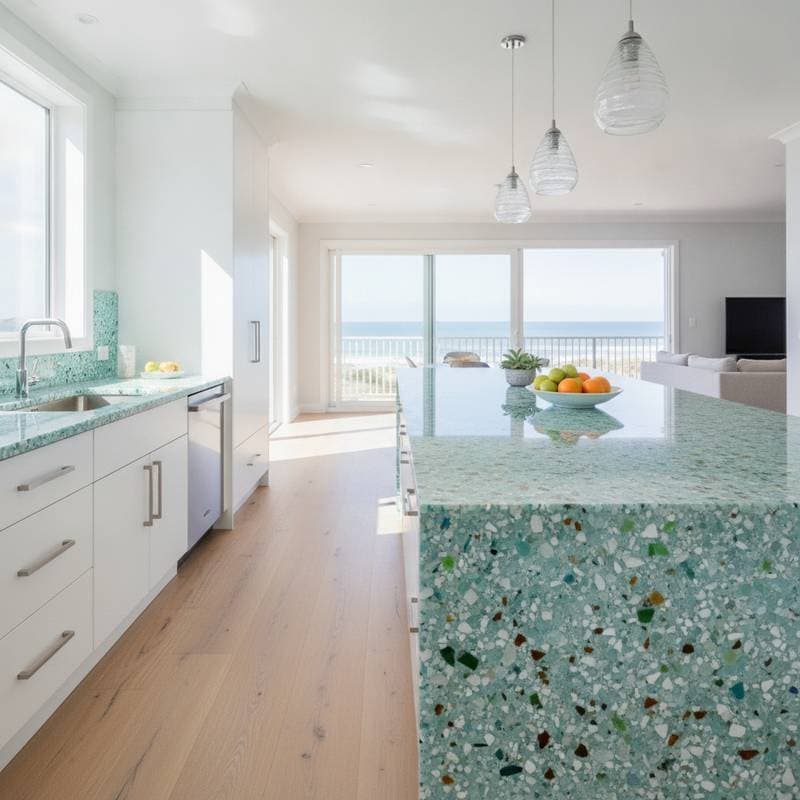
Recycled Glass Countertops for Coastal Kitchens
Recycled glass countertops transform kitchens into bright and sustainable spaces. These surfaces combine post consumer glass with a binder to create durable work areas. Homeowners in coastal regions value the way the material captures light and echoes ocean tones.
The installed cost typically ranges from 60 to 120 dollars per square foot. A mid sized kitchen project therefore falls between 3000 and 7500 dollars. Price varies with material thickness, edge profile, and local labor rates.
Reasons Homeowners Select This Material
Recycled glass counters are formed from crushed bottles and windows set in resin or concrete. The finished surface resists heat and scratches once sealed. Coastal residents appreciate the reflective quality that brightens rooms filled with natural light.
Practical Advantages
- Diverts waste glass from landfills during production.
- Produces unique patterns because each slab contains different glass fragments.
- Requires only mild soap and water for routine cleaning.
- Offers polished or matte finishes to suit different design preferences.
Price Comparison with Common Alternatives
Recycled glass sits in the same cost bracket as quartz yet earns a higher sustainability rating.
| Countertop Material | Cost per Square Foot | Maintenance | Eco Rating | Visual Impact |
|---|---|---|---|---|
| Laminate | 20 to 40 | Low | Moderate | Moderate |
| Granite | 50 to 100 | Medium | Low | High |
| Quartz | 60 to 120 | Low | Moderate | High |
| Recycled Glass | 60 to 120 | Low | High | Very High |
The material reflects sunlight effectively, which helps kitchens feel larger and more open.
Variables That Affect Final Cost
Binder choice influences both weight and stain resistance. Resin versions are lighter and need less sealing. Concrete versions provide a textured feel but require annual resealing in humid climates.
Custom color blends and complex edge details raise labor expenses. Larger islands or sink cutouts also increase installation time. Homeowners should request itemized quotes that list each of these factors separately.
Design Approaches for Coastal Settings
A beach glass blend uses blue and green fragments to suggest shallow water. A neutral palette combines clear and white glass in a pale resin base for a minimalist appearance. Deep cobalt mixes create focal points on islands or peninsulas.
Pair the countertop with light cabinetry and brushed nickel hardware to maintain an airy atmosphere. Stainless appliances complete the clean coastal look.
Routine Care Guidelines
Clean surfaces daily with a soft cloth and pH neutral soap. Avoid abrasive pads that can scratch the finish. Concrete based tops benefit from resealing once or twice each year to block moisture.
Use trivets under hot cookware to protect the surface. Minor chips can be repaired with color matched epoxy applied by a professional.
Common Questions Answered
How long do these countertops last? Proper installation and sealing allow decades of service.
Do they resist stains? Resin bonded slabs perform well. Concrete slabs need consistent sealing.
Are they suitable for outdoor kitchens? They perform best indoors where temperature swings remain moderate.
Selecting recycled glass counters supports waste reduction while delivering a distinctive surface that suits coastal living.