
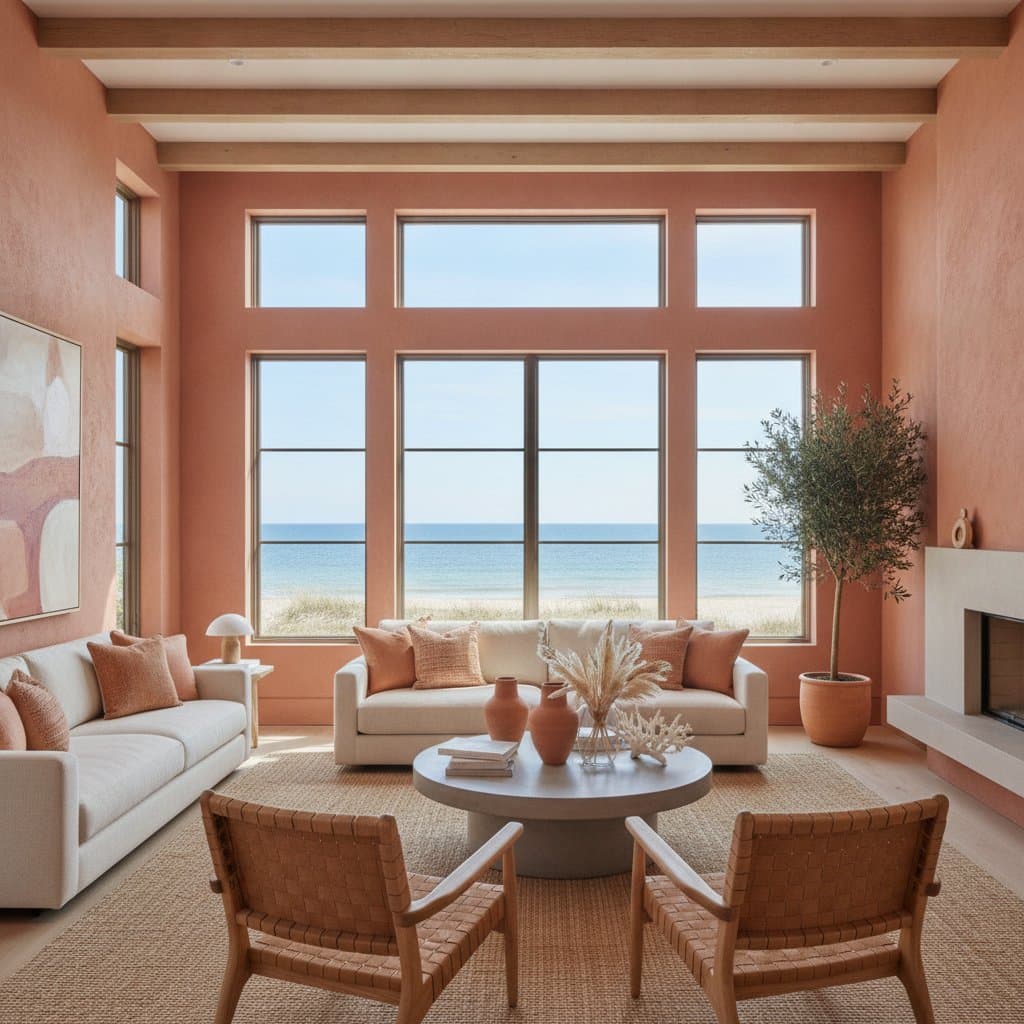
Coastal Homes Shift to Coral and Terracotta Hues
Coastal living has long featured soft neutrals, breezy whites, and ocean blues. Homeowners now favor warmer directions. Coral and terracotta hues bring the warmth of sunbaked cliffs and tropical sunsets to seaside architecture. This change reflects a desire for comfort, authenticity, and an organic connection to nature.
These tones redefine a space through more than a color swap. They support a design approach centered on warmth, sustainability, and timeless belonging.
Why Coral and Terracotta Define the Updated Coastal Style
Cool coastal palettes once dominated seaside design. Homeowners now select earthy warmth to create grounded yet luminous rooms. Coral and terracotta achieve this balance.
Coral adds energy, optimism, and playfulness. Terracotta, sourced from natural clay, supplies depth and rustic sophistication. The combination feels both modern and nostalgic. These tones work with coastal light and pair with driftwood, rattan, and limestone textures.
Architects and designers note that coral and terracotta walls or accents suit seaside settings. Their warm undertones offset the cool blues and greens of the ocean and produce a harmonious contrast.
Average Cost of a Coastal Color Refresh
A full exterior repaint for a coastal home ranges from 4500 dollars to 12000 dollars. The price depends on size, materials, and accessibility. Interior repainting averages 2 dollars to 6 dollars per square foot. High end finishes or custom blends can reach 8 dollars per square foot.
The table below shows typical painting costs for a coastal home.
| Project Area | Typical Cost Range | Average Cost |
|---|---|---|
| Exterior repaint | 4500 - 12000 dollars | 7800 dollars |
| Interior repaint | 2 - 6 dollars per sq. ft. | 4 dollars per sq. ft. |
| Accent walls | 350 - 800 dollars per wall | 550 dollars |
| Stucco refinishing | 5000 - 14000 dollars | 8500 dollars |
These figures cover materials, labor, and minor surface preparation. Extensive repair, stripping, or texture upgrades may raise the total.
Cost by Material and Finish Type
Finish and material choices affect both appearance and longevity when coral or terracotta tones are selected. Coastal conditions demand careful product selection because salt air, humidity, and UV exposure accelerate fading.
| Finish Type | Material Example | Cost per Sq. Ft. | Durability Rating | Maintenance Level |
|---|---|---|---|---|
| Matte | Acrylic latex | 2.50 - 4 dollars | Moderate | Low |
| Satin | Hybrid enamel | 3 - 5 dollars | High | Low |
| Textured | Limewash or mineral paint | 4 - 6 dollars | Very High | Moderate |
| Stucco tint | Integral color | 6 - 8 dollars | Excellent | Very Low |
Mineral based finishes and limewash coatings suit terracotta tones because they produce a soft, chalky texture that ages gracefully. High quality acrylic latex preserves vibrant coral shades under strong sunlight.
Labor Costs and Project Expectations
Professional painters charge 45 dollars to 80 dollars per hour for coastal projects. Labor represents 60 to 70 percent of the total budget. Costs rise when scaffolding or weatherproof coatings become necessary.
Labor covers surface preparation such as cleaning, patching, and priming. It also includes protective masking for windows, decks, and trim plus two or more coats for lasting coverage.
Homeowners can reduce expenses by completing minor prep work themselves, such as pressure washing or trimming vegetation, before the crew arrives.
Factors That Influence Total Cost
Several variables can alter the renovation budget. Awareness of these elements supports realistic planning.
- Proximity to the ocean requires specialized marine grade finishes for homes near salt spray.
- Surface condition affects prep time when cracked stucco or peeling paint is present.
- Home size and height increase labor hours for multi story or complex structures.
- Color selection often demands extra coats for rich coral and terracotta hues to achieve uniform coverage.
- Local labor rates vary in coastal regions with high demand for skilled painters.
- Weather conditions such as moisture or wind can extend project timelines.
How to Reduce Expenses on a Warm Coastal Repaint
Strategic steps produce strong results without excess spending.
- Request multiple quotes from licensed painters to compare labor and product options.
- Select mid grade paints with UV inhibitors instead of premium designer brands.
- Limit accent areas rather than repainting every surface in coral or terracotta.
- Schedule work during off peak seasons when painting contractors have lighter schedules.
- Maintain the exterior annually with light washing to extend paint life.
These measures can lower total costs by 10 to 25 percent while preserving quality.
DIY Approach Versus Professional Service
A DIY approach works for small accent projects. Painting a front door or a few shutters in coral can cost as little as 100 dollars in materials. Full exterior work on coastal homes involves greater complexity.
| Aspect | DIY | Professional |
|---|---|---|
| Skill required | Moderate to high | Expert |
| Equipment needed | Ladders, sprayers, safety gear | Industrial grade tools |
| Average cost | 300 - 1200 dollars | 5000 - 12000 dollars |
| Longevity | 3 - 5 years | 7 - 10 years |
| Finish quality | Variable | Consistent |
Professional service provides safety, precision, and lasting results unless the homeowner has experience with ladders, stucco surfaces, and weatherproof coatings.
Common Mistakes to Avoid
- Overusing bold color. Coral and terracotta should accentuate rather than overwhelm. Balance them with whites, creams, or sandy neutrals.
- Ignoring undertones. Warm hues with excess pink or orange can clash with existing roof or trim colors.
- Skipping primer. Coastal humidity requires proper priming for adhesion and durability.
- Choosing interior only paints. These fade quickly under ultraviolet exposure.
- Neglecting maintenance. Even premium finishes need periodic washing to prevent salt buildup.
Avoiding these errors helps protect the investment.
Frequently Asked Questions
Do coral and terracotta colors fade quickly near the coast?
High quality exterior paints with UV protection resist fading for up to a decade. Lower grade pigments can begin to dull within a few years due to salt and sun exposure.
Do these warmer tones work with traditional coastal decor?
Yes. Coral and terracotta pair well with white trim, woven textures, and natural woods. They add warmth to cool coastal interiors without disrupting the beach aesthetic.
Can coral or terracotta appear indoors and outdoors?
Both hues perform well indoors. Coral brings vibrancy to living rooms or baths. Terracotta creates a grounded tone for kitchens and bedrooms. Matte or satin finishes maintain a soft glow in coastal light.
Is a special primer required before applying warm tones?
Use a sealer primer formulated for high humidity and salt exposure on stucco, wood, or concrete near the ocean. It improves adhesion and extends paint life.
How long does a full repaint require?
Most coastal home repaints take 7 to 14 days. The exact duration depends on weather and house size. Preparation often needs several days for cleaning, repairs, and drying.
Which colors complement coral and terracotta on the exterior?
Soft whites, sandy beige, muted sage, and pale blue gray balance these tones. Use coral for accents such as shutters or entry doors. Apply terracotta to larger surfaces such as stucco walls or planters.
Practical Steps for a Lasting Coastal Update
Select finishes suited to salt air and sunlight. Test samples on site during different times of day. Schedule annual inspections to catch wear early. These actions deliver a durable and welcoming result that ages well with the coastal environment.