
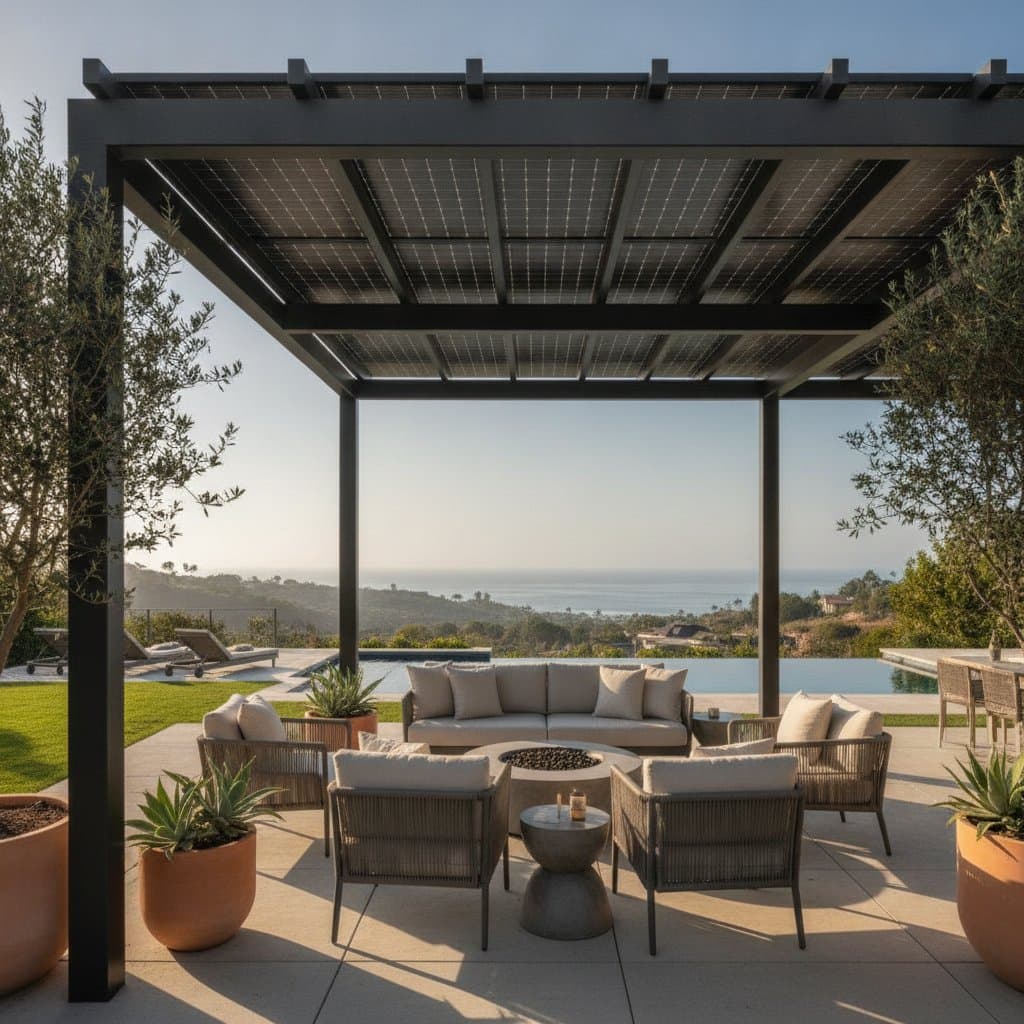
Energy-Generating Pergolas Deliver Shade and Power
Homeowners now combine beauty, comfort, and sustainability through energy-generating pergolas. These structures integrate photovoltaic panels into architectural shade designs. They produce clean electricity while creating outdoor retreats. A typical system generates 1.5 to 3 kilowatts, which offsets household energy use in sunny climates such as San Diego.
Cost Ranges by Size
Pricing depends on dimensions, materials, and panel quality. The following table shows typical ranges.
| Pergola Type | Size | Cost Range | Power Output | ROI |
|---|---|---|---|---|
| Small patio | 10x10 ft | $8,000 to $15,000 | 1.5 kW | 60 to 75 percent |
| Medium deck | 12x16 ft | $16,000 to $25,000 | 2.5 kW | 70 to 80 percent |
| Large poolside | 16x20 ft | $26,000 to $40,000 | 3.5 kW | 75 to 85 percent |
Energy savings and tax credits often recover the investment within several years.
Design Styles
Owners select frames and panel types to match home architecture. Contemporary aluminum models resist corrosion and require little upkeep. Wood frames provide a natural appearance. Louvered designs adjust for shade and sunlight capture. Attached units connect directly to the home electrical system. Freestanding pavilions suit larger yards.
Factors Affecting Price and Output
Material choice influences both cost and durability. Aluminum costs 50 to 70 dollars per square foot. Wood ranges from 40 to 60 dollars but needs regular maintenance. Steel offers strength at 70 to 90 dollars per square foot.
Panel selection also matters. Monocrystalline units deliver higher efficiency. Polycrystalline panels cost less but produce slightly less power. Solar glass maintains transparency for premium aesthetics.
Proper orientation maximizes yield. South or southwest facing panels perform best in Southern California. Clear space around the structure prevents shading from trees or buildings.
Installation Choices
Prefabricated kits start at 5,000 dollars for smaller sizes. Homeowners with electrical experience can mount panels on existing sturdy pergolas. Professional installation remains advisable for grid connections and code compliance.
Return on Investment
Payback periods vary by system size. Small units recover costs in six to eight years with 8,000 to 12,000 dollars in lifetime savings. Medium systems pay back in five to seven years. Large systems recover in four to six years while adding 5 to 6 percent to property value.
Frequently Asked Questions
A solar pergola produces 1.5 to 3.5 kilowatts depending on size and exposure. It powers outdoor lighting, appliances, and contributes to indoor needs.
Maintenance stays minimal. Clean panels several times a year and inspect connections annually.
Existing rooftop arrays can pair with a new pergola for added capacity.
Most jurisdictions require building and electrical permits. Licensed contractors manage these steps.
Cloudy weather reduces output, yet batteries or grid ties maintain supply.
Selecting an Installer
Verify that contractors hold licenses for both solar and structural work. Request details on permitting, warranties, energy estimates, and concealed wiring methods.
Ongoing Care
Clean panels with mild soap and water every few months. Check bolts and trim vegetation. Review production data to identify issues early. Professional electrical inspections every few years protect the system.
Using the Finished Space
Solar pergolas create shaded areas for meals, relaxation, or outdoor equipment while generating power. They support daily comfort and reduce utility expenses over decades.