
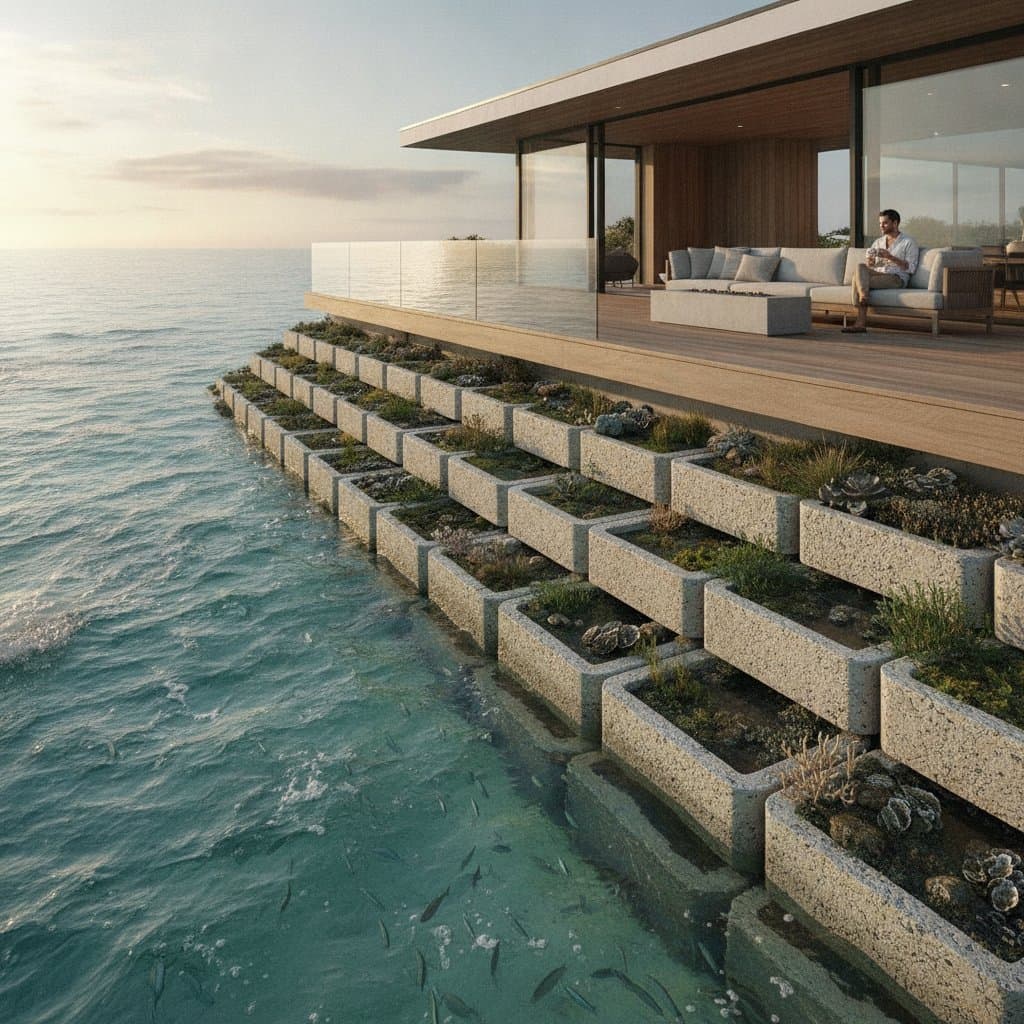
Coastal Homes Embrace Living Seawalls Over Concrete
For generations concrete seawalls have lined coastlines as the standard defense against erosion and storm surges. Homeowners once valued their strength and permanence. Across many coastal communities a quiet shift is underway as living seawalls replace rigid barriers with structures that protect property while supporting marine life.
If your home sits near the water this change matters. Traditional concrete walls can accelerate shoreline loss and harm ecosystems. A living seawall stabilizes the edge of your property, encourages biodiversity, and can improve water quality without sacrificing necessary protection.
Average Cost of a Living Seawall
The average cost of a living seawall ranges from 400 to 1200 dollars per linear foot. Cost depends on materials, design complexity, and site conditions. Concrete seawalls typically range from 600 to 2000 dollars per linear foot. Long term maintenance and environmental performance often favor the living option.
| Type of Seawall | Average Cost per Linear Foot | Lifespan | Environmental Impact | Maintenance Frequency |
|---|---|---|---|---|
| Living Seawall | 400 to 1200 dollars | 25 to 50 years | Positive, supports habitats | Low |
| Concrete Seawall | 600 to 2000 dollars | 30 to 40 years | Negative, disrupts habitats | Moderate to high |
These numbers represent national averages. Local permits, shoreline slope, and water depth can change the final budget.
Cost by Project Scope
Project size drives total expense more than any other element.
- Small scale restoration under 50 feet costs 20000 to 40000 dollars.
- Mid range residential barriers of 50 to 150 feet cost 45000 to 120000 dollars.
- Large coastal protection over 150 feet costs 125000 to 300000 dollars or more.
Smaller jobs usually target specific erosion spots. Larger projects combine full shoreline restoration with structural work.
Materials Used in Living Seawalls
A living seawall pairs structural elements with biological components that attract marine life. Most designs combine several materials.
| Material | Approximate Cost per Linear Foot | Durability | Aesthetic Appeal | Maintenance |
|---|---|---|---|---|
| Textured Concrete Panels | 300 to 600 dollars | High | Moderate | Low |
| Rock Revetments | 400 to 700 dollars | Very High | Natural | Low |
| Oyster Shell Beds | 200 to 500 dollars | Medium | High | Moderate |
| Native Vegetation | 100 to 300 dollars | Medium | High | Moderate |
| Recycled Plastic Modules | 500 to 900 dollars | High | Modern | Low |
Successful designs blend materials to deliver both strength and ecological benefit. Textured panels mimic reefs while vegetation and shell beds absorb wave energy.
Labor Costs and Professional Expertise
Labor accounts for 30 to 50 percent of total project cost. Specialized marine contractors charge 85 to 150 dollars per hour. Projects that include native planting or oyster habitat often need input from coastal engineers or marine biologists.
Permits add 2000 to 10000 dollars depending on local rules. Because living seawalls sit in tidal zones, environmental compliance is required.
Factors That Influence Total Cost
Several site conditions affect the final price. Shoreline slope, erosion rate, wave exposure, and soil type all matter. Equipment access, permit fees, and regional material availability also play roles. Early assessment of these variables prevents later redesign expenses.
How to Reduce Expenses
Homeowners can lower costs while preserving quality through targeted decisions.
- Focus restoration on the most vulnerable erosion zones and use vegetation elsewhere.
- Source rocks and plants from nearby suppliers to cut transport costs.
- Complete core structural work first and add habitat features in later phases.
- Check for community grants that support eco friendly shoreline projects.
- Schedule routine inspections to catch small issues before they become expensive repairs.
Professional Installation Versus Owner Tasks
A living seawall is not a standard DIY project. Homeowners can plant native grasses or monitor oyster beds. Structural design, foundation work, and permit compliance require licensed professionals.
Attempting full construction without marine engineering experience risks instability and regulatory problems. Most owners hire experts for the main build and handle ongoing care themselves.
Frequent Errors to Avoid
Early mistakes can lead to costly fixes. Common problems include ignoring permit requirements, selecting vegetation unsuited to tidal conditions, and overbuilding with excessive weight. Designs should also account for gradual sea level rise. Regular checks for debris and plant health keep systems functioning.
Frequently Asked Questions
Do living seawalls require permits?
Yes. Construction in tidal zones needs local and state approval to protect both property and ecosystems.
How long do living seawalls last?
A well designed system lasts 25 to 50 years. Vegetation may need occasional replanting while structural parts often outlast concrete.
Can living seawalls manage storm surges?
Properly engineered systems disperse wave energy more effectively than flat concrete surfaces.
Do living seawalls increase property value?
Eco friendly shorelines improve aesthetics, reduce erosion, and meet modern environmental expectations, which supports higher valuations.
How does maintenance compare with concrete walls?
Living systems generally require less long term upkeep because natural elements self repair to a degree.
Can an existing concrete wall be converted?
Many owners attach textured panels or habitat modules to existing walls and add vegetation at the base.
Planning Your Next Steps
Assess your shoreline conditions, gather local cost data, and consult a qualified marine contractor. These actions help you select materials and a design that delivers durable protection along with ecological gains.