
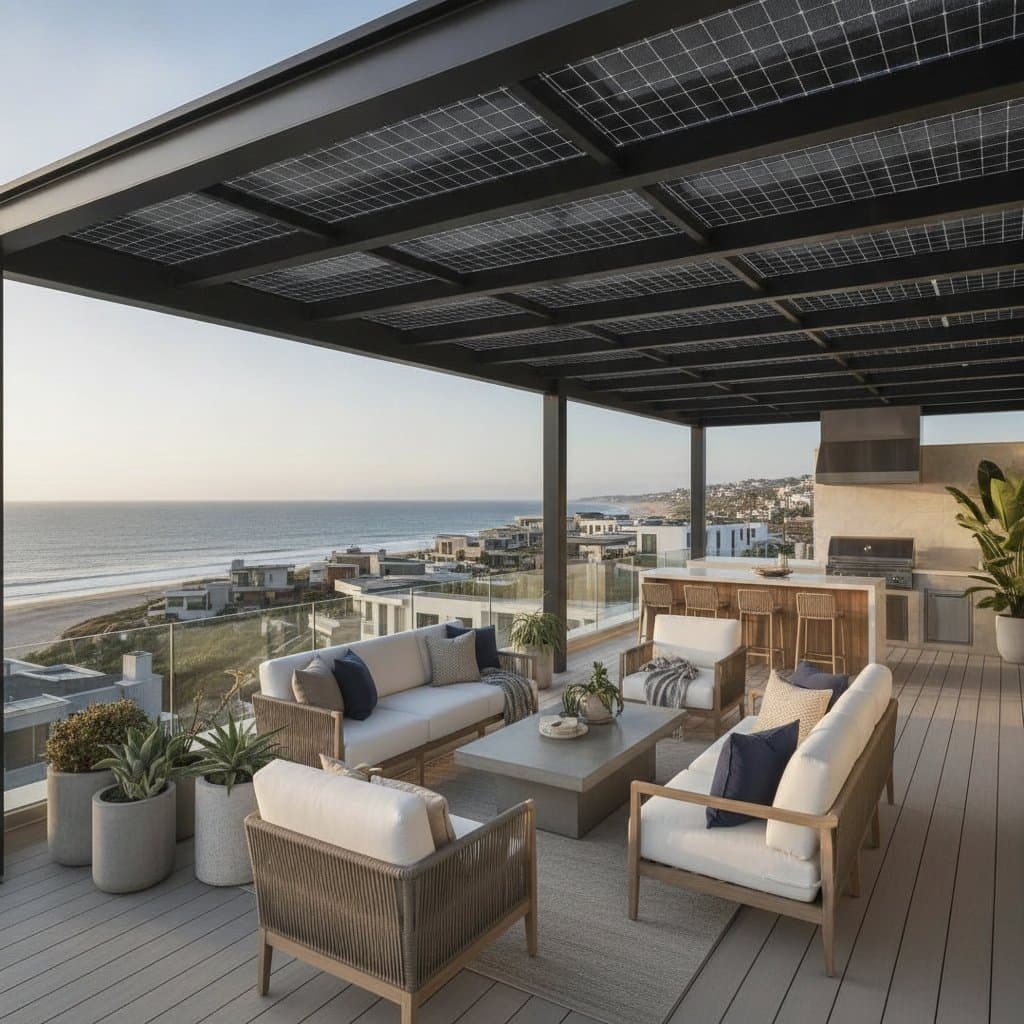
Coastal Homes Add Solar Canopy Rooftop Decks
Imagine stepping onto your rooftop deck and feeling the ocean breeze while your solar canopy quietly generates energy above you. Coastal homeowners are combining these two luxuries to create outdoor spaces that are both functional and efficient. A solar canopy rooftop deck transforms unused roof space into a shaded retreat that also reduces electricity bills.
This article explains what a solar canopy rooftop deck is, how much it costs, and what to consider before building one. You will learn about design options, cost factors, DIY potential, and ways to save money while maintaining safety and style.
Expect to spend between $25,000 and $60,000 for most solar canopy rooftop deck projects. The investment creates shade, boosts home value, and produces renewable energy that offsets long term costs. If you prefer expert installation, get quotes from top rated pros who specialize in both solar systems and outdoor living spaces.
In this article
- Cost factors
- Types and options
- DIY versus pro installation
- Ways to save
- FAQs
Cost Factors
The total cost for a solar canopy rooftop deck ranges from $25,000 to $60,000, with an average of about $42,000 for a midsize installation. Several elements influence this price.
Structural support often requires reinforced framing to handle wind and salt exposure on coastal homes. This work can add $5,000 to $10,000. Solar panels and canopy materials, including high efficiency panels paired with aluminum or steel framing, typically cost $15,000 to $25,000.
Deck construction finished in composite or hardwood decking runs between $10,000 and $20,000 depending on square footage. Permits and engineering require $1,000 to $3,000 for design plans and city approvals. Certified solar electricians charge about $100 to $150 per hour, and installation may take several days.
A well designed canopy system can generate enough energy to offset a significant portion of your home electricity use. This production helps balance the upfront cost over time.
Types and Options
Integrated Solar Canopy
This structure combines the solar panels directly with the shade roof. The panels serve as the canopy surface and offer a sleek, modern look. It works best for homeowners who want maximum energy production with minimal visual clutter.
The design provides streamlined appearance, higher efficiency, and weather protection. Replacement or repair of individual panels tends to cost more than other options.
Framed Shade Canopy with Separate Panels
This design uses a traditional pergola or slatted frame with solar panels mounted on top. It allows more flexibility in style and ventilation. The approach suits homes with varied roof shapes or limited structural load capacity.
Maintenance is easier and aesthetics can be customized. Energy output may be slightly lower due to spacing between panels.
Retractable Panel System
Some homeowners choose retractable solar canopies that adjust for shade or exposure. This option fits entertaining spaces where control over sunlight matters most. It offers versatility and style, though upfront cost is higher and more moving parts require maintenance.
DIY versus Pro Installation
Building a solar canopy rooftop deck is not a beginner level project. A typical installation involves electrical wiring, structural engineering, and weatherproofing that must meet local building codes.
DIY feasibility ranges from moderate to difficult. You might handle decking and framing if you have construction experience, but solar integration should always be completed by a licensed installer. Solar contractors coordinate with deck builders and structural engineers to ensure the system is safe and efficient. Professional labor adds cost but guarantees compliance and warranty protection.
If you choose to mix DIY and professional help, consider managing the deck portion yourself and hiring pros for the solar and electrical work.
Ways to Save
You can reduce costs without cutting quality by taking a strategic approach. Use an existing roof structure if your roof is already flat and accessible. This choice avoids costly framing upgrades.
Select mid tier solar panels since the highest efficiency models cost more but may not be necessary for smaller coastal homes. Bundle installations because some contractors offer discounts when solar panels and decks are installed together.
Apply for incentives since local and federal programs often provide rebates for renewable energy projects. Choose durable materials such as composite decking that resists salt corrosion and requires less maintenance than wood, saving money over time.
Maintenance and Long Term Care
Solar canopy decks are relatively low maintenance, but routine care ensures long lasting performance. Clean panels every few months with mild soap and water to remove salt buildup. Inspect hardware and fasteners after major storms. For decks, reseal or wash surfaces once a year to prevent fading.
In coastal climates, corrosion resistance is critical. Use stainless steel or powder coated hardware, and check seals around electrical connections for wear. Many homeowners schedule annual inspections with their solar provider to maintain warranty coverage.
FAQs
How long does installation take? Most projects take 1 to 2 weeks from preparation to final inspection, depending on size and complexity.
Do I need a building permit? Yes. Coastal areas require permits for both structural and electrical work. Your contractor usually handles this process.
Can the canopy handle high winds? Properly engineered canopies are rated for coastal wind conditions. Reinforced framing and secure anchoring are essential.
Planning Your Installation
A solar canopy rooftop deck turns your home into a sustainable coastal retreat that works as beautifully as it looks. With careful planning and the right professionals, you can enjoy ocean views, lower energy bills, and an outdoor space that stays comfortable year round.