
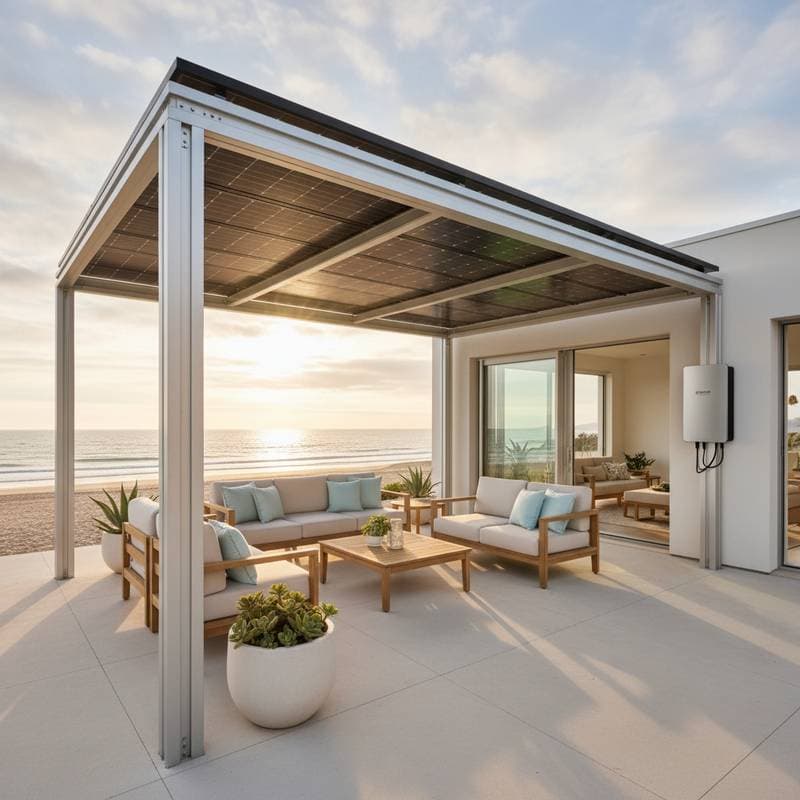
Solar Pergolas: Shade and Power for Coastal Homes
Coastal living presents remarkable advantages, including ocean winds and stunning sunsets. However, the sun that illuminates outdoor areas can render patios excessively warm and elevate expenses for cooling interiors. Homeowners seeking shade alongside renewable energy production find an intelligent option in solar pergolas. These installations merge the elegance of classic pergolas with solar panel capabilities, yielding outdoor environments that offer comfort and productivity.
This guide covers essential details on solar pergolas. Readers will discover their operation, suitability for coastal settings, installation planning, and projections for expenses, upkeep, and enduring benefits.
What Is a Solar Pergola?
A solar pergola consists of a freestanding or attached outdoor framework featuring integrated solar panels on its roof. Distinct from conventional rooftop solar arrays, these panels attach to the pergola's frame, delivering shade during power generation. The setup can shelter patios, driveways, gardens, or pool areas, blending utility with visual charm.
How It Works
Solar pergolas employ photovoltaic (PV) technology identical to rooftop systems. Panels absorb sunlight and transform it into electricity for home use or grid contribution. This power applies directly, stores in batteries, or earns credits via net metering, based on utility policies.
Key Benefits
- Dual Functionality: Delivers shade while producing renewable electricity simultaneously.
- Flexible Placement: Installs at any property location, beyond roof constraints.
- Aesthetic Appeal: Enhances architectural design and diminishes environmental impact.
- Durability: Constructs with weather-proof materials apt for seaside exposures.
Why Solar Pergolas Suit Coastal Homes
Coastal residents encounter distinct environmental factors that render solar pergolas particularly advantageous. Intense sun, saline atmosphere, and elevated moisture affect energy demands and outdoor usability. A solar pergola counters these issues proficiently.
Protecting Against Sun and Heat
Seaside areas endure strong sunlight across daylight hours. A solar pergola offers natural shade, minimizing glare and cooling patios. By covering home sections or living zones, it reduces interior heat, potentially decreasing air conditioning expenditures.
Designed for Coastal Durability
Coastal solar pergolas incorporate corrosion-resistant elements like aluminum, stainless steel, and preserved wood. Such choices endure saline air and dampness, promoting extended reliability. Select premium fittings and marine-grade coatings to avert rust and degradation.
Enhancing Outdoor Living
Coastal dwellers often emphasize exterior spaces. A solar pergola increases practical area by forming a pleasant zone for meals, gatherings, or leisure. Integrated solar illumination and electrical outlets allow evening enjoyment without added power draw.
Planning Your Solar Pergola Project
Effective solar pergola setup begins with thorough preparation. Evaluate site features, energy requirements, and stylistic choices to guide selections.
Step 1: Assess Your Site
Prior to design, examine space availability and solar access. Panels achieve peak efficiency with steady, unblocked sunlight. Account for property alignment and shadows from vegetation or structures.
Step 2: Determine Your Energy Goals
Establish if the aim involves augmenting current solar setups or supplying primary household power via the pergola. Anticipated output dictates panel quantity and variety.
Step 3: Set a Realistic Budget
Solar pergola expenses fluctuate by dimensions, substances, and capacity. Homeowners typically invest $20,000 to $50,000 for complete installation, encompassing framework and solar elements. Regional differences, installer rates, and selections influence figures; obtain several estimates.
Step 4: Design for Function and Style
Collaborate with a specialist versed in structural beauty and solar mechanics. Select a pergola form matching your residence, from contemporary aluminum with crisp contours to classic wood integrating panels that harmonize with landscapes.
Step 5: Secure Permits and Approvals
Regulations vary by municipality. Seaside districts may impose extra codes for wind resistance and corrosion safeguards. An expert solar provider assists in complying with local structural and electrical mandates.
Working with the Right Professionals
Selecting skilled experts safeguards your funds and guarantees a secure, effective installation.
Check Licenses and Insurance
Confirm the contractor possesses valid solar and construction credentials. Require liability and workers' compensation coverage to shield against mishaps or errors.
Request Detailed Proposals
Solicit written bids detailing designs, equipment lists, and expense itemizations. Prioritize established solar panel and inverter brands, as they impact efficiency and durability.
Understand Warranties
Examine product guarantees for panels and inverters, alongside workmanship assurances for setup. Superior panels frequently warrant 20 to 25 years, with distinct protections for framework parts.
Maintenance and Long-Term Care
Solar pergolas demand little upkeep, yet consistent checks preserve peak operation and aesthetics.
Cleaning and Inspection
Wipe panels several times annually to clear salt, particles, and residue. Employ a gentle brush, mild detergent, and water. Scan the framework for corrosion, erosion, or harm, particularly in marine settings.
Monitoring System Performance
Contemporary solar arrays feature tracking applications for output oversight. Examine data routinely to verify smooth function. Address output declines by consulting the installer.
Planning for Repairs and Upgrades
Advancements occur over years. Consider inverter replacements or battery additions. Maintain installation records and warranty information for streamlined future maintenance.
Frequently Asked Questions
What is the lifespan of a solar pergola?
A quality-constructed solar pergola endures 25 to 30 years or longer under routine care. The framework often outlasts panels, which permit replacement or enhancement.
How much electricity can a solar pergola produce?
Output relies on scale and insolation. A standard home unit yields 3 to 6 kilowatts, sufficient to counter substantial household consumption.
Can I install a solar pergola if I already have rooftop solar panels?
Yes. Additions expand capacity or shade options. It operates separately or links to present inverters and monitors.
Are solar pergolas suitable for small yards?
Yes. Custom sizes fit compact spaces, shading patios or seats while producing power.
Do solar pergolas qualify for incentives or rebates?
Numerous areas provide solar credits or rebates applicable to pergolas. Eligibility depends on locale; consult installers or utilities for active programs.
What materials work best for coastal solar pergolas?
Aluminum and stainless steel excel in resisting corrosion. Sealed pressure-treated wood or composites also succeed with diligent care.
Can I store the energy from my solar pergola?
Yes. Battery integration stores surplus for overcast or nighttime use. Installers suggest optimal storage matches.
Maximizing Benefits from Your Solar Pergola
Once installed, integrate your solar pergola into daily routines for full advantages. Position furniture beneath for shaded relaxation, and utilize generated power for outdoor appliances or home offset. Regular monitoring ensures consistent yields, while seasonal adjustments like panel angling optimize production. This setup not only cools your patio but also advances sustainable living, yielding savings and satisfaction over decades.