
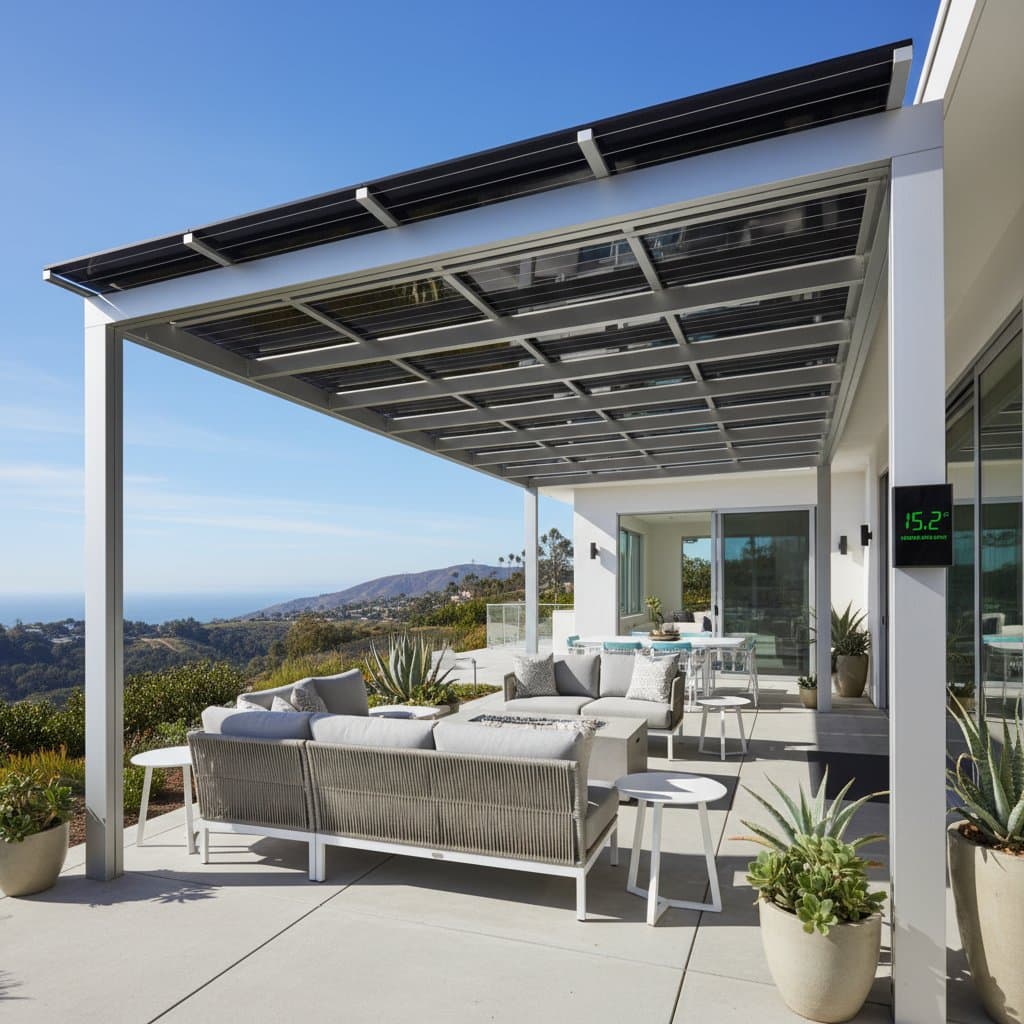
Why Solar Pergolas Revolutionize Outdoor Living
Outdoor living has evolved far beyond simple patios and umbrellas. Homeowners now seek spaces that blend comfort, design, and sustainability. A solar pergola achieves all three goals beautifully. It provides shade for your outdoor area while generating clean electricity to power your home. In sunny regions like San Diego, this structure transforms an ordinary backyard into an energy-producing retreat. On average, a well-designed solar pergola generates 5 to 10 kilowatt-hours per day, enough to offset 20 to 40 percent of a typical household's energy use. This addition enhances your property's appeal and increases its market value by up to 5 percent, according to real estate trends in coastal areas.
Key Benefits of Solar Pergolas
Solar pergolas offer multiple advantages that extend beyond basic shading. They integrate photovoltaic panels into the roof structure, capturing sunlight efficiently without obstructing views. Homeowners enjoy reduced utility bills, with potential annual savings of $500 to $1,500 depending on system size and local rates. These structures also promote environmental responsibility by reducing reliance on fossil fuels. In San Diego's climate, where sunlight averages 260 days per year, solar pergolas maximize energy production while creating inviting spaces for relaxation or entertaining.
Image Placeholder
Modern solar pergola with sleek panel roof over a furnished patio
Image Placeholder
Contemporary backyard with solar pergola beside a swimming pool
Image Placeholder
Outdoor dining area shaded by a solar pergola with integrated lighting
Budgeting and Planning Tips
Planning a solar pergola requires balancing aesthetics, energy goals, and budget. Follow these steps to streamline the process and ensure a successful installation.
-
Assess Your Energy Needs: Review your utility bills for the past year to calculate average monthly kilowatt-hour usage. Consult an energy audit professional to identify peak consumption times and prioritize high-use appliances like air conditioners or outdoor lights.
-
Get Multiple Quotes: Contact at least three contractors experienced in solar integrations and pergola construction. Request detailed breakdowns of costs for materials, labor, and permits to compare value accurately.
-
Check Local Incentives: Research California's Solar Initiative and federal tax credits, which can cover 26 percent of installation costs. San Diego County offers additional rebates for renewable energy projects; verify eligibility through the local utilities department.
-
Design for Function: Map your outdoor layout to position the pergola where it receives at least six hours of direct sunlight daily. Factor in wind patterns and integrate features like retractable shades or built-in fans for year-round comfort.
-
Include Storage Options: Select a system compatible with lithium-ion batteries, such as those from Tesla or Enphase, to store excess energy. This setup ensures power availability during evenings or grid outages, enhancing reliability.
-
Plan for Maintenance: Schedule bi-annual cleanings to remove dust and pollen from panels, which can reduce efficiency by 10 to 20 percent if neglected. Hire certified technicians for structural inspections to address any wear from weather exposure.
Solar Pergolas vs. Rooftop Solar Panels
| Feature | Solar Pergolas | Rooftop Solar Panels |
|---|---|---|
| Location | Freestanding, flexible placement | Fixed to roof |
| Function | Provides shade and energy | Generates energy only |
| Aesthetic Appeal | Enhances landscape design | Minimal visual impact |
| Maintenance | Easy access for cleaning | Requires roof access |
| Ideal For | Homes with limited roof space | Homes with sunny, unshaded roofs |
Solar pergolas combine beauty and performance, offering a compelling alternative to traditional rooftop systems. They suit properties where roof orientation limits solar exposure or where homeowners prioritize outdoor aesthetics.
FAQs About Solar Pergolas
Can a solar pergola power an entire house?
It depends on the system size and household demands. A large pergola equipped with 20 high-efficiency panels can supply 70 to 90 percent of energy needs for a three-bedroom home, but full coverage often requires supplemental rooftop arrays.
How long do solar pergolas last?
Most structures and panels endure 20 to 30 years with proper care. Inverters typically last 10 to 15 years before replacement, while the aluminum frame resists corrosion in coastal environments like San Diego.
Do solar pergolas require a lot of maintenance?
Maintenance remains straightforward. Wipe panels with a soft brush and mild soap two to four times annually, and inspect electrical connections quarterly to prevent efficiency losses.
Are permits required for installation?
Yes, local building codes mandate permits for structural and electrical work. Engage a licensed contractor familiar with San Diego's regulations to submit plans and secure approvals efficiently.
Integrating Solar Pergolas into Daily Life
Once installed, a solar pergola elevates everyday experiences in your outdoor space. Host evening gatherings under integrated LED lights powered by stored solar energy, or set up a remote workspace with shaded protection from the midday sun. These structures foster sustainable habits, such as charging electric vehicles or running irrigation systems off-grid. Over time, the combination of comfort, cost savings, and eco-friendly power generation makes solar pergolas a worthwhile investment for modern homeowners.