
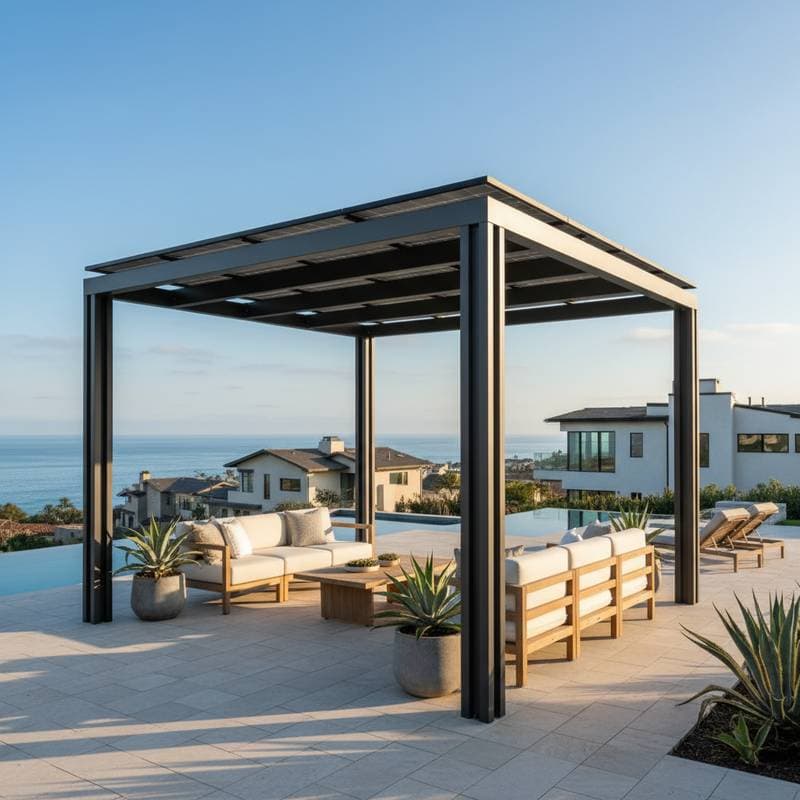
Solar Pergolas: Shade and Power for Coastal Homes
Enjoying outdoor living forms a core element of the coastal lifestyle, yet achieving balance among comfort, energy efficiency, and design presents challenges. A solar pergola provides an innovative solution by integrating shade with renewable energy production in a single, attractive structure. For homeowners in coastal regions such as San Diego, this approach delivers practical and economic advantages. This guide details the mechanics of solar pergolas, planning and construction processes, along with expectations for costs, upkeep, and performance.
Understanding What a Solar Pergola Is
A solar pergola consists of a freestanding or attached outdoor framework that incorporates solar panels into its roof. It functions similarly to a conventional pergola, offering shade for patios or decks, while simultaneously producing clean electricity via embedded solar components. This configuration proves particularly suitable for coastal residences, where outdoor areas play a vital role in daily life.
How Solar Pergolas Work
Solar panels affixed to the pergola roof absorb sunlight and transform it into usable electricity. Homeowners may direct this power for immediate household use, store it in batteries for later application, or return excess to the grid to reduce energy expenses. The supporting frame, typically constructed from wood, aluminum, or steel, accommodates the panels' weight and optimal tilt. Many designs feature integrated wiring conduits within the beams to maintain a streamlined, professional finish.
Benefits of a Solar Pergola
A thoughtfully engineered solar pergola yields several key advantages:
- Shade and Comfort: Creates a shaded retreat for outdoor meals, relaxation, or gatherings, shielding against intense sun.
- Energy Production: Produces electricity without occupying roof space, benefiting properties with restricted or obstructed rooftops.
- Improved Aesthetics: Delivers a contemporary, refined appearance that elevates the overall backyard design.
- Increased Property Value: Enhances market appeal to environmentally aware buyers and potentially raises resale prices.
- Environmental Impact: Diminishes dependence on non-renewable sources and promotes sustainable practices.
Planning Your Solar Pergola Project
Thorough planning before construction guarantees that the solar pergola operates effectively and aligns with aesthetic preferences. Early consideration of objectives, space availability, and regulatory requirements proves essential.
Setting Your Goals
Determine the primary purposes for your solar pergola. Certain homeowners emphasize electricity output, whereas others focus on developing a welcoming outdoor haven. Typical aims encompass:
- Lowering electricity costs via on-site generation.
- Securing moderate shade to support extended outdoor activities.
- Extending functional living areas beyond the interior.
- Incorporating green technologies to advance property sustainability.
Clear goals influence decisions on dimensions, panel alignment, and material selection.
Evaluating the Site
Optimal performance hinges on sunlight availability and environmental factors. Engage a solar expert to perform a shading assessment, identifying ideal positioning and inclination for peak efficiency. Key elements to assess include:
- Sunlight Access: Select locations exposed to direct rays for the majority of daylight hours.
- Wind Exposure: Account for coastal breezes, which influence both user comfort and frame stability.
- Proximity to Home: Position near the residence to facilitate wiring and seamless integration with living spaces.
- View Preservation: Place the structure to accentuate rather than obscure scenic vistas, such as ocean panoramas.
Permits and Regulations
Coastal jurisdictions generally mandate approvals for solar installations and structural additions. A certified contractor manages paperwork, encompassing electrical and engineering certifications. Verify adherence to local codes, homeowners association guidelines, and coastal zoning mandates prior to starting work.
Designing a Solar Pergola That Fits Your Home
With site and objectives established, the design stage realizes your concept. Balance visual harmony, functional output, and resilience against the elements.
Choosing Materials
Material selection impacts endurance and visual appeal:
- Aluminum: Offers light weight, resistance to corrosion, and minimal upkeep, suiting humid, saline coastal atmospheres.
- Steel: Provides exceptional strength for expansive designs, though it demands anti-rust treatments.
- Wood: Imparts organic warmth and elegance, requiring consistent protection from dampness and insects.
- Composite: Mimics wood's charm with enhanced weather resistance and reduced maintenance needs.
Integrating Solar Panels
Panels may mount flush against the roof surface or supplant conventional coverings. Monocrystalline varieties gain favor for their high efficiency and unobtrusive black finish. Select semi-transparent options to permit diffused light, fostering a gentle illumination under the canopy.
Design and Layout Considerations
Consider integration with existing architecture and surroundings. Effective strategies involve:
- Coordinating colors and details with the home's facade.
- Orienting the pergola toward patios, pools, or landscaped zones.
- Incorporating built-in lights or fans to extend usability into evenings.
- Installing adjustable shades or screens for adaptable privacy.
Cost, Installation, and Return on Investment
Solar pergolas demand upfront capital, yet deliver long-term value through savings and utility. Expenses fluctuate according to scale, components, and capacity.
Understanding Costs
Residential solar pergolas typically cost between $15,000 and $40,000. Compact versions with limited panels fall at the lower end, while expansive, feature-rich builds surpass this threshold. Solicit bids from several providers and clarify inclusions like permits, wiring, and guarantees.
Disclaimer: Costs differ by region, selections, labor, and configuration. Secure customized estimates for accurate planning.
Installation Timeline
Projects span several weeks from inception to operation. Standard phases comprise:
- Site Assessment: Analyze solar potential and foundational requirements.
- Design and Engineering: Develop blueprints and specify components.
- Permitting: Obtain necessary structural and electrical clearances.
- Construction: Erect the frame and connect the solar array.
- Inspection and Activation: Validate safety and initiate energy flow.
Energy and ROI Expectations
System scale dictates output, potentially meeting partial or full daily demands. Expect diminished utility payments alongside eligible tax credits or incentives for renewables. Cumulative reductions often recoup a substantial investment share, complemented by enhanced outdoor utility.
Maintenance and Care for Coastal Conditions
Saline air, moisture, and gusts in coastal settings necessitate vigilant upkeep to prolong component lifespan.
Routine Cleaning
Sustain panel efficacy by clearing debris regularly. Accumulated salt, pollen, or droppings impair generation. Employ a soft brush with diluted soap and water for safe removal. For hard-to-reach areas, consult specialists to minimize hazards.
Structural Maintenance
Conduct yearly checks for fasteners, corrosion, or deterioration. Apply fresh sealants and secure fittings as needed. Diligent attention ensures longevity amid harsh weather.
Monitoring Solar Performance
Utilize inverter apps for live production data. Review metrics routinely to detect anomalies. Prompt professional evaluation addresses any declines in yield.
Finding a Qualified Contractor
Selecting a skilled professional safeguards quality and compliance. Prioritize those versed in both construction and solar integration.
Key Qualifications to Look For
- Licensing and Certification: Confirm valid credentials for solar and building work.
- Experience: Review portfolios of coastal solar pergola installations.
- Insurance Coverage: Ensure liability and workers' protection policies exist.
- References: Speak with previous customers regarding execution and support.
Questions to Ask Before Hiring
- How do you manage permits and compliance checks?
- Which panels and inverters do you install?
- What warranties apply to the build and solar elements?
- How do you safeguard against coastal corrosion?
- What post-installation maintenance do you suggest?
Frequently Asked Questions
What is the difference between a solar pergola and rooftop solar panels?
A solar pergola stands as a separate shade-providing unit that generates power, unlike rooftop arrays fixed to the home. Pergolas suit properties facing roof limitations or shading constraints.
Can a solar pergola power an entire home?
System dimensions and consumption levels determine coverage. Installers assess site specifics to project reliable generation capacity.
Are solar pergolas durable in coastal weather?
Constructed with resistant alloys and finishes, they withstand saline exposure effectively. Aluminum and coated steel excel in such conditions.
How long does a solar pergola last?
Premium builds endure for decades under routine care. Panels retain efficiency progressively over 25 years or more.
Do I need batteries for my solar pergola?
Batteries enable storage for off-peak use, though grid-tied setups suffice for many. Evaluate based on energy patterns and reliability goals.
Can I add a solar pergola to an existing patio?
Yes, retrofitting complements current setups. Ensure structural compatibility and consult experts for seamless addition.
What if my yard gets partial shade?
Shading analysis identifies viable spots. Tilted panels or partial coverage options mitigate reduced sunlight impacts.
Maximizing Comfort and Savings in Your Outdoor Haven
A solar pergola transforms patios into efficient, enjoyable extensions of home life. By generating power and providing respite from the sun, it aligns coastal living with sustainability. Homeowners gain not only lower bills and eco-benefits but also a versatile space for year-round gatherings. Invest in this dual-purpose design to elevate property appeal and daily routines.