
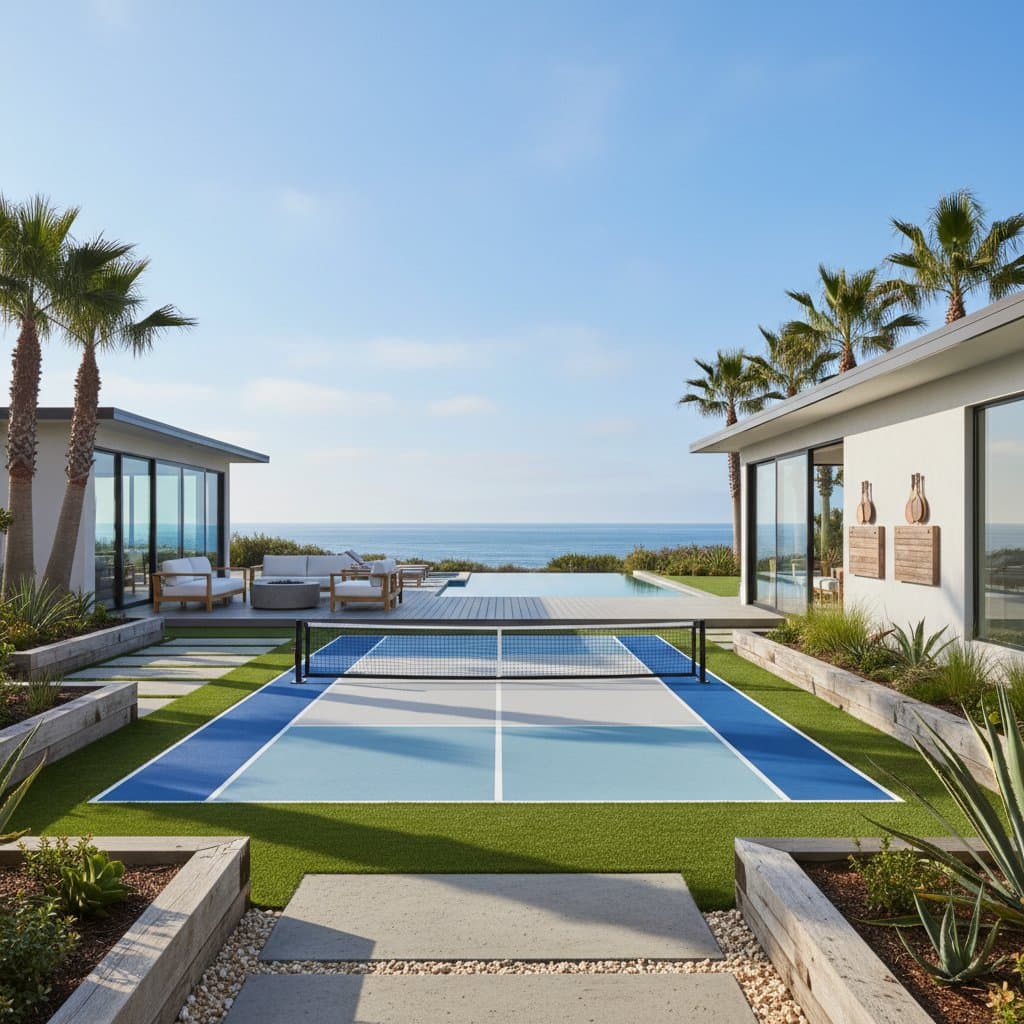
9 Ways Pickleball Courts Elevate Coastal Backyard Living
Imagine the salty ocean air mingling with the rhythmic pop of paddles striking a ball, as family and friends gather under the coastal sun. This scene captures the essence of a backyard pickleball court in a seaside home. Homeowners often seek ways to make outdoor spaces more inviting and versatile. A pickleball court achieves this by merging physical activity, social interaction, and thoughtful design into a single, impactful feature.
Pickleball offers a blend of tennis, badminton, and table tennis, requiring minimal space and equipment. The sport suits the relaxed pace of coastal life, appealing to players of all abilities. Beyond recreation, such a court serves as a focal point for outdoor living. This article details nine key ways a pickleball court enhances coastal backyards, from practical installation to long-term lifestyle gains.
Space-Efficient Design for Compact Coastal Yards
1. Maximizes Limited Outdoor Areas
Coastal properties frequently feature smaller yards due to shoreline constraints. A pickleball court fits neatly into these spaces, measuring just 20 feet by 44 feet for play. This compact footprint leaves room for landscaping, seating, or other features, unlike larger tennis courts.
Homeowners can position the court along a fence line or integrate it with existing patios. Such placement preserves views of the ocean while adding functionality. The result is a yard that feels expansive and purposeful.
2. Adapts to Uneven or Sloped Terrain
Many coastal backyards include natural slopes from dunes or cliffs. Pickleball courts tolerate minor grading adjustments better than other sports surfaces. Professional installers level the area efficiently, ensuring safe play without extensive earthwork.
Modular tiles or permeable surfaces handle drainage from frequent rains or tides. These options prevent water pooling and support eco-friendly designs. Thus, the court becomes a resilient addition to challenging coastal landscapes.
Durable and Low-Maintenance Features
3. Withstands Harsh Coastal Elements
Salt air, sand, and UV exposure challenge outdoor structures. Pickleball courts built with marine-grade materials resist corrosion and fading. Acrylic coatings and aluminum posts endure humidity without frequent repairs.
Routine care involves simple hosing to remove debris, far less demanding than grass lawns or pools. This durability ensures the court remains a reliable feature year after year. Coastal residents appreciate the minimal upkeep alongside natural beauty.
4. Supports Year-Round Use in Mild Climates
Coastal regions enjoy temperate weather, extending outdoor seasons. A covered or lighted court allows play during light rain or evenings. Non-slip surfaces provide safety on dewy mornings or after sea spray.
Players engage in matches from dawn patrols to sunset games. This versatility turns the backyard into a consistent venue for activity. The court aligns perfectly with the extended daylight and comfortable temperatures of seaside living.
Aesthetic and Value-Adding Integration
5. Enhances Visual Appeal and Property Value
A well-designed pickleball court complements coastal architecture, from modern beach houses to traditional bungalows. Neutral surfacing in shades of blue or green echoes ocean hues. Surrounding it with native plants or low fences creates a seamless landscape.
Real estate experts note that recreational amenities increase home desirability. Buyers in active-lifestyle markets pay premiums for such features. The court not only beautifies the yard but also signals a premium, wellness-oriented property.
6. Blends with Sustainable Coastal Design
Eco-conscious homeowners favor courts using recycled materials or permeable pavers. These reduce runoff into sensitive marine environments. Solar-powered lighting minimizes energy use while highlighting nighttime play.
Integration with rain gardens or drought-tolerant greenery supports local ecosystems. This approach elevates the yard's environmental footprint. The result is a court that enhances sustainability alongside recreation.
Wellness and Community Focus
7. Promotes Physical and Mental Health
Regular pickleball sessions build endurance, agility, and flexibility without joint strain. The low-impact nature suits all fitness levels, encouraging consistent activity. Coastal dwellers benefit from combining exercise with vitamin D from sun exposure.
Mental health gains include stress reduction through outdoor play. The sport's strategic elements sharpen focus amid relaxing surroundings. Overall, the court fosters a balanced, invigorating lifestyle.
8. Encourages Fitness and Fun
Pickleball delivers a comprehensive workout in brief, engaging sessions. It targets coordination, balance, and heart health while remaining accessible. For coastal residents, this means enjoying fitness amid scenic backdrops.
Benefits include efficient calorie burn and muscle toning. Social aspects sustain motivation beyond solitary routines. Fresh air elevates the experience, making exercise feel effortless and enjoyable.
9. Brings People Together
The sport's inclusivity spans generations, from children to seniors. Quick mastery invites casual participation at barbecues or gatherings. A backyard court positions the home as a social anchor in the neighborhood.
Spontaneous games strengthen bonds and create lasting memories. Neighbors join for mixed doubles, expanding community ties. Extra equipment ensures seamless inclusion for drop-in players.
[Image: Family and friends playing pickleball together outdoors]
Frequently Asked Questions
How much space do I need for a backyard pickleball court?
A standard playing area requires 20 feet by 44 feet. Allocate an additional 5 to 10 feet on each side for safety and movement, totaling about 30 feet by 60 feet. This setup accommodates fencing and viewing space without overwhelming the yard.
Can I build a court on an existing surface like concrete or asphalt?
Yes, provided the base is flat and stable. Apply a specialized sports resurfacing for grip and durability. Modular interlocking tiles offer a quick, removable alternative for temporary or budget-conscious installations.
What is the average cost to install a pickleball court?
Expect $15,000 to $35,000 for a full setup, varying by size, materials, and extras like lighting. Basic modular systems start at $5,000, ideal for DIY projects. Factor in site preparation for coastal-specific needs.
How do I maintain the court in a coastal climate?
Sweep or rinse regularly to clear salt and sand buildup. Inspect for wear annually and apply protective sealants. Opt for rust-proof hardware and fade-resistant paints to combat environmental stress.
Can a pickleball court increase property value?
Absolutely, as it appeals to health-focused buyers. Comparable sales show 5 to 10 percent uplifts for homes with outdoor sports features. Highlight the court's quality in listings to maximize appeal.
Is it noisy to have a pickleball court near the house?
The sound level resembles light tennis play, with a unique paddle snap. Mitigate with vegetative screens, acoustic barriers, or strategic placement. Most players find the noise invigorating rather than disruptive.
Steps to Install Your Coastal Pickleball Court
Start by assessing your yard's dimensions and soil conditions with a professional surveyor. Select materials suited to salt exposure, such as polymer surfaces and galvanized steel. Design the layout to preserve sightlines to the sea and incorporate shading elements.
Hire certified installers familiar with coastal regulations, including permits for drainage or setbacks. Budget for enhancements like windbreaks or integrated seating. Once complete, the court invites immediate use, enriching daily coastal routines.
This addition redefines backyard potential, blending utility with joy. It supports active days and serene evenings, all while honoring the unique rhythm of seaside life.