
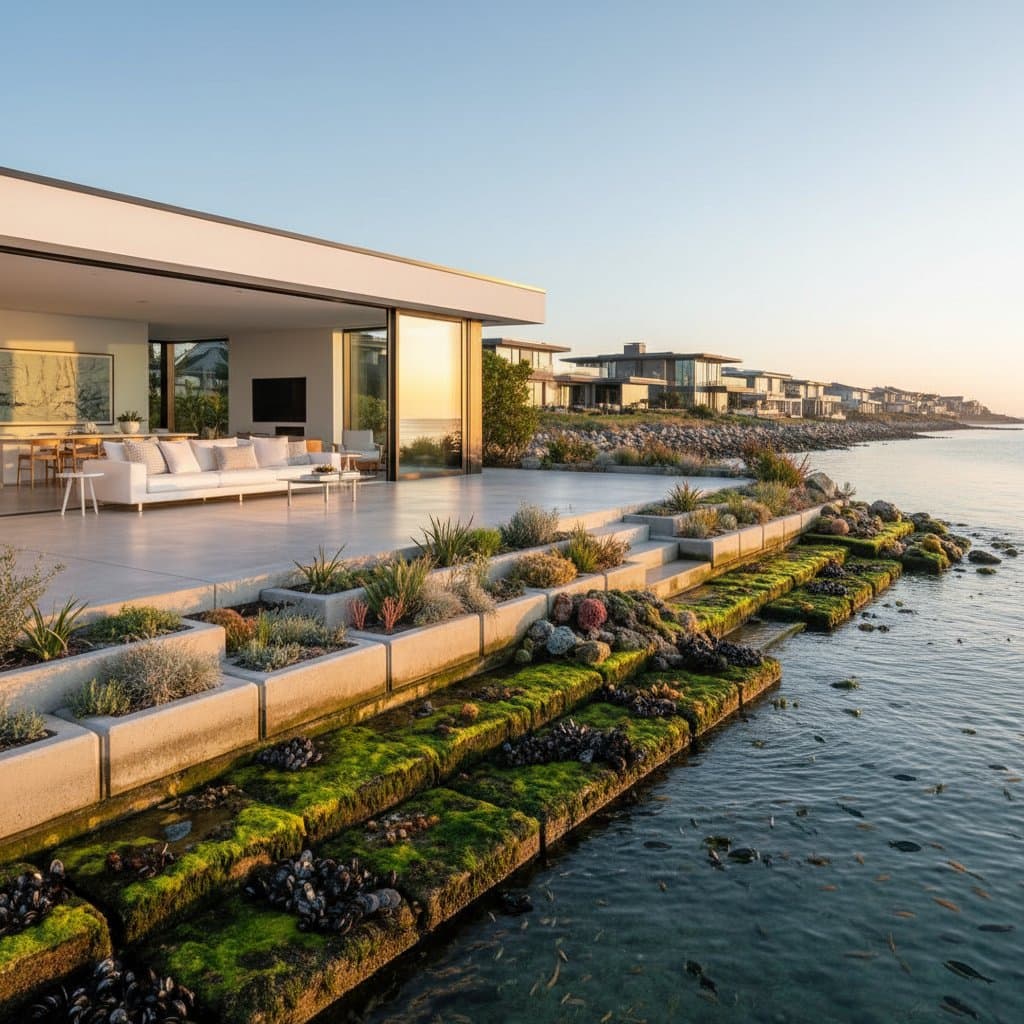
Living Seawalls: An Eco-Friendly Shift in Coastal Protection
Coastal communities face increasing pressure from erosion and rising sea levels. Traditional concrete seawalls provide short-term barriers but often harm marine environments and require frequent repairs. Living seawalls emerge as a superior option, integrating natural elements to protect shorelines while enhancing biodiversity.
These structures replicate natural coastal features like mangrove roots or oyster reefs. Textured surfaces on panels or modules promote the growth of algae, shellfish, and fish, which in turn stabilize the wall and dissipate wave energy. Property owners and local governments adopt this approach to achieve durable protection with ecological gains.
Average Cost of Living Seawalls
The average cost for a living seawall falls between $350 and $750 per linear foot. Factors such as material selection, project scale, and site specifics determine the price. For a typical residential setup spanning 100 feet, expect totals from $25,000 to $60,000.
Initial expenses exceed those of plain concrete walls, yet long-term savings materialize through reduced maintenance. Marine organisms colonize the surfaces, reinforcing the structure naturally and cutting repair needs by 30 to 50 percent over a decade.
| Project Type | Cost Range (per linear foot) | Typical Total Cost | Maintenance Frequency |
|---|---|---|---|
| Small Residential | $350 - $500 | $25,000 - $60,000 | Minimal after first year |
| Mid-Scale Community | $500 - $650 | $80,000 - $250,000 | Annual inspection |
| Large Coastal Project | $650 - $750+ | $300,000 - $500,000+ | Biannual monitoring |
Cost by Material and Design
Selecting materials balances upfront costs with performance and environmental impact. Precast concrete panels with etched textures support diverse marine life at a moderate price point. Ceramic modules or bio-composites offer superior adhesion for algae and corals, ideal for high-biodiversity goals.
Hybrid designs incorporating natural stone provide aesthetic appeal and enhanced wave resistance. Each option extends lifespan beyond 25 years, far outpacing traditional walls that degrade under constant exposure.
| Material Type | Cost per Linear Foot | Lifespan | Ecological Benefit |
|---|---|---|---|
| Textured Concrete Panels | $350 - $550 | 30+ years | High biodiversity support |
| Ceramic or Composite Modules | $400 - $600 | 25+ years | Excellent algae and coral adhesion |
| Natural Stone Hybrid | $500 - $750 | 40+ years | Natural appearance, strong wave dissipation |
Over time, these materials prove economical as they minimize erosion-related repairs and boost habitat value.
Labor and Installation Costs
Labor constitutes 35 to 45 percent of the overall budget. Skilled teams, including marine engineers and divers, handle the precise work needed for submersion and ecological integration. Hourly rates range from $75 to $125, influenced by regional labor markets.
Permits and site assessments add $2,000 to $10,000, ensuring compliance with coastal regulations. These steps prevent costly delays and legal issues.
Key Labor Components
- Site Survey and Design: Analyze soil stability, tide cycles, and habitat objectives to customize the layout.
- Fabrication and Delivery: Manufacture tailored panels or modules off-site for efficient transport.
- Installation: Secure anchors below the waterline to withstand tidal forces.
- Ecological Seeding: Introduce seed organisms or substrates to jumpstart marine colonization.
Factors Influencing Total Cost
Project costs vary based on several site-specific elements. Remote locations demand extra logistics, raising expenses by 10 to 20 percent. High-wave areas require reinforced designs, adding to material needs.
Regulatory hurdles, such as mandatory impact studies, extend timelines and budgets. Opting for advanced composites or intricate species-support features further elevates prices. Budget planning involves consulting local experts to match ambitions with finances.
Strategies to Reduce Costs on Living Seawalls
Smart planning trims expenses while preserving effectiveness. Integrate the wall with existing mangroves or seagrasses to shorten the structure and leverage natural buffers.
Modular prefabricated units cut installation time by up to 30 percent. Collaborate with adjacent property owners for shared infrastructure, dividing costs equitably.
Explore government grants for restoration projects, which often cover 20 to 50 percent of eco-initiatives. Implement phased builds, prioritizing vulnerable sections first.
These tactics lower totals by 15 to 25 percent, making the investment more accessible.
DIY Options Versus Professional Installation
Living seawalls demand professional expertise for core elements like anchoring and fabrication. Homeowners might contribute to supplementary tasks, such as planting native species along the upper edges.
Professionals guarantee regulatory adherence and optimal ecological outcomes. Attempting structural work without qualifications risks failure and environmental harm.
| Task | DIY Potential | Professional Required | Notes |
|---|---|---|---|
| Basic shoreline planting | Yes | No | Ideal for native vegetation support |
| Panel fabrication | No | Yes | Precision molds and materials needed |
| Structural anchoring | No | Yes | Requires marine-grade equipment |
| Monitoring and maintenance | Partial | Yes | Professionals assess ecological performance |
Pitfalls to Sidestep in Living Seawall Projects
Overlooking local tidal dynamics can undermine placement, limiting habitat efficacy. Select only marine-compatible materials to avoid toxin release into the water.
Regular checks prevent debris buildup, which hampers organism growth. Secure all necessary approvals upfront to evade penalties. Tailor designs to actual needs, avoiding excess reinforcement that inflates costs unnecessarily.
Environmental and Economic Advantages
Living seawalls deliver multifaceted benefits beyond erosion control. They foster habitats that improve water quality through natural filtration by oysters and algae. Biodiversity surges, supporting fisheries and coastal resilience against storms.
Economically, property values rise by 5 to 15 percent in areas with sustainable features, attracting eco-minded buyers. Municipalities save on public maintenance, redirecting funds to community needs. Over 20 years, total ownership costs drop significantly compared to concrete alternatives.
Frequently Asked Questions About Living Seawalls
Do I need a permit to install a living seawall?
Yes. Coastal authorities mandate permits for shoreline alterations to uphold environmental protections and safety protocols.
How long does installation take for a living seawall?
Residential projects span two to four weeks, encompassing surveys and seeding. Extensive public works may require three to six months for approvals and execution.
How do living seawalls compare in durability to traditional concrete?
They match concrete in initial strength but excel in longevity, as biological layers reinforce against wear and prevent cracking.
Can living seawalls retrofit existing concrete structures?
Yes. Attachment systems add textured panels to legacy walls, converting them into functional habitats without full replacement.
Which species thrive on living seawalls?
Oysters, mussels, barnacles, crabs, and juvenile fish find ideal niches, aiding sediment control and nutrient cycling.
What maintenance do living seawalls demand?
Post-establishment, they need yearly inspections for integrity and debris removal, far less than concrete's ongoing fixes.
How do living seawalls impact property values?
They enhance appeal through sustainability, often increasing market prices and reducing insurance premiums in flood-prone zones.
Embracing Resilient Coastal Solutions
Adopting living seawalls marks a proactive step toward balanced shoreline stewardship. These innovations secure assets while nurturing marine health. Coastal stakeholders gain tools for enduring protection that aligns economic and environmental priorities.