
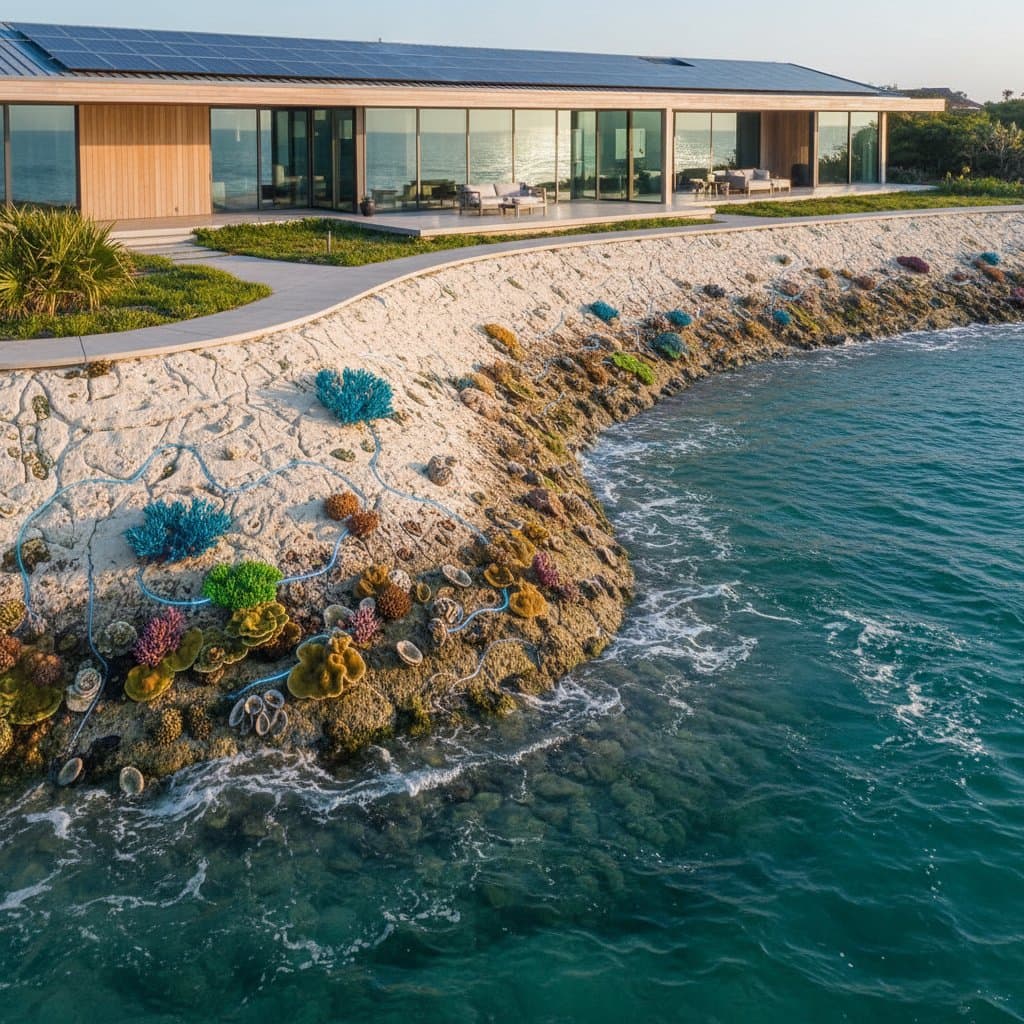
Living Biorock Seawalls Shield Coastal Homes from Erosion
Coastal homeowners confront escalating threats from tides, storms, and rising sea levels that erode shorelines. Concrete or steel seawalls provide temporary protection yet accelerate erosion in adjacent areas. Living biorock seawalls offer an innovative alternative that safeguards properties while revitalizing marine ecosystems. These structures integrate scientific principles, advanced technology, and ecological processes to form barriers that strengthen progressively.
This guide details the mechanics of biorock technology, its superiority over traditional approaches, and practical steps for homeowners to implement it in coastal defense strategies. Coverage includes installation procedures, maintenance protocols, and ecological advantages that position these electrified barriers as transformative solutions.
Building a Living Biorock Seawall
Construction of a living biorock seawall demands meticulous planning and coordination with marine engineers, coastal scientists, and regulatory bodies. Site-specific factors such as water depth, soil characteristics, and tidal dynamics guide the customization process.
Step 1: Site Assessment
Experts begin by analyzing shoreline conditions, including erosion velocity, wave energy, and sediment composition. This evaluation pinpoints optimal placement for the seawall and confirms compatibility with biorock methods. Homeowners must examine regional regulations, as many jurisdictions mandate permits for waterfront installations. Initial discussions with environmental authorities streamline approvals and promote adherence to standards.
Step 2: Designing the Framework
The foundational framework utilizes durable, non-corrosive metals such as titanium or specialized steel alloys to support mineral deposition. Designs incorporate curved or segmented profiles that harmonize with shoreline topography. Engineers prioritize configurations that permit water circulation while mitigating wave impact, thereby averting the undermining effects associated with vertical, inflexible barriers.
Step 3: Installing Power and Monitoring Systems
After securing the framework, specialists attach a low-voltage power source with precisely regulated current to facilitate mineral buildup without disrupting aquatic species. Renewable options like solar arrays or compact wind generators supply the electricity. Integrated sensors monitor electrical output, accretion progress, and biological indicators, enabling real-time adjustments to sustain structural and ecological vitality.
Step 4: Encouraging Marine Growth
Biorock surfaces rapidly draw in microbes that establish foundational ecosystems. Subsequently, coral polyps, algae, and mollusks adhere, fostering a robust habitat that bolsters the barrier's resilience and wave-dissipating capacity. Collaboration with marine biologists allows for the strategic introduction of coral nubs or oyster larvae to expedite settlement and diversification.
Long-Term Maintenance and Monitoring
Biorock seawalls exhibit considerable self-sufficiency, yet regular supervision guarantees peak functionality.
Routine Inspections
Homeowners arrange biannual evaluations to verify electrical integrity and mineral expansion rates. Prompt remediation of storm-induced or debris-related impairments preserves performance.
Power System Checks
Renewable energy components and wiring require ongoing verification to sustain mineralization. Automated alerts notify users of disruptions, prompting timely interventions by qualified technicians.
Ecological Management
Colonizing organisms evolve naturally on the structure. Scheduled biodiversity assessments measure coral vitality, fish abundance, and water quality, informing refinements that amplify habitat value.
Environmental and Community Benefits
Living biorock seawalls foster harmony with marine environments rather than opposition to them.
Restoring Coral and Marine Habitats
This technology has successfully rehabilitated coral reefs across various regions. In seawall applications, it extends regeneration to private coastlines, elevating biodiversity through shelters for fish and invertebrates that maintain ecological equilibrium. Enhanced marine vitality supports tourism and fisheries in dependent communities, bolstering economic stability.
Reducing Carbon Footprint
Concrete manufacturing generates substantial carbon emissions, whereas biorock relies on clean energy and inherent mineral processes. This method minimizes ecological harm and sequesters carbon in the accruing limestone matrix.
Enhancing Coastal Aesthetics
Over time, these seawalls evolve into colorful subaquatic landscapes adorned with corals, algae, and bivalves, supplanting monotonous barriers. Such visual appeal elevates property desirability for environmentally conscious residents.
How Homeowners Can Explore Biorock Solutions
Residents along vulnerable coastlines can initiate biorock adoption through structured inquiry.
Research Local Experts
Identify engineering firms or conservation groups proficient in biorock deployments. Inquire about completed projects and solicit testimonials from comparable installations.
Evaluate Site Suitability
Biorock thrives in shallow, low-turbulence waters; sediment-laden or high-current zones necessitate modifications. Commission a specialist survey to assess viability and outline tailored designs.
Secure Permits and Approvals
Coastal developments typically demand regulatory clearance. Present comprehensive plans encompassing environmental impacts and power specifications to expedite reviews. Proactive engagement underscores the initiative's alignment with sustainability objectives.
Plan for Long-Term Stewardship
These dynamic structures demand ongoing commitment akin to nurturing a living entity. Engage in observation protocols or community data-sharing efforts to monitor development and contribute to collective knowledge.
Frequently Asked Questions
What is a living biorock seawall?
A living biorock seawall employs minimal electrical current to precipitate limestone minerals onto a metallic skeleton, yielding a durable, regenerative shield that harbors corals, oysters, and diverse marine species.
Is biorock technology safe for marine ecosystems?
The employed current remains negligible and benign to aquatic life. Far from harm, biorock promotes proliferation by supplying substrates for coral attachment and fish refuge.
How long does it take for a biorock seawall to form?
Mineral deposition commences almost immediately, with substantial fortification achieved in months. Continuous operation yields escalating density, while biotic colonization emerges within weeks.
How much does a living biorock seawall cost?
Expenses vary with scale, locale, and infrastructure; modest home setups range from several thousand dollars upward for expansive endeavors. Obtain itemized quotes and verify compliance prerequisites.
Can biorock structures withstand major storms?
Affirmative; research indicates superior hardness to concrete upon maturation. Their contoured, permeable forms diffuse wave forces, curbing structural strain and shoreline degradation. Post-event checks affirm resilience.
Does the system require constant electricity?
Sustained low-level power drives accretion; renewables ensure efficiency and ecological compatibility.
Can homeowners install biorock seawalls on their own?
Installation entails specialized electrical and marine competencies. Engage licensed professionals versed in shoreline dynamics and permitting.
Securing Shorelines Through Ecological Innovation
Living biorock seawalls redefine erosion mitigation for coastal properties. They supplant faltering static defenses with adaptive, fortifying systems that amplify over years. This integration of safeguarding, aesthetics, and habitat enhancement delivers multifaceted value.
Homeowners embracing biorock invest in enduring resilience and oceanic welfare. Through strategic collaboration and vigilant care, shorelines transform into fortified ecosystems that protect dwellings and nurture surrounding seas.