
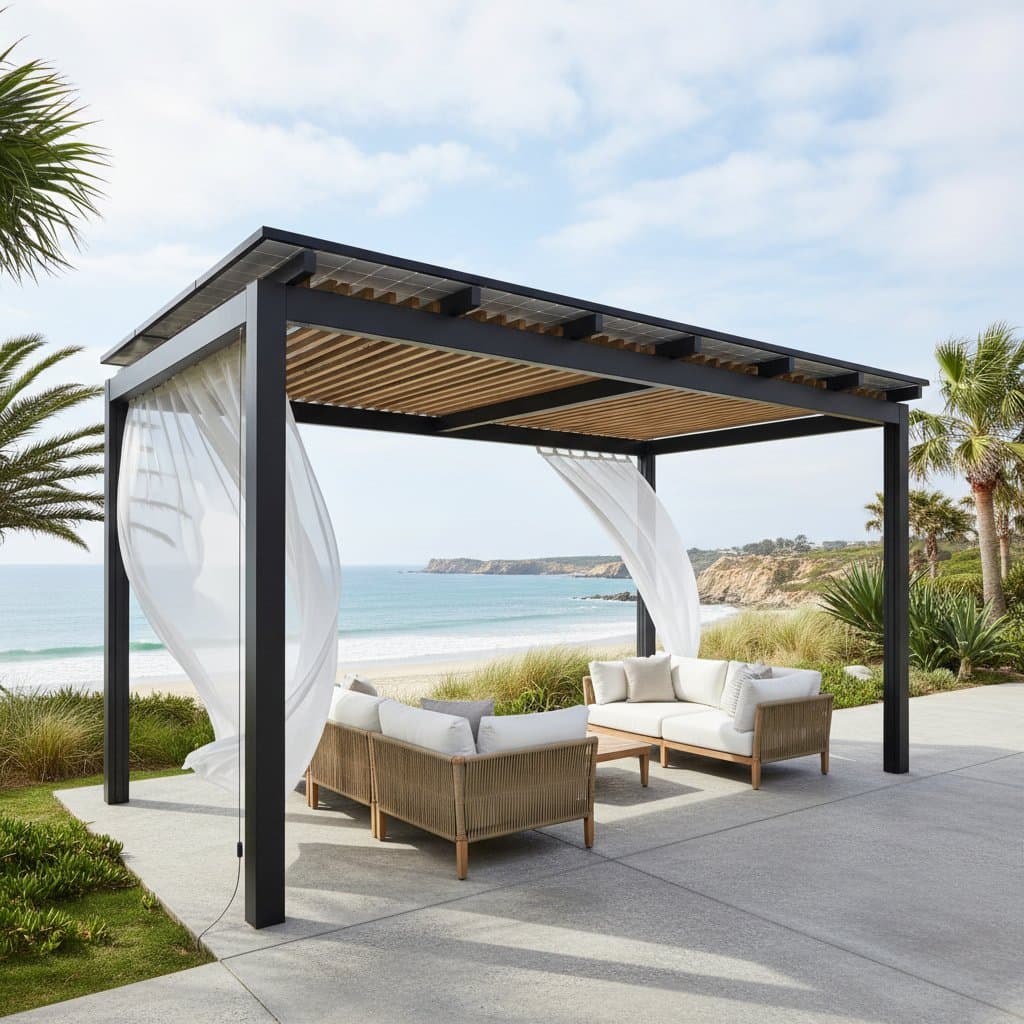
Solar Pergolas Unlock 3kW Power for Coastal Yards
Homeowners in coastal regions often face a balancing act. They seek outdoor shade that protects against intense sunlight, yet they also aim to harness that sunlight for renewable energy generation. Solar pergolas address both requirements simultaneously. These structures merge architectural elegance with integrated solar technology, delivering up to 3 kilowatts of clean energy while offering shaded comfort for patios, pool areas, or garden spaces.
This guide provides comprehensive details on solar pergolas suited to coastal properties. Readers will explore costs, installation processes, performance metrics, material selections, and design choices. The information includes practical recommendations for budgeting, contractor selection, and ongoing maintenance.
Average Cost of a Solar Pergola
The average cost of a solar pergola falls between $15,000 and $27,000. Most homeowners invest approximately $21,000 for a full system that generates about 3 kilowatts of power. This price encompasses the pergola framework, embedded solar panels, electrical elements, and expert installation.
Several elements determine the final expense:
- The pergola's dimensions and overall solar capacity
- Solar panel variety, such as standard, high-efficiency, or bifacial types
- Framework materials, including wood, aluminum, steel, or vinyl
- Enhancements for coastal durability, like weatherproofing against corrosion
- Intricacies of electrical integration and necessary permits
Cost by Project Scope
| Project Type | Description | Typical Cost Range |
|---|---|---|
| Small (1.5–2 kW) | Compact pergola over a sitting area | $10,000 - $16,000 |
| Mid-range (3 kW) | Standard backyard pergola with full solar integration | $17,000 - $24,000 |
| Large (4–6 kW) | Extended structure covering patio, poolside, or carport | $25,000 - $38,000 |
A 3-kilowatt system produces approximately 4,000 to 4,500 kilowatt-hours of electricity each year in coastal areas with ample sunlight. This output frequently covers a substantial share of household daytime electricity needs.
Breaking Down the Cost by Material
The choice of frame and finish significantly affects appearance and endurance. Coastal environments demand materials that withstand salt-laden air, high humidity, and ultraviolet radiation.
| Material | Cost per Square Foot | Durability | Maintenance | Aesthetic Appeal |
|---|---|---|---|---|
| Pressure-treated wood | $40 - $55 | Moderate | Requires sealing or painting | Natural, traditional appearance |
| Cedar or redwood | $55 - $75 | Good | Needs occasional sealing | Warm, premium wood tones |
| Aluminum | $50 - $70 | Excellent | Minimal | Sleek, contemporary finish |
| Powder-coated steel | $60 - $85 | Excellent | Minimal | Robust, industrial style |
| Vinyl composite | $45 - $60 | Good | Simple cleaning | Neat, understated design |
In coastal locations, aluminum and powder-coated steel rank as top selections. These options resist rust, demand scant maintenance, and allow customization to match home exteriors. Wood provides rustic appeal but necessitates frequent upkeep to counter weathering and salt corrosion.
Labor and Installation Costs
Labor constitutes 25 to 40 percent of the total expenditure. The process includes multiple technical phases:
- Assembly of the pergola framework
- Secure mounting and wiring of solar panels
- Integration with the home's electrical system or inverter
- Securing permits and passing inspections for grid adherence
Anticipate labor fees of $4,000 to $9,000 based on project demands. Electricians and solar specialists bill $75 to $120 hourly, whereas carpenters or metalworkers charge $50 to $80 per hour.
Additional work like trenching for cables, installing new conduits, or upgrading subpanels may incur extra charges of $1,000 to $3,000.
Factors That Influence Total Cost
Multiple considerations shape the investment amount and energy yield:
- Sunlight availability and pergola alignment: South-facing positions with clear exposure maximize output.
- Attachment method: Designs may connect to the home or stand independently.
- Permit expenses in the area: Coastal jurisdictions typically mandate approvals for structural and electrical aspects.
- Panel performance: Advanced panels command higher prices yet deliver superior power density.
- Energy storage addition: Batteries increase costs by $7,000 to $12,000 while enabling power reserves.
- Advanced inverters: These optional features enhance monitoring and system efficiency.
- Base preparation: Options like concrete foundations or helical piers bolster stability at added expense.
Grasping these elements enables accurate budgeting and prevents unexpected outlays during execution.
Energy Performance and Payback
A 3-kilowatt solar pergola offsets 40 to 60 percent of typical household electricity in sunny coastal zones. With standard utility rates, owners realize annual savings of $600 to $900.
The payback timeline spans 8 to 12 years, influenced by regional electricity prices and incentives. Beyond this period, the system supplies gratis power for at least another 10 years, while elevating the property's outdoor functionality.
Strategies to Reduce Solar Pergola Expenses
Strategic decisions early on can substantially decrease costs without sacrificing quality.
- Opt for predefined dimensions to minimize bespoke manufacturing fees.
- Schedule installation in slower seasons when specialists have greater availability.
- Combine with complementary enhancements, like deck repairs or pathway illumination, to streamline labor.
- Leverage current electrical setups where feasible.
- Investigate regional rebates or tax deductions for solar projects.
- Balance efficiency with economy by selecting mid-tier panels over luxury variants.
- Solicit bids from at least three providers to secure competitive rates.
Such approaches often trim thousands from the budget while securing enduring energy benefits.
DIY Versus Professional Installation
Certain homeowners contemplate self-construction of the pergola, supplemented by licensed electrical services for the solar array. This method suits skilled individuals but introduces potential hazards.
DIY Approach
Pros
- Reduced labor expenditures
- Customization freedom in design and components
- Sense of accomplishment from personal construction
Cons
- Electrical tasks demand certified expertise
- Errors in structure or compliance may lead to setbacks or penalties
- Manufacturer warranties frequently diminish or expire
Professional Installation
Pros
- Comprehensive guarantees on framework and solar elements
- Adherence to regulations through proper approvals
- Tailored configurations for peak performance
- Quicker timelines and dependable outcomes
Cons
- Elevated initial outlay
Professionals represent the preferable choice for the majority. They guarantee safety, regulatory alignment, and optimal energy returns over time.
Pitfalls to Sidestep in Solar Pergola Projects
Careful foresight safeguards the investment's viability.
- Overlooking alignment and obstructions: Partial shadows can diminish production by 10 to 20 percent.
- Selecting subpar materials: Standard metals succumb quickly to saline atmospheres.
- Underestimating weight burdens: Panels impose notable loads requiring robust engineering.
- Bypassing approvals: Such oversights jeopardize grid access.
- Overlooking care routines: Accumulated debris or oxidation hampers efficiency and lifespan.
Thorough preparation, premium components, and periodic inspections promote decades of steadfast operation.
Frequently Asked Questions About Solar Pergolas
Do I need a permit for a solar pergola?
Yes. Local authorities generally require structural and electrical permits. These ensure compliance with wind resistance standards and safe wiring practices. Contractors typically manage the application process.
How long does installation take?
Standard projects require three to seven days after permit approval. Elaborate setups involving custom elements or groundwork may extend this duration.
Can a solar pergola power my entire home?
A 3-kilowatt unit covers a segment of consumption but seldom the whole. Expansion to 5 or 6 kilowatts proves possible with sufficient area.
How much maintenance does a solar pergola need?
Requirements remain low. Rinse panels seasonally using gentle detergent, examine metal for deterioration, and review connections yearly. Digital alerts from monitoring tools signal any declines.
Will a solar pergola increase my property value?
Yes. Properties featuring solar enhancements attract quicker sales and premium offers. The addition furnishes usable outdoor areas alongside sustainable power, drawing environmentally aware purchasers.
What happens on cloudy days?
Panels generate power under diffuse light, albeit at lower rates. Contemporary inverters adapt seamlessly to fluctuating illumination, optimizing capture across conditions.
Can I add battery storage later?
Yes. Retrofitting batteries integrates smoothly, permitting excess energy retention for evenings or disruptions without panel replacement.
Steps to Launch Your Solar Pergola Project
A solar pergola elevates coastal living by fusing shaded retreats with renewable power generation. It diminishes reliance on utilities, lessens ecological impact, and amplifies home enjoyment. Though the initial commitment holds weight, sustained economies and asset appreciation justify the endeavor.
Prioritize resilient, corrosion-resistant materials, precise panel positioning, and certified installers. Gather proposals from multiple sources, scrutinize warranty terms, and affirm the team's proficiency in construction and solar integration. This upgrade fosters independence, leisure, and forward-thinking residence.