
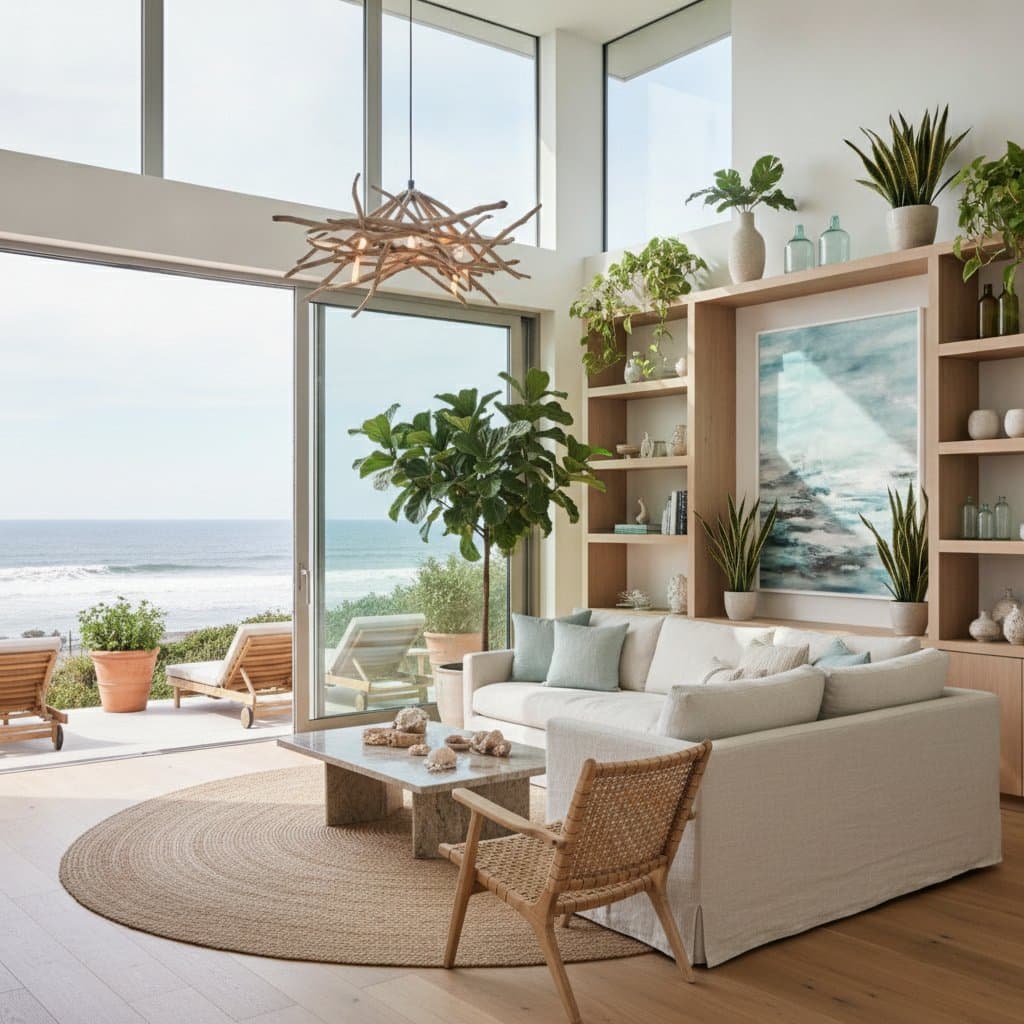
7 Biophilic Interior Ideas to Bring Coastal Wellness Into Your Home
Coastal homes naturally invite a sense of calm. Sunlight moves across pale walls, ocean air drifts through open windows, and familiar textures such as wood, linen, and stone create an easy connection with the landscape. With thoughtful biophilic interiors, you can strengthen that relationship and make everyday rooms feel more restorative.
What does your home need to feel more peaceful? You do not need a complete renovation or a collection of expensive furnishings. Small changes, including living plants, natural materials, organic shapes, and better access to daylight, can support wellness while complementing a coastal design scheme.
These practical ideas will help you create a home that feels connected to nature, comfortable for daily living, and suited to the relaxed character of coastal California.
Natural Light and Air
1. Maximize Sunlight With Open Window Treatments
Natural light helps coastal rooms feel spacious and welcoming. Replace heavy curtains with lightweight linen panels, woven shades, or simple fabric coverings that soften glare without blocking the view.
Arrange seating near windows so you can enjoy daylight and outdoor scenery throughout the day. If privacy is a concern, use sheer curtains or adjustable shades that provide control while preserving brightness.
Pro Tip: Keep window areas free from tall furniture. An unobstructed sightline makes the room feel larger and strengthens the connection between indoors and outdoors.
2. Improve Airflow With Flexible Layouts
Fresh air is a central part of coastal wellness. Arrange furniture to support cross ventilation, especially in living rooms, bedrooms, and dining spaces. Avoid placing bulky cabinets directly in front of windows or doors.
Ceiling fans, operable windows, and interior doors that can remain open give you several ways to move air through the home. Choose natural, low scent cleaning products to keep the atmosphere comfortable.
- Use breathable cotton or linen upholstery.
- Keep vents clear of furniture and rugs.
- Add screens so windows can remain open comfortably.
Biophilic Materials and Textures
3. Layer Wood, Stone, and Natural Fibers
Natural materials add warmth and visual depth to pale coastal interiors. Light oak, rattan, seagrass, bamboo, jute, and unpolished stone each bring an organic quality that manufactured surfaces often lack.
You can introduce these elements gradually through a coffee table, woven basket, wood stool, stone tray, or fiber rug. Choose a limited palette so the space feels collected rather than crowded.
Texture matters as much as color. Pair smooth plaster or painted walls with nubby upholstery, braided fibers, and gently weathered wood. These contrasts create a tactile environment that feels relaxed and grounded.
4. Choose Colors Inspired by the Shore
A nature-based palette can support calm without making every room look predictable. Start with warm whites, sandy beige, soft gray, muted blue, and pale green. Add deeper accents through artwork, cushions, ceramics, or a painted cabinet.
Look outside for guidance. Shells, driftwood, dune grass, sea glass, and coastal cliffs offer subtle color combinations that feel connected to place. Avoid excessive bright white if it makes the room feel cold. Creamy neutrals often create a more comfortable backdrop.
Easy Update: Add two or three accents in a muted coastal color, then repeat that shade in nearby rooms for a smooth visual flow.
5. Select Organic Shapes
Curved furniture and irregular forms can make interiors feel softer and less rigid. Consider a rounded coffee table, arched mirror, sculptural ceramic, or pendant light with a woven shade.
Organic shapes work especially well in rooms with strong architectural lines. A curved chair beside a rectangular sofa creates balance, while a freeform wood bowl can soften a sharp console.
Choose pieces that remain useful. A beautiful object can support wellness when it also serves a practical purpose and does not create unnecessary clutter.
Plants and Outdoor Connection
6. Build a Coastal Indoor Plant Collection
Plants bring color, movement, and living texture into biophilic interiors. Choose varieties that suit the available light and your maintenance habits. Palms, snake plants, pothos, rubber plants, and bird of paradise can work well in bright coastal rooms when placed appropriately.
Group plants at different heights to create a natural composition. Use ceramic, woven, or wood planters that complement the surrounding materials. In smaller rooms, one substantial plant may provide more visual calm than several small pots.
Care remains essential. Check soil moisture, remove damaged leaves, and place plants where they receive suitable light. Healthy greenery supports the atmosphere you want, while struggling plants can create visual stress.
7. Extend Interior Design Onto Patios and Balconies
A strong indoor outdoor connection makes coastal homes feel larger and more relaxed. Repeat interior colors and materials outside with weather-resistant cushions, wood furniture, ceramic planters, and outdoor rugs.
Create a clear reason to use the space. A small bistro table supports morning meals, while a lounge chair encourages reading or quiet breathing exercises. Add layered lighting with lanterns or soft exterior fixtures for a comfortable evening setting.
Use plants that suit your local conditions, including drought-tolerant grasses, succulents, herbs, and native coastal species. Group them near doors and windows so greenery remains visible from inside.
Planning Advice for Coastal Wellness
Before changing a room, identify what feels uncomfortable. Is the space too dark, cluttered, noisy, or disconnected from the outdoors? A clear problem leads to a more useful design decision.
Use this simple planning process:
- Remove items that block movement, light, or views.
- Select one natural material to introduce first.
- Add plants suited to the room's conditions.
- Improve seating so the space supports rest and conversation.
- Repeat a few colors and textures across connected areas.
Durability also matters near the coast. Salt air and humidity can affect metal, wood, and fabrics. Choose finishes designed for the environment, wipe surfaces regularly, and use washable covers in high-use areas.
Frequently Asked Questions
What are biophilic interiors?
Biophilic interiors use natural light, plants, organic materials, nature-inspired colors, and views of the outdoors to create a stronger connection with nature inside the home.
How can I add coastal wellness without using nautical decor?
Focus on atmosphere rather than themed accessories. Use breathable fabrics, soft colors, natural textures, open views, plants, and comfortable furniture instead of anchors, ropes, or overly literal ocean motifs.
Which plants work well in coastal homes?
Choose plants based on indoor light, humidity, and care requirements. Snake plants, pothos, rubber plants, palms, and bird of paradise are common choices, but local nurseries can suggest varieties suited to your conditions.
Are natural materials difficult to maintain?
Many are practical with routine care. Seal porous stone, protect wood from standing moisture, vacuum woven rugs gently, and follow care instructions for upholstery and finishes.
Can renters create biophilic interiors?
Yes. Focus on removable elements such as potted plants, lightweight woven rugs, sheer window panels, and portable seating. These additions require no permanent changes yet still create meaningful connections to nature.
Creating a Calmer Coastal Home
A nature-connected home develops through small, considered choices. Clear a window, bring in a healthy plant, replace a synthetic texture with woven fiber, or create a comfortable place to sit outdoors. Each step builds a living environment that supports daily wellness and reflects the coastal setting you value.