
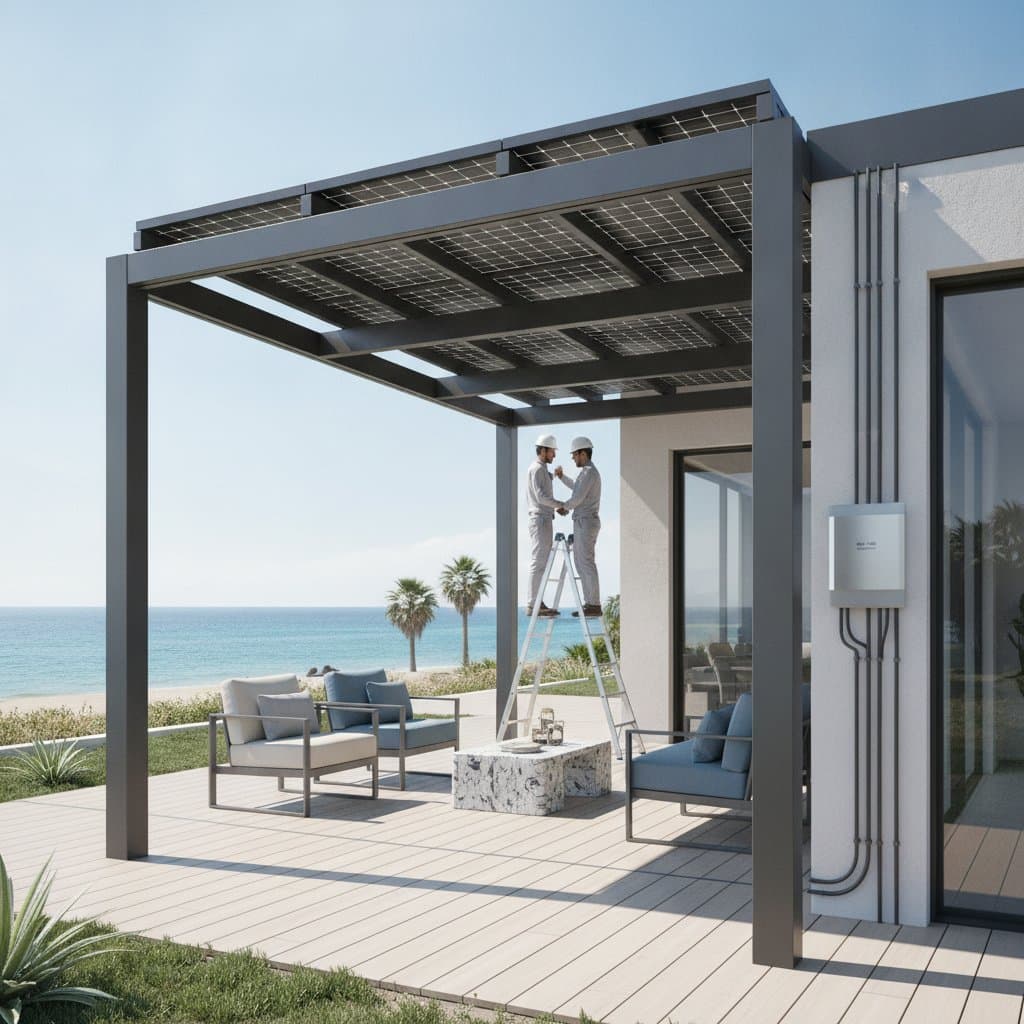
Designing the Right Solar Pergola for Your Home
Every coastal property presents distinct conditions. Design flexibility allows customization of size, style, and materials to align with existing architecture and surrounding landscape.
Choosing the Best Materials
Durability takes priority in coastal environments where salt air corrodes metal and warps untreated wood. Homeowners should evaluate these proven options.
- Aluminum remains lightweight and rust resistant while requiring minimal upkeep.
- Steel delivers strength for larger structures when galvanized or powder coated.
- Composite wood provides a natural appearance without risks of rot or termite damage.
Balancing Form and Function
A solar pergola functions as both a visual element and an energy generator. Clean modern lines suit contemporary homes, whereas classic wood framing integrates with garden settings. Surface area exposed to sunlight directly determines power output, so efficiency requirements guide final proportions.
Placement for Maximum Efficiency
Position the structure where direct sunlight reaches panels for most daylight hours. Nearby trees or buildings may require adjusted panel angles. A professional site assessment identifies optimal layout before construction begins.
Estimating Costs and Savings
Project costs depend on size, chosen materials, and panel quantity. Homeowners typically invest in the moderate to high five figure range, covering the frame, panels, inverter, and labor.
Prices fluctuate with location and technology. Multiple detailed quotes help compare options before any commitment.
Potential Energy Savings
A properly sized system offsets a substantial share of household electricity use. Many coastal residents cut bills by half or more. Battery storage captures surplus power for evening hours and increases independence from the grid.
Available Incentives
Rebates and tax credits exist in many coastal regions. Installers identify qualifying programs that lower initial expenses. Eligibility must be confirmed prior to contract signing.
Installation and Professional Guidance
A solar pergola requires electrical skill, structural engineering, and adherence to local codes. The process follows a clear sequence.
- Consultation and site evaluation determine the best location and panel arrangement.
- Design and permitting produce drawings and secure approvals.
- Construction builds or reinforces the frame to support the panels.
- Panel installation connects the photovoltaic system and inverter to household wiring.
- Final inspection verifies safety and performance before activation.
Choosing a Reliable Contractor
Protect the investment by verifying credentials. Confirm licenses and insurance for both solar and general construction work. Request references from recent clients and review warranty terms for structure and electrical components. Detailed bids should list material costs, labor, and projected output.
Maintenance and Longevity
Solar pergolas need only routine attention to sustain output and appearance.
Routine Cleaning and Inspection
- Remove salt and dust from panels with a soft brush or hose.
- Examine connections and framing for corrosion or wear.
- Monitor inverter readings to confirm consistent production.
Protecting Against Coastal Conditions
Salt air speeds corrosion. Weather resistant materials and protective coatings extend service life. Post storm inspections keep panels and wiring secure.
Frequently Asked Questions
How much power can a solar pergola produce?
Output varies with system size, panel efficiency, and sunlight hours. A typical multi panel installation offsets a large portion of average household consumption.
Can a solar pergola power my entire home?
The structure supplies a significant share of electricity needs. Full coverage depends on consumption patterns and available space. Some owners add rooftop panels to reach complete offset.
Does a solar pergola add value to a home?
Properties with solar features often command higher resale prices. Buyers value reduced utility costs and sustainable design, particularly in coastal markets.
How long does installation take?
Most projects span several weeks from design approval through final activation. Weather, permitting, and scale influence the schedule.
Do solar pergolas require a lot of maintenance?
Maintenance stays minimal. Occasional panel cleaning and annual inspections maintain performance.
Can I use the pergola for outdoor lighting or appliances?
The electrical design can include dedicated circuits for lighting or small appliances when specified during planning.
What happens on cloudy days?
Production drops under cloud cover. Grid connection or stored battery power maintains supply without interruption.
Integrating Solar Features into Daily Routines
Homeowners gain shade, reduced utility expenses, and added property appeal. Regular monitoring and timely upkeep keep the system operating at peak levels for years.