
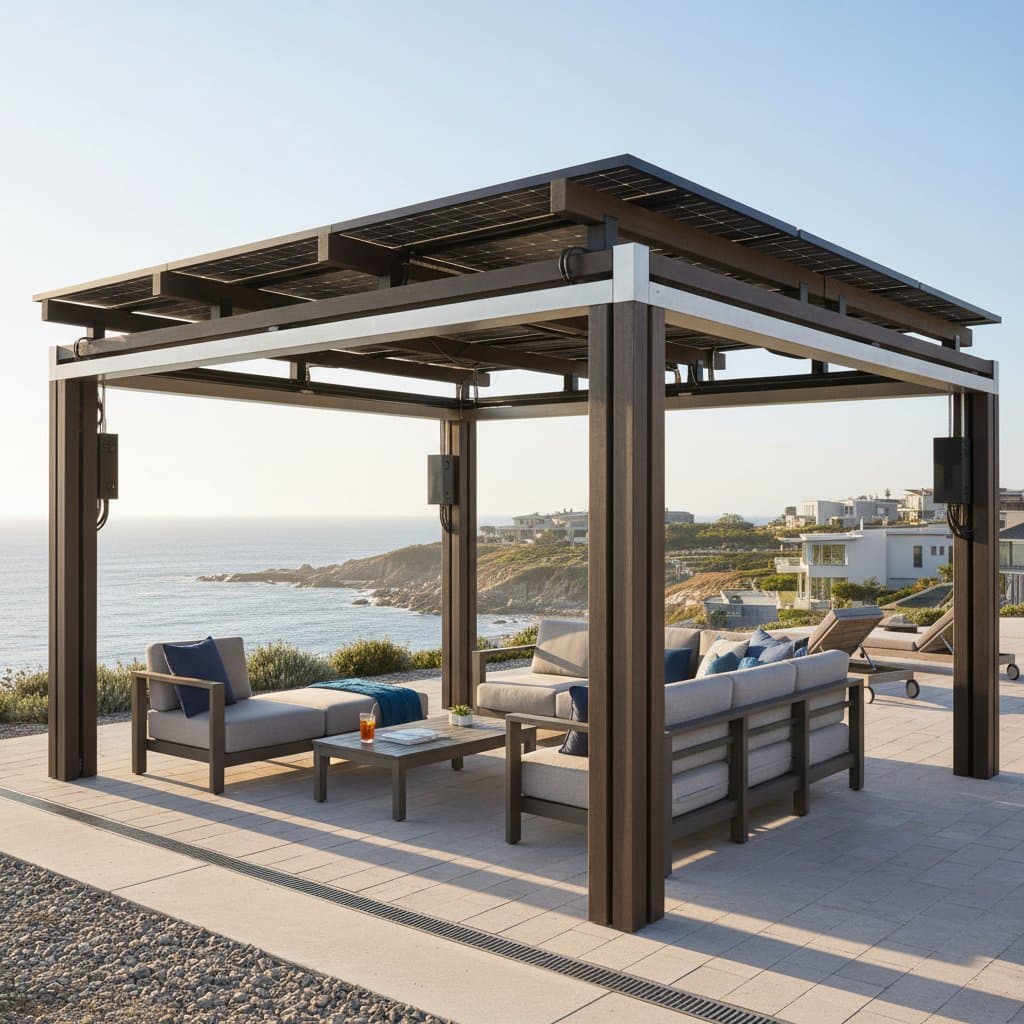
Solar Pergolas Deliver Power and Shade for Coastal Homes
Solar pergolas combine clean energy production with functional outdoor shade. Homeowners in sunny coastal regions generate reliable solar power while creating a stylish area for relaxation or entertaining. A well-designed solar pergola lowers utility bills, supports sustainability goals, and increases property value.
Understanding Solar Pergolas
A solar pergola is a freestanding or attached outdoor structure with solar panels integrated into its roof. These panels collect sunlight and convert it into electricity for home use. Unlike traditional rooftop solar systems, a solar pergola provides both energy generation and usable outdoor space. It suits coastal homes that receive abundant sunlight yet require protection from intense rays.
How Solar Pergolas Work
Solar panels on the pergola roof capture sunlight. The energy passes through an inverter that converts direct current to alternating current for household appliances and lighting. Excess energy can be stored in a battery system or fed back to the grid. This dual-purpose design lets homeowners enjoy their outdoor space while cutting energy costs.
Average energy production ranges from 1 to 3 kilowatts per pergola, depending on size and panel efficiency. Common coverage areas span 150 to 400 square feet.
Benefits for Coastal Homes
Coastal homes encounter intense sunlight, salt exposure, and humidity. A solar pergola addresses these conditions while improving comfort and sustainability.
Key Advantages
- Shade and comfort: The structure blocks direct sunlight and keeps patios and decks usable throughout the day.
- Energy independence: On-site power generation reduces grid reliance and provides backup during outages.
- Durability: Marine-grade materials resist corrosion from salt and moisture.
- Aesthetic appeal: A well-designed pergola enhances outdoor style and complements coastal architecture.
- Environmental impact: Lower fossil fuel use helps preserve nearby coastal ecosystems.
Cost Overview and Installation Breakdown
Solar pergolas vary in cost based on materials, size, and system capacity. Homeowners can expect a range from $12,000 to $30,000 for a complete installation. The cost covers both structural and solar components.
| Component | Cost Range | Description |
|---|---|---|
| Structure (wood or aluminum) | $4,000 - $10,000 | Frame, posts, and finish |
| Solar panels and inverter | $6,000 - $15,000 | Panels, inverter, mounts |
| Electrical setup and permits | $2,000 - $5,000 | Wiring, inspection, labor |
| Optional battery storage | $5,000 - $10,000 | For energy independence |
Average total cost reaches $18,000. Estimated return on investment falls between 8 and 12 years, depending on local energy rates and sunlight exposure.
Factors Influencing Cost
Several factors affect pricing and performance. Coastal regions often require corrosion-resistant materials, which can raise costs slightly. Larger pergolas generate more power but need additional panels and structural support. Premium panels cost more yet deliver higher energy output. Custom shapes or integrated lighting add to expenses. Skilled installation professionals remain essential for safe and lasting performance.
Design and Material Options
Solar pergolas come in many styles that allow homeowners to match design preferences and functional needs. Materials and finishes determine appearance, durability, and maintenance requirements.
Common Material Choices
- Aluminum: Lightweight, rust-resistant, and ideal for humid coastal climates.
- Wood: Offers a natural look but requires regular sealing to prevent salt damage.
- Steel: Strong and long-lasting, with powder-coated finishes for protection.
- Composite materials: Provide durability with minimal upkeep.
Style Considerations
- Modern minimalist designs use clean lines and integrated panels for a sleek, contemporary look.
- Rustic coastal styles feature exposed wood beams and natural finishes that blend with beachside landscapes.
- Hybrid designs combine metal frames with wooden accents for balanced aesthetics.
Planning and Installation Tips
Creating a solar pergola requires thoughtful planning. Homeowners should evaluate sun exposure, local building codes, and electrical needs before starting.
Steps to Plan Effectively
- Assess the space to identify the best placement for sunlight capture and shade coverage.
- Obtain permits because local regulations may require approval for both structural and electrical components.
- Select materials that feature corrosion-resistant finishes suitable for salty air.
- Hire certified installers who are licensed solar professionals familiar with coastal installations.
- Include safety features such as proper grounding, drainage, and wind-resistant supports.
Maintenance Tips
Rinse panels regularly with fresh water to remove salt residue. Inspect fasteners and joints for corrosion. Trim nearby vegetation to prevent shadows on panels. Schedule annual electrical checks to maintain performance.
Boosting Home Value and ROI
Solar pergolas reduce energy bills and increase property appeal. Buyers value sustainable features that enhance outdoor living. Homes with integrated solar systems typically achieve 3 to 5 percent higher resale value compared to similar properties without renewable energy features.
Estimated ROI Table
| Project Type | Average Cost | Annual Savings | Estimated ROI Timeframe |
|---|---|---|---|
| Small pergola (2 kW) | $12,000 | $700 | 10-12 years |
| Medium pergola (3 kW) | $18,000 | $1,000 | 8-10 years |
| Large pergola (5 kW) | $25,000 | $1,500 | 7-9 years |
These figures vary depending on local electricity rates and sunlight availability. Most coastal homeowners experience steady financial returns alongside improved lifestyle comfort.
FAQs About Solar Pergolas
Q: Can a solar pergola power an entire home?
A: Usually not completely, but it can offset a large portion of electricity use, especially when paired with energy-efficient appliances.
Q: Are solar pergolas suitable for high-wind coastal areas?
A: Yes, when built with reinforced posts and proper anchoring systems designed for coastal weather conditions.
Q: How long do solar panels on pergolas last?
A: Most panels last 20 to 25 years with minimal maintenance while maintaining strong energy output over time.
Q: Do solar pergolas require batteries?
A: Batteries are optional. They allow homeowners to store excess energy for nighttime use but are not essential if connected to the grid.
Q: How much maintenance is required?
A: Cleaning panels a few times per year and checking hardware for corrosion is usually sufficient.
Living with Your Solar Pergola
Once installed, a solar pergola becomes the centerpiece of outdoor living. It offers a comfortable space for cooking, lounging, or hosting guests while generating clean power. Homeowners can add lighting, ceiling fans, or outdoor kitchens beneath the shaded canopy. Over time, the energy savings, added comfort, and environmental benefits make this investment both practical and rewarding.
Whether the home sits near cliffs, a harbor, or a quiet coastal neighborhood, a solar pergola blends beauty with sustainability. It transforms open spaces into functional retreats while capturing solar energy, making coastal living more efficient, comfortable, and environmentally responsible.