
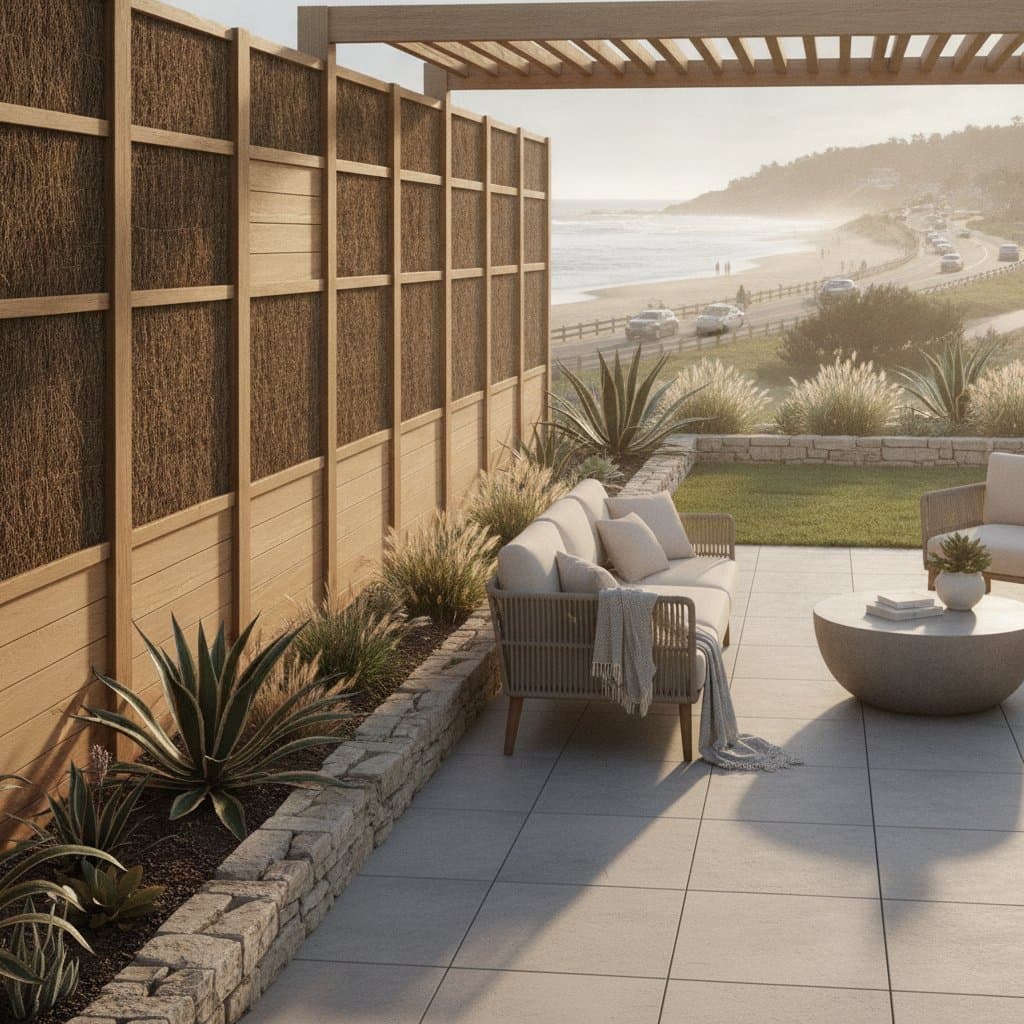
Acoustic Fencing Silences Beach Noise in Coastal Yards
If you live near the coast, the sound of waves can be soothing. The buzz of beachgoers, traffic, and nightlife might not be. Many San Diego homeowners love their ocean views but wish they could dial down the noise. Acoustic fencing offers a practical, attractive solution that keeps your yard peaceful without sacrificing style or sea breezes.
Highlights
- Acoustic fencing reduces outdoor noise from traffic, beach crowds, and neighbors.
- It works well in coastal environments where traditional fences wear down.
- The barriers offer privacy while enhancing curb appeal.
- Materials include timber, composite, and specialized acoustic panels.
- Installation and maintenance prove simpler than many expect.
- Landscaping combines with fencing for even better sound absorption.
What Is Acoustic Fencing?
Acoustic fencing is a type of sound barrier designed to reduce noise transmission into or out of an area. Unlike standard fences, these barriers use dense, layered materials that deflect, absorb, and diffuse sound waves before they reach your ears. In coastal settings such as San Diego, acoustic fences prove particularly valuable. They help block the hum of roadways leading to the beach, the chatter from nearby patios, and even the echo of ocean winds moving across concrete and sand.
How It Works
Sound travels through air and reflects off hard surfaces. Acoustic fences interrupt that path by creating a dense, solid barrier that forces the sound waves to lose energy. Some panels have internal cavities or insulation layers that trap and dissipate sound.
Typical Noise Reduction
A well-designed acoustic fence can reduce noise levels by up to 30 decibels. The exact amount depends on height, materials, and installation quality. This reduction can make a noisy beachfront feel more like a private retreat.
Why Coastal Homes Need Acoustic Fencing
Beachfront living has its perks, yet peace and quiet are not always one of them. Many coastal neighborhoods experience constant activity, especially during warm weekends. That means more cars, visitors, and outdoor music.
Acoustic fencing helps solve several common problems faced by coastal homeowners:
- Traffic noise from busy coastal roads carries steady engine sounds that bounce off homes.
- Foot traffic and conversations occur when beachgoers pass close to property lines.
- Wind amplification in open areas near the ocean can carry sound farther than inland neighborhoods.
- Privacy concerns arise when high foot traffic makes backyards feel exposed.
A sound-reducing fence gives you acoustic comfort and visual separation. You can enjoy the ocean without the chaos that sometimes comes with it.
Best Materials for Coastal Acoustic Fencing
Not every fence can handle salt air, humidity, and sun exposure. The right materials make all the difference when it comes to both durability and noise reduction.
| Material Type | Noise Reduction | Coastal Durability | Maintenance Level | Aesthetic Appeal |
|---|---|---|---|---|
| Acoustic Timber Panels | High | Moderate | Medium | Natural and warm |
| Composite Acoustic Panels | Very High | Excellent | Low | Modern and sleek |
| Concrete or Masonry Walls | Very High | Excellent | Low | Strong, solid look |
| Metal Acoustic Panels | Moderate | Good if coated | Medium | Contemporary |
| Living Green Walls with Acoustic Core | Medium to High | Moderate | High | Lush and organic |
Tip: Always choose marine-grade fasteners and corrosion-resistant coatings for fences near saltwater. Even the best materials can degrade quickly without proper protection.
Design and Installation Tips
A beautiful fence should do more than block noise. It should enhance your outdoor space. When planning your acoustic fencing project, keep these steps in mind:
- Check local codes and HOA rules before choosing fence height or materials. Some areas limit how tall fences can be, even if they are acoustic.
- Decide on the main purpose. Is it primarily for sound reduction, privacy, or both? The answer will affect the design and material choice.
- Combine materials. A composite acoustic panel base with a timber cap can balance performance and style.
- Add landscaping. Layered plantings such as hedges, bamboo, or vines can absorb extra sound and soften the fence visually.
- Hire professional installers familiar with acoustic fence systems. Proper sealing at ground level and panel joints is vital to reduce sound leaks.
Placement Matters
Positioning your fence correctly can improve its performance by up to 20 percent. The closer the barrier is to the noise source, the better the reduction. If space allows, consider doubling up with a smaller inner fence or dense shrub line for added absorption.
Maintenance Guidance
Coastal air brings salt and moisture, so routine care is key. Rinse off salt buildup occasionally. Inspect for corrosion and reseal wood or composite finishes every few years. Regular upkeep keeps both appearance and soundproofing at their best.
Combining Fencing With Noise-Reducing Landscaping
A fence alone does a lot, yet acoustic landscaping can make the results even better. Think of your yard as a sound ecosystem. Every surface, plant, and structure either reflects or absorbs sound.
Here are simple ways to blend landscaping with noise control:
- Plant dense evergreen hedges along the fence line.
- Use gravel or mulch instead of concrete paths to reduce echo.
- Install water features like fountains that mask background noise naturally.
- Add trellises with climbing plants to break up sound waves.
This combination not only makes your yard quieter but also more inviting and visually balanced.
Pros and Cons of Acoustic Fencing
| Pros | Cons |
|---|---|
| Significantly reduces outside noise | Higher cost than standard fencing |
| Improves privacy and security | Requires professional installation for best results |
| Enhances property value | May need occasional maintenance in salty air |
| Aesthetic options to match any home style | Heavier materials can limit DIY builds |
For many coastal homeowners, the peace and privacy gained far outweigh the downsides. This holds true especially when the design complements the existing architecture.
Cost Considerations
Factors influencing cost include fence height and thickness. Choice of soundproof material also matters. Custom finishes or integrated landscaping affect the total. Labor rates in your area play a final role.
Frequently Asked Questions
How tall should an acoustic fence be?
Most effective designs are at least six feet high. Taller fences block more sound. Always check your local zoning rules before finalizing plans.
Can I install acoustic fencing myself?
Some modular systems allow DIY installation. Professional help ensures proper sound sealing and structural stability, especially in windy coastal zones.
Does acoustic fencing block ocean views?
Not necessarily. You can design sections with glass or perforated panels that maintain visibility while still limiting noise.
How long does an acoustic fence last near the coast?
With regular maintenance and quality materials, an acoustic fence can last well over a decade, even with salt exposure.
Will it stop all noise completely?
No fence can create total silence. A good acoustic design can dramatically reduce unwanted sounds and make your outdoor space much more relaxing.
Creating Your Serene Coastal Retreat
Proper acoustic fencing transforms a noisy yard into a private sanctuary. The right materials, placement, and landscaping deliver lasting comfort and value for seaside living.