
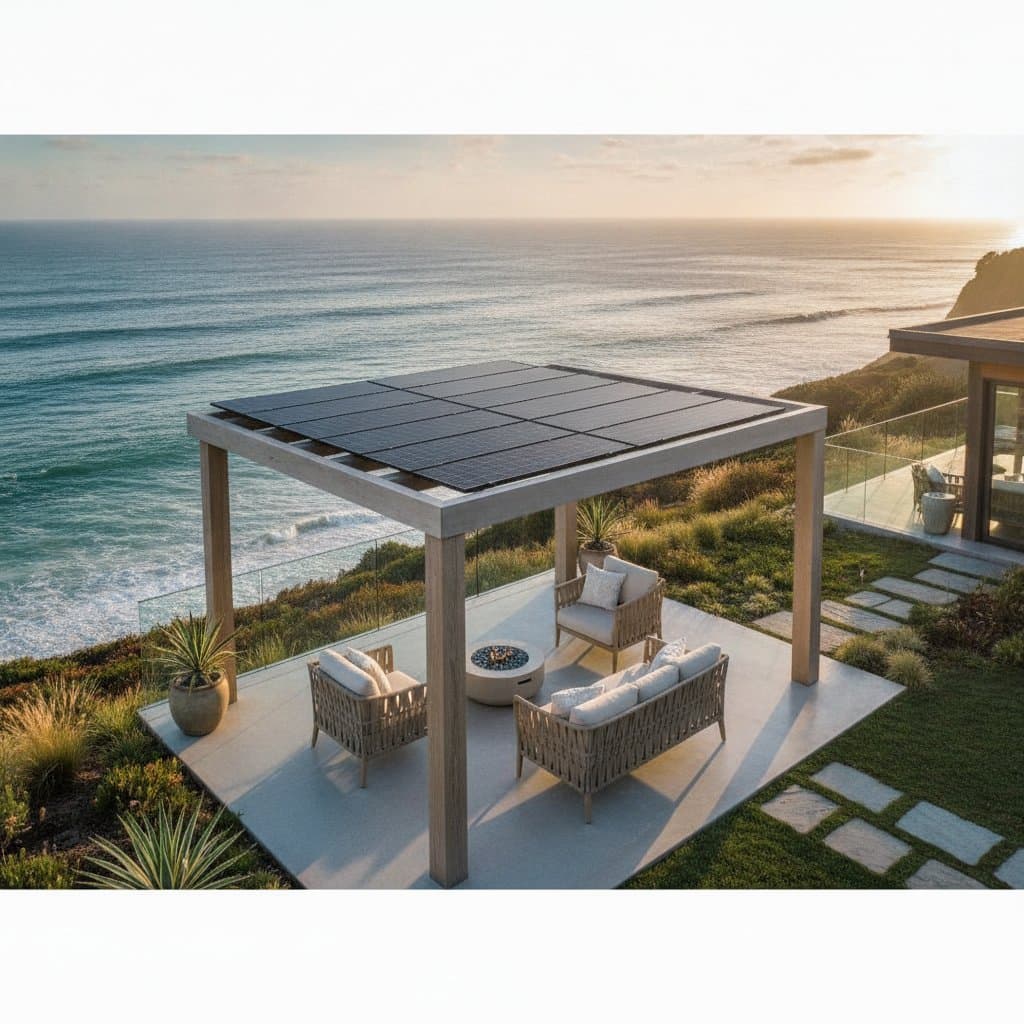
Coastal Homes Powered by Shade-Providing Solar Pergolas
Coastal living offers breathtaking views and a soothing climate. Homeowners near the coast also face challenges with energy efficiency, sun exposure, and protecting outdoor spaces. Solar pergolas address these needs by providing shade, generating clean power, and enhancing property value.
This guide explains how solar pergolas work, why they suit coastal homes, and what to consider before installation. Readers will learn how to create a design statement that also supplies renewable energy.
Why Coastal Homes Benefit from Solar Pergolas
Balancing Sun, Shade, and Comfort
Coastal regions receive abundant sunshine that supports solar production yet creates uncomfortable heat outdoors. A solar pergola combines shade with photovoltaic panels on the roof. Homeowners relax without direct glare while the system produces electricity.
Protecting Against Coastal Conditions
Salt air, humidity, and strong breezes degrade standard outdoor materials. Select powder-coated aluminum, stainless steel, or pressure-treated wood with marine-grade finishes. Rust-resistant fasteners further extend service life in seaside environments.
Enhancing Property Value and Curb Appeal
A solar pergola improves aesthetics and extends indoor-outdoor living. Install it by the pool, over a patio, or attached to a deck to create an inviting transition. Buyers increasingly seek renewable energy features, which supports higher resale interest.
How a Solar Pergola Works
Power Generation and Distribution
Photovoltaic panels convert sunlight into direct current electricity. An inverter changes the power to alternating current for household use. Excess energy can return to the grid through net metering programs where available.
Integration with Existing Solar or Battery Systems
An existing rooftop array pairs with a solar pergola to increase total offset. Homeowners may dedicate pergola output to battery charging or an electric vehicle charger. This approach matches specific energy goals without major roof modifications.
Dual Functionality and Design Flexibility
Solar pergolas merge architecture with energy production. Choose minimalist frames, wood finishes, or metal structures with adjustable louvers and integrated lighting. These options create an architectural feature that complements coastal styles.
Planning Your Solar Pergola Project
Step 1: Evaluate Your Site
Assess sun exposure, shade obstructions, and wind patterns before installation. A south-facing orientation maximizes output in most regions. A professional installer performs a site analysis to project energy yield and confirm placement.
Step 2: Set a Budget and Understand Costs
Costs vary by size, materials, and capacity. Factor in both structural and solar components, then review federal or state incentives that may lower the initial outlay. Confirm eligibility with a tax professional before proceeding.
Step 3: Choose a Qualified Installer
Verify licenses for solar and structural work along with liability and workers compensation insurance. Request detailed proposals that list equipment, energy estimates, and timelines. Compare multiple bids and review panel and workmanship warranties before signing.
Step 4: Design for Aesthetics and Functionality
Plan seating, dining, lighting, fans, or planters beneath the structure. These additions turn the pergola into a comfortable extension of daily living while supporting energy efficiency.
Key Advantages of Solar Pergolas in Coastal Settings
Coastal sunshine supports steady generation even on partly cloudy days. The resulting offset reduces monthly utility bills over time. Renewable production lowers carbon impact and can power irrigation, lighting, or outdoor appliances.
Shade protects furnishings and surfaces from ultraviolet damage. Corrosion-resistant materials require only occasional cleaning and inspections to maintain performance for decades.
Common Design Options for Coastal Solar Pergolas
- Freestanding units stand alone near pools or gardens for flexible placement.
- Attached models connect to the home for seamless indoor-outdoor flow.
- Custom designs match architectural details such as curved beams or smart monitoring.
- Hybrid louvers adjust automatically to balance light, ventilation, and power output.
Frequently Asked Questions
What is the lifespan of a solar pergola?
Panels carry long-term performance warranties. Durable frames withstand coastal exposure with routine maintenance and can serve for several decades.
How much energy can a solar pergola produce?
Output depends on size, orientation, and local sunlight. A qualified installer supplies a property-specific production estimate.
Can a solar pergola power my entire home?
Many systems supplement rooftop arrays to cover most household needs. Total coverage depends on consumption and available space.
How do I maintain a solar pergola in a coastal environment?
Rinse panels to remove salt, inspect fasteners, and check the structure after storms. These steps preserve efficiency and safety.
Are permits required for installation?
Most areas require permits for solar and structural work. Installers typically manage the process to meet local codes.
What incentives are available for solar pergolas?
Federal and state programs may provide tax credits or rebates. Current options change, so consult an installer or local energy office.
Can solar pergolas be customized to match my home style?
Manufacturers supply varied finishes and configurations. Design consultants align selections with existing architecture and colors.
Maximizing Coastal Living Benefits
A solar pergola converts underused outdoor areas into shaded spaces that generate clean energy daily. The upgrade improves comfort, reduces utility costs, and supports sustainable practices for years ahead.