
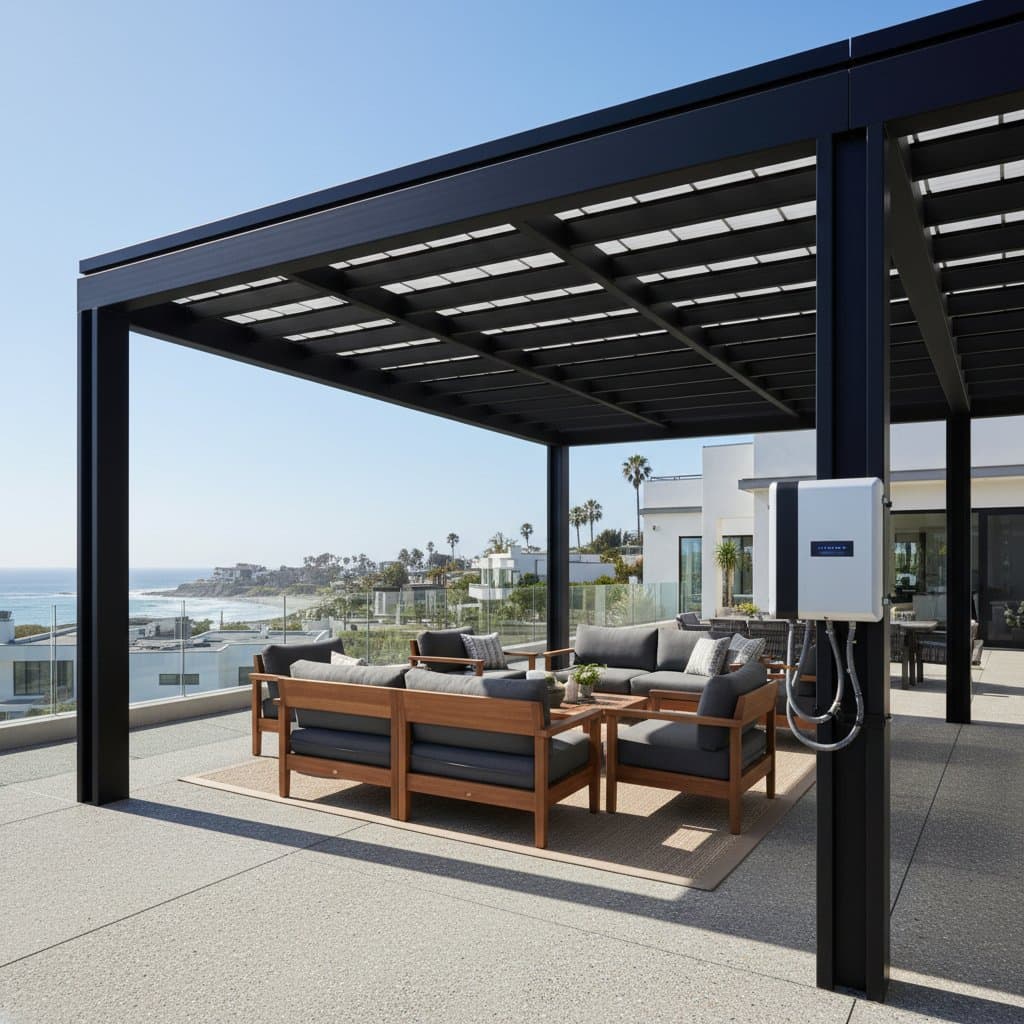
Solar Pergolas Deliver Shade and Power for Coastal Homes
Coastal residents value shaded outdoor areas because intense sunlight competes with appealing sea breezes. Solar pergolas address both needs by supplying shade and producing electricity from panels that form the roof. This approach suits properties where roof mounted systems face exposure challenges.
A solar pergola functions as a patio cover or freestanding structure. Panels replace traditional roofing materials and generate power while blocking sun. Coastal conditions with salt and wind favor these installations over some rooftop options because the lower profile reduces certain stresses.
Average Cost of a Solar Pergola
Project costs range from 25000 dollars to 45000 dollars based on size and capacity. Smaller 3 kilowatt systems start near 18000 dollars. Larger custom designs can exceed 55000 dollars. The typical project totals around 35000 dollars including structure and installation.
Federal and local incentives offset portions of the expense through tax credits. Savings from reduced electricity use accumulate over years and improve overall value.
Cost by Size and Scope
| Project Type | Typical Size | Estimated Cost | Energy Output |
|---|---|---|---|
| Small Patio Solar Pergola | 10x10 feet | 18000 to 25000 dollars | 2 to 3 kW |
| Mid Size Backyard Pergola | 12x16 feet | 28000 to 40000 dollars | 4 to 6 kW |
| Large Custom Pergola | 16x20 feet or larger | 40000 to 55000 dollars | 7 to 10 kW |
Larger structures supply more shade and higher output. Households with greater electricity demand achieve faster returns as capacity grows.
Cost by Material
Material selection affects appearance and resistance to humidity and salt.
| Material | Cost per Square Foot (Structure Only) | Durability | Maintenance | Aesthetic Appeal |
|---|---|---|---|---|
| Pressure Treated Wood | 35 to 55 dollars | Moderate | High | Warm natural |
| Aluminum | 45 to 70 dollars | High | Low | Modern clean |
| Steel | 60 to 85 dollars | Very High | Low | Industrial |
| Composite | 50 to 75 dollars | High | Low | Wood like finish |
Aluminum and composite options resist corrosion effectively in coastal settings and require limited upkeep.
Labor Costs
Labor accounts for 20 to 30 percent of total expense. Solar specialists charge 50 to 80 dollars per hour. Carpenters or fabricators charge 40 to 70 dollars per hour. Mid size projects incur 6000 to 10000 dollars in labor. Permits and inspections add 500 to 2000 dollars.
Factors That Influence Total Cost
Several elements determine final price and performance.
- Size and design complexity raise expenses for custom shapes.
- Higher efficiency panels increase output per square foot at greater initial cost.
- Corrosion resistant materials extend service life despite higher upfront prices.
- Battery storage adds expense yet enables use after sunset.
- Southern exposure maximizes generation for most sites.
- Older electrical systems may require upgrades before connection.
How to Save Money on a Solar Pergola
- Choose standard dimensions to avoid custom fabrication fees.
- Select mid range panels that balance output and price.
- Apply available federal and local credits during purchase.
- Combine installation with related patio work to reduce separate labor charges.
- Install storage after initial operation reveals usage patterns.
DIY vs. Hiring a Professional
Skilled individuals can assemble basic structures from kits. Solar integration demands licensed work for safety and compliance.
| Task | DIY Feasibility | Risks | Professional Advantage |
|---|---|---|---|
| Pergola Assembly | Moderate | Structural instability if misaligned | Guaranteed structural integrity |
| Solar Panel Mounting | Low | Electrical hazards and code violations | Safe code compliant installation |
| Wiring and Inverter Setup | Very Low | Fire risk and voided warranties | Certified electrical connection |
| System Commissioning | Low | Inefficient performance | Optimized power generation |
Licensed installers ensure code adherence and incentive eligibility.
Common Mistakes to Avoid
- Underestimate wind loads and select inadequate anchoring for coastal gusts.
- Skip shade analysis that accounts for trees or neighboring buildings.
- Omit integrated drainage for rainwater management.
- Select untreated wood that deteriorates in salt air.
- Neglect periodic cleaning and inspections even on low maintenance materials.
Frequently Asked Questions About Solar Pergolas
Do I need a permit for a solar pergola?
Most areas require building and electrical permits. Qualified contractors manage submissions and verify compliance.
How long does installation take?
Standard projects require two to three weeks from foundation work through final inspection.
How much energy can a solar pergola produce?
Average systems generate 4000 to 9000 kilowatt hours annually depending on panel orientation and sunlight.
Can a solar pergola power my entire home?
Capacity and household consumption determine full coverage. Many owners pair pergolas with rooftop arrays or use output for outdoor equipment and vehicle charging.
How long will a solar pergola last?
Panels carry 25 year performance warranties. Structures endure 30 years or longer with routine care.
Are solar pergolas safe near the ocean?
Properly anchored aluminum or composite frames withstand salt exposure when installed to local wind standards.
What maintenance is required?
Annual cleaning of panels and inspection of connections maintain efficiency. Structural checks occur every few years.
Planning Your Installation
Homeowners begin with site assessment for sun exposure and wind conditions. They then compare material options against budget and desired output. Professional consultation confirms permit needs and incentive qualification before construction begins. The completed structure provides reliable shade alongside measurable energy production for years ahead.