
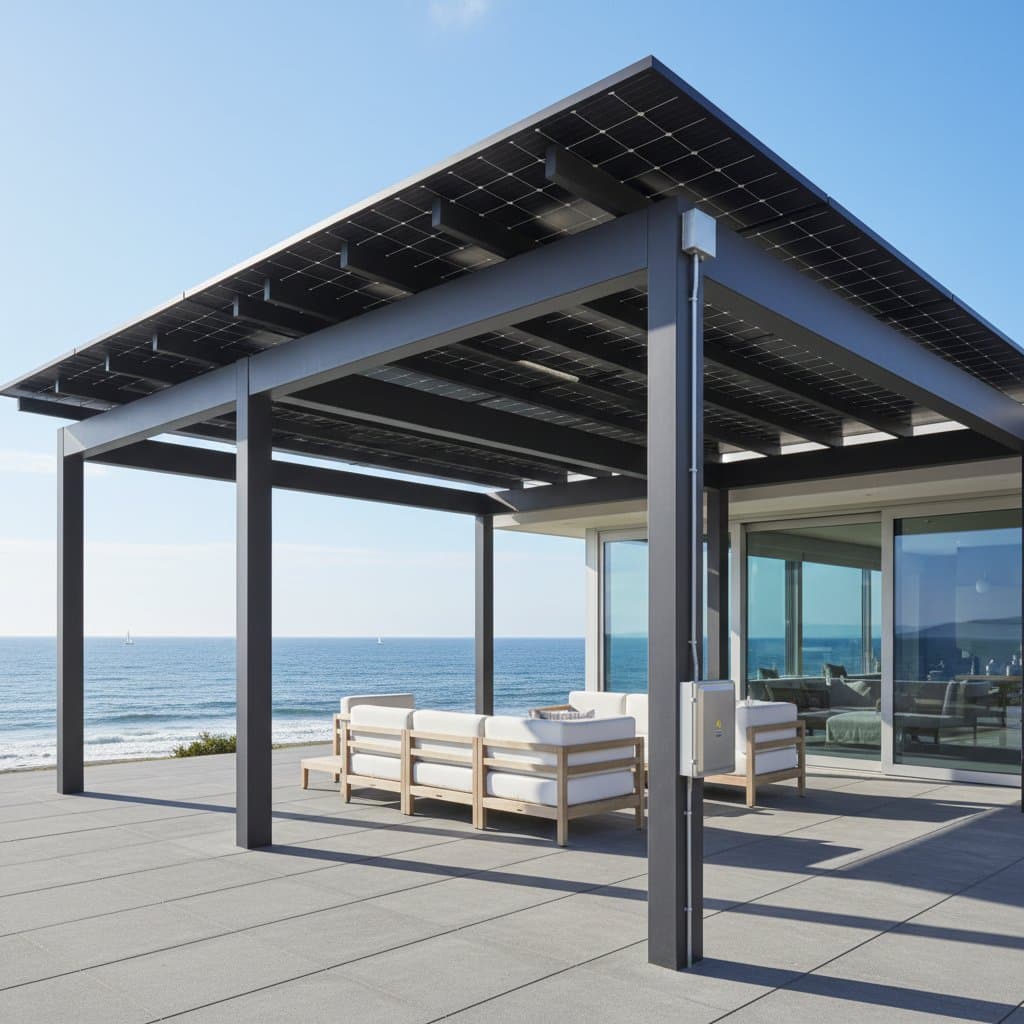
Solar Pergolas Energizing Coastal Homes in 2025
Solar pergolas transform coastal homes by integrating outdoor comfort with clean energy production. These structures feature solar panels embedded in overhead frameworks, enabling homeowners to generate renewable power while relaxing in shaded patios or pool areas. In sunny regions like Southern California, installations typically range from $12,000 to $30,000, delivering notable energy savings and elevated property values.
What Is a Solar Pergola?
A solar pergola consists of a freestanding or attached outdoor framework with solar panels incorporated into its roof slats. It provides traditional shade benefits while converting sunlight into usable electricity for outdoor lights, appliances, or integration with the home's electrical system.
Quick facts:
- Average cost: $12,000–$30,000
- Energy output: 3 kW–6 kW systems on average
- ROI: 70%–85% in most coastal climates
- Lifespan: 20–25 years with minimal maintenance
Modern solar pergola shading a coastal patio with ocean views.
Average Costs of Solar Pergolas
Solar pergolas represent an investment in renewable energy and contemporary outdoor aesthetics. Expenses vary based on materials, dimensions, and panel capacity. In coastal areas, factors like labor and permits can further affect the total price.
| Pergola Type | Cost Range | Typical Size | Energy Output | ROI Estimate |
|---|---|---|---|---|
| Basic wood solar pergola | $10,000–$15,000 | 10x10 ft | 2–3 kW | 65% |
| Aluminum solar pergola | $15,000–$22,000 | 12x12 ft | 3–4 kW | 75% |
| Custom steel solar pergola | $20,000–$30,000 | 14x14 ft | 5–6 kW | 85% |
| Luxury composite solar pergola | $25,000–$35,000 | 16x16 ft | 6–8 kW | 80% |
Close-up of integrated solar panels installed on a pergola roof frame.
Key Factors Influencing Cost and Efficiency
Multiple elements shape the efficiency and expense of a solar pergola installation.
1. Location and Sun Exposure
Coastal properties benefit from plentiful sunlight, optimizing energy yield. Structures facing south without obstructions from trees or buildings achieve peak performance. Evaluate your site early to avoid efficiency losses.
2. Material Choice
- Wood: Affordable and natural, though it demands periodic sealing to combat weathering.
- Aluminum: Lightweight and resistant to corrosion, making it suitable for salty coastal air.
- Steel: Robust for expansive setups, yet it carries a higher price tag.
- Composite: Maintenance-free and resilient against humidity and ocean exposure.
3. Panel Quality
Opt for high-efficiency monocrystalline panels to maximize output per area, justifying the initial investment through faster payback. These panels offer a streamlined appearance alongside reliable performance.
4. Design Complexity
Features like embedded lighting, adjustable louvers, or onboard batteries enhance functionality but raise costs. Prioritize elements that align with your daily outdoor routines.
5. Permitting and Labor
Coastal regulations often mandate permits for wind resistance and energy compliance. Engage certified installers to guarantee safety and optimal results.
Roof view of a solar pergola showing neatly aligned photovoltaic panels.
Benefits of Solar Pergolas for Coastal Homes
Beyond aesthetics, solar pergolas provide tangible advantages in energy use and daily living for coastal residents.
Energy Independence
A standard installation generates sufficient power to cover a large share of home energy demands, including indoor and outdoor systems like lighting or pool pumps.
Year-Round Outdoor Comfort
These pergolas offer reliable shade on intense days and can include retractable shades or screens for versatility. Integrated fans or misters, powered directly by the panels, extend usability across seasons.
Property Value and ROI
Solar enhancements typically raise home values by 3% to 5%, varying by market conditions. The combination of energy savings and appeal to eco-conscious buyers accelerates return on investment.
Resilience in Coastal Climates
Materials such as aluminum and composites withstand corrosion from saltwater, while secure anchors protect against high winds and moisture.
Aesthetic Appeal
Designs harmonize with styles from modern to Mediterranean, elevating patios into focal points that enhance overall curb appeal.
Budgeting and Planning Tips
Strategic preparation helps secure the best outcomes within financial limits. Follow these steps for effective implementation.
- Assess Energy Needs: Analyze monthly utility statements to determine required output.
- Set a Budget: Include materials, installation, and a 10% to 15% buffer for unforeseen expenses.
- Compare Installers: Obtain proposals from three or more specialists experienced in coastal projects.
- Check Incentives: Explore available rebates and tax credits to lower net costs.
- Plan for Maintenance: Arrange yearly checks to sustain peak operation.
Coastal backyard featuring a solar pergola over an outdoor dining area.
DIY and Low-Cost Alternatives
Budget-conscious homeowners can explore scaled-down approaches to solar pergolas.
- Solar Panel Kits: Pre-assembled options for self-installation range from $6,000 to $10,000 for compact units.
- Partial Integration: Add panels to an existing pergola to minimize structural changes.
- Hybrid Systems: Pair solar with grid electricity for balanced reliability and expense.
- Community Solar Programs: Participate in shared initiatives if individual setups prove impractical.
Professional advice remains essential for code adherence and safety, even with DIY elements.
Long-Term Value and Maintenance
A solar pergola fosters enduring sustainability and enriches outdoor experiences. Consistent maintenance preserves its performance over time.
Maintenance Tips
- Clean panels quarterly to clear salt and debris.
- Examine joints annually for signs of corrosion.
- Track production via monitoring tools to detect issues promptly.
- Apply sealant to wood elements as required to block moisture.
Systems maintained properly sustain over 80% efficiency for more than 20 years.
FAQs About Solar Pergolas
| Question | Answer |
|---|---|
| How long does installation take? | Projects usually finish in one to two weeks, based on customization. |
| Can it power my entire home? | Modest setups offset portions of usage; expansive ones cover most needs. |
| Do solar pergolas need batteries? | Batteries provide optional storage for off-peak use at added expense. |
| Are they safe in coastal storms? | Compliant builds with resistant materials and anchors ensure durability. |
| Do I need special permits? | Coastal areas typically require building and electrical approvals; verify locally. |
| Does it work on cloudy days? | Production continues from diffuse light, though at reduced levels. |
Integrating Solar Pergolas into Coastal Living
Solar pergolas unite renewable energy with refined outdoor spaces, offering coastal homeowners shade, savings, and sustainability. Through thoughtful design and expert setup, these installations turn patios into efficient, inviting extensions of the home. Embrace this upgrade to lower costs, heighten comfort, and align with eco-friendly coastal ideals.