
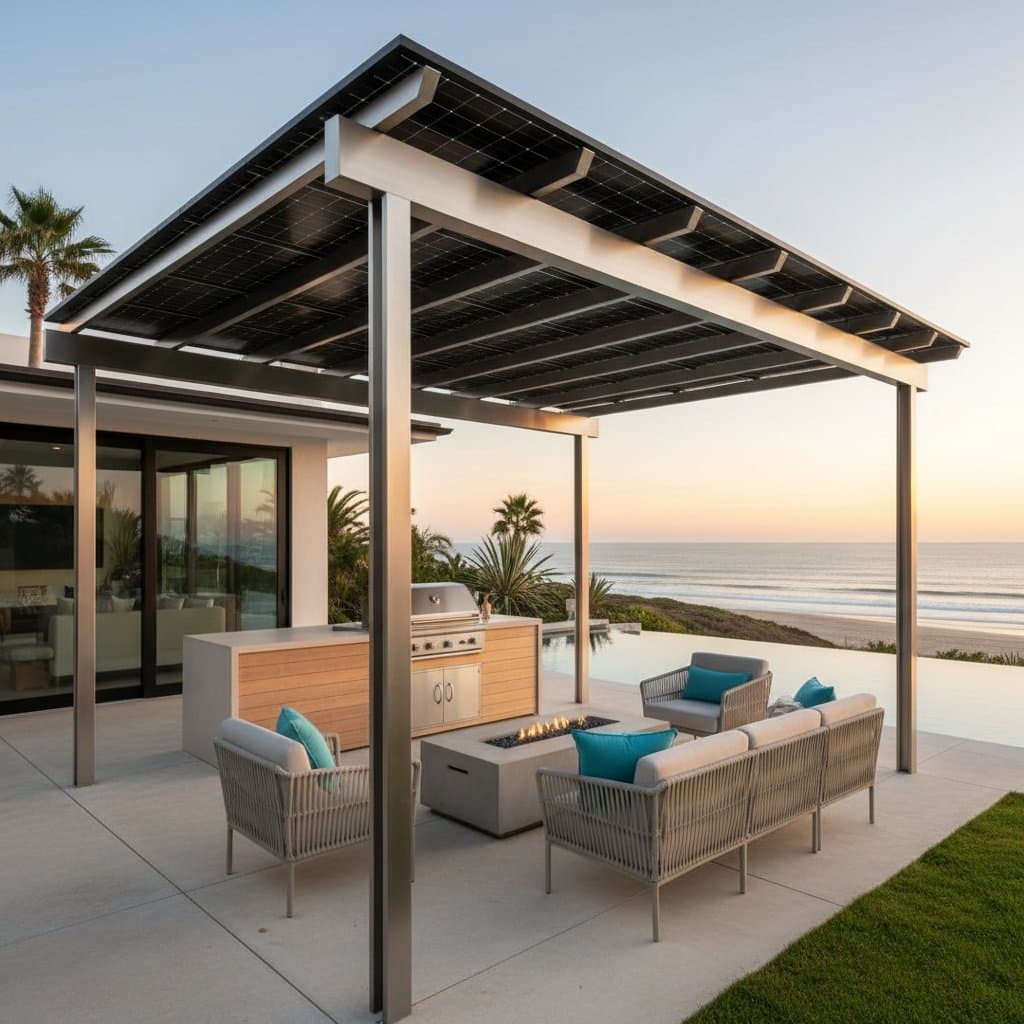
Introduction to Solar Pergolas
Coastal living offers breathtaking views and mild climates, yet it presents challenges like high energy costs from air conditioning and exposure to harsh elements. Solar pergolas address these issues by integrating shade structures with photovoltaic technology. Homeowners gain a versatile outdoor space that generates electricity while protecting against intense sun.
These installations suit the unique demands of seaside properties. They withstand salty air and strong winds better than traditional options. As renewable energy adoption grows, solar pergolas emerge as a practical solution for sustainable living.
What Are Solar Pergolas?
A solar pergola consists of an open-roofed framework topped with solar panels instead of fabric or wood slats. The design allows partial sunlight to filter through while capturing energy for home use. Panels connect to inverters that convert sunlight into usable electricity, feeding into the household grid or powering outdoor features.
Materials emphasize durability in coastal settings. Aluminum frames resist corrosion from ocean spray, and tempered glass panels endure UV exposure. Customizable sizes range from small patios to expansive entertainment areas, blending functionality with architectural style.
Benefits for Coastal Homeowners
Solar pergolas significantly lower power bills in sun-drenched coastal regions. By offsetting electricity needs, they reduce reliance on utility grids during peak summer months. Annual savings often reach several hundred dollars, depending on system size and local rates.
Beyond finances, they enhance comfort and property value. Shaded areas stay cooler, encouraging extended outdoor time without excessive heat. Real estate experts note that energy-efficient features like these can boost home appraisals by up to 5 percent in eco-aware markets.
Environmental advantages align with coastal conservation efforts. These structures produce clean energy, cutting carbon footprints from fossil fuel-based power. They support local wildlife by providing shaded microhabitats in developed yards.
How Solar Pergolas Generate Power
Solar panels on the pergola roof absorb photons from sunlight, exciting electrons to create direct current. An inverter then transforms this into alternating current compatible with home systems. Excess energy can charge batteries for nighttime use or evening lighting.
In coastal areas, high solar irradiance maximizes output. A standard 10-foot by 10-foot pergola might generate 3 to 5 kilowatts, enough to power appliances or offset air conditioning loads. Integration with smart home systems allows monitoring via apps for optimal performance.
Installation involves securing the frame to a concrete base for stability against winds. Professional electricians ensure safe wiring to avoid hazards in humid conditions. Most setups qualify for renewable energy incentives, further reducing upfront costs.
Key Components
- Panels: Monocrystalline types offer high efficiency in limited space.
- Frame: Powder-coated aluminum prevents rust in salty environments.
- Inverter: Microinverters per panel improve output in shaded spots.
- Battery Storage: Optional lithium-ion units store surplus power.
Costs and Return on Investment
Initial expenses for a solar pergola vary by size and features. Basic models start at $5,000, while premium versions with batteries exceed $15,000. Factors include panel quality, frame dimensions, and permitting fees common in coastal zones.
Payback periods typically span 5 to 8 years through energy savings and rebates. Federal tax credits cover 30 percent of costs, and state programs in sunny areas like California add further reductions. Long-term, panels last 25 years with minimal degradation.
Compare this to traditional shading options, which offer no energy benefits. Over time, solar pergolas deliver compounded value by combining utility with income generation via net metering programs.
Choosing the Right Solar Pergola
Assess your outdoor space needs first. Measure the area and consider usage, such as dining or lounging. Opt for designs that match your home's architecture, from modern sleek lines to rustic wood accents.
Prioritize corrosion-resistant materials for longevity. Look for certifications like UL listing for electrical safety and wind ratings up to 120 mph. Consult local installers familiar with coastal regulations to navigate permits smoothly.
Evaluate energy goals. Calculate potential output using online solar calculators tailored to your location's sunlight hours. Systems with expandable panels allow future upgrades as needs evolve.
Selection Tips
- Determine daily energy consumption for outdoor features.
- Review warranties covering at least 10 years on frames and 25 on panels.
- Test modular designs for easy panel replacement.
- Integrate lighting or fans powered by the system for added convenience.
Maintenance in Coastal Environments
Routine care keeps solar pergolas performing optimally. Clean panels quarterly with soft brushes and water to remove salt buildup and bird droppings. Avoid harsh chemicals that could damage coatings.
Inspect frames annually for loose bolts or corrosion signs. Lubricate moving parts if the design includes adjustable louvers. Professional tune-ups every few years ensure electrical components function efficiently.
In stormy seasons, secure loose items and monitor for damage. Most systems require little intervention, making them ideal for busy coastal lifestyles. Proper upkeep extends lifespan and maintains energy production levels.
Integrating Solar Pergolas into Outdoor Living
Position the pergola to capture maximum sunlight while providing shade over key areas. Connect it to pools, kitchens, or seating zones for seamless functionality. Add retractable screens for privacy or insect protection.
Pair with native landscaping to enhance sustainability. Drought-tolerant plants around the base reduce water use and complement the eco-theme. This setup creates a cohesive outdoor retreat that withstands coastal weather.
Homeowners report increased enjoyment of their spaces year-round. From morning coffee to evening gatherings, solar pergolas turn ordinary yards into vibrant, powered havens.
Realizing Savings and Sustainability
Adopting a solar pergola positions coastal homes at the forefront of green innovation. Immediate shade reduces cooling demands, while generated power trims monthly bills. Over years, the investment yields financial returns alongside environmental stewardship.
Consider the broader impact on community resilience. Widespread use lessens grid strain during heatwaves, benefiting entire neighborhoods. For those ready to upgrade, solar pergolas offer a straightforward path to enhanced living and lower costs.