
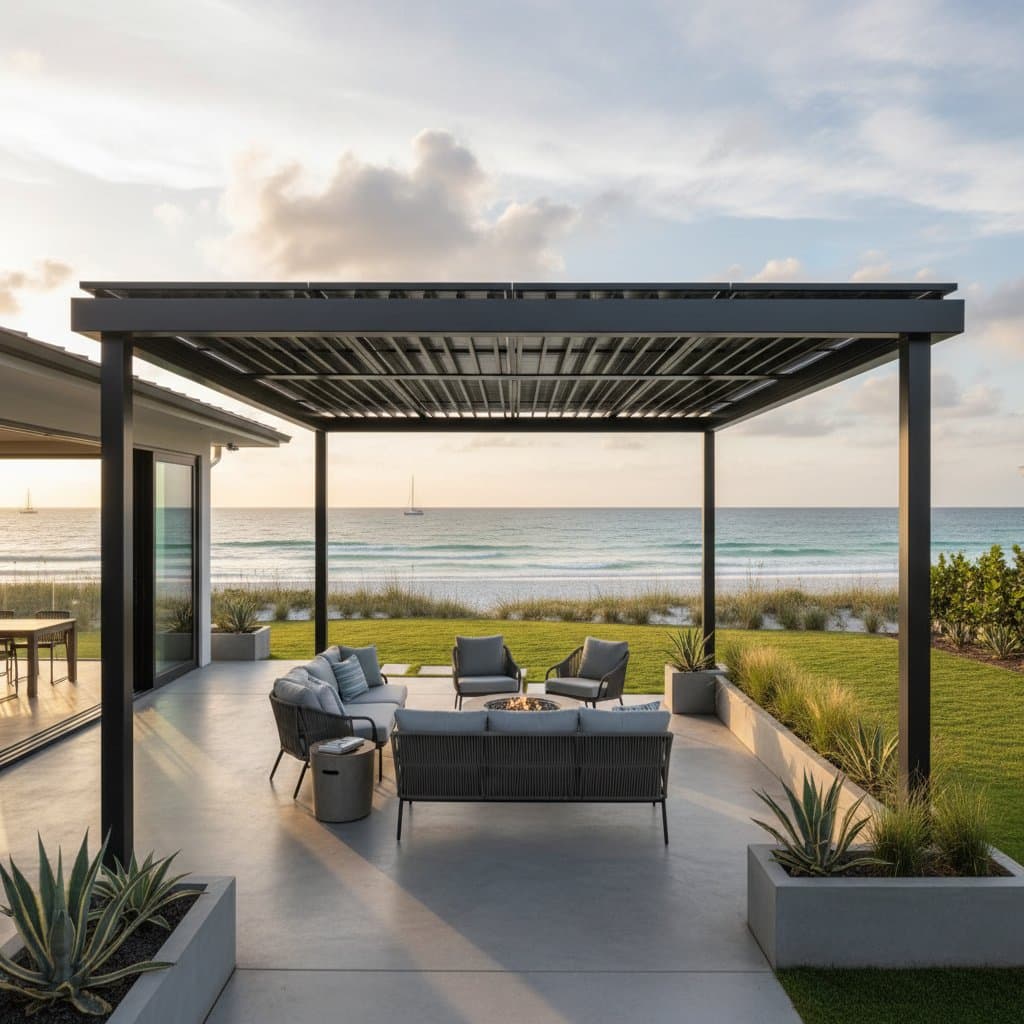
Power Your Coastal Backyard with Solar Pergolas
Imagine relaxing in your coastal backyard under a beautiful pergola that provides shade and generates clean energy. That is the essence of solar pergolas, a trend that combines style, sustainability, and technology. For residents near the beach or on hills with ocean views, a solar pergola transforms outdoor spaces into efficient retreats.
Highlights
- Solar pergolas integrate shade structures with solar power generation
- They suit coastal homes that receive abundant sunlight
- These installations reduce electricity bills and increase property value
- Custom designs match various outdoor aesthetics
- They charge devices, power lights, or operate pool equipment
- They promote sustainable backyard enjoyment and renewable energy support
What Is a Solar Pergola?
A solar pergola consists of a traditional outdoor structure with solar panels embedded in its roof. The panels capture sunlight and convert it into electricity for home or outdoor use. Unlike ground-mounted systems, solar pergolas offer shade alongside power generation.
Photo: A modern coastal backyard featuring a sleek solar pergola amid tropical plants.
How It Works
- Solar panels mount on the pergola roof.
- Inverters transform captured solar energy into usable electricity.
- The power integrates with the home grid or charges batteries for later.
- Excess energy may return to the utility via net metering, subject to local rules.
Why Coastal Homes Suit Solar Pergolas
Coastal regions enjoy strong, year-round sunlight. Open landscapes and water reflections boost solar exposure, maximizing panel efficiency. In salty, windy conditions, pergola-mounted panels outlast roof installations and ease maintenance.
Benefits of Solar Pergolas for Coastal Living
Solar pergolas extend beyond energy savings to foster comfortable, eco-friendly lifestyles that integrate with outdoor designs.
Dual Functionality
The structure delivers shade and electricity simultaneously. During barbecues, it powers grills, lights, and audio systems.
Energy Independence
Less grid dependence empowers homeowners. Solar pergolas directly supply renewable energy to outdoor lighting, fans, and appliances.
Coastal Durability
These pergolas employ marine-grade materials to resist corrosion and rust, essential for oceanfront settings.
Design Flexibility
Options range from rustic wood to sleek aluminum. Choose freestanding or attached configurations.
Environmental Stewardship
Each kilowatt hour from a solar pergola lowers carbon emissions. This contributes significantly to sustainable coastal practices.
Photo: A coastal deck with a cedar solar pergola facing the ocean.
Understanding the Cost of Solar Pergolas
Costs depend on size, materials, and panel count. Consider these ranges for planning.
| Project Type | Approximate Cost Range | Description |
|---|---|---|
| Basic Solar Pergola | $8,000 - $15,000 | Small unit with few panels for patios or decks |
| Mid-Range Solar Pergola | $15,000 - $25,000 | Larger setup for partial home power needs |
| Premium Custom Pergola | $25,000 - $40,000+ | Custom design with lighting, fans, full array |
Factors That Influence Price
- Pergola size and design complexity
- Solar panel quality and efficiency
- Materials like wood, aluminum, or composite
- Installation as freestanding or attached
- Addition of battery storage
Tip: Allocate 20 percent extra in the budget for upgrades or installation changes.
Power Output and Energy Savings
Output varies by sunlight, panel quality, and angle. A typical setup yields 2 to 5 kilowatts, offsetting daily home electricity.
What You Can Power
- Outdoor lighting and ceiling fans
- Electric grills and small appliances
- Pool pumps and filters
- Electric vehicle chargers
- Nearby home office devices
With batteries or smart integration, it provides outage backup.
Photo: A pergola with solar panels powering string lights and a mini outdoor kitchen.
Building and Installing a Solar Pergola
Installation involves planning, permits, and expert coordination. Follow these steps.
Step 1: Evaluate Your Space
Select a sunny spot with minimal shade from trees or buildings. South-facing orientations optimize output.
Step 2: Design the Structure
Collaborate with contractors or designers on dimensions, materials, and features like lighting.
Step 3: Obtain Necessary Permits
Secure approvals for solar and building work. Installers often manage documentation.
Step 4: Install the Pergola and Solar Panels
Build the frame, then add panels, wiring, and inverters. Projects span a few days.
Step 5: Connect to the Grid or Battery System
Post-inspection, link to the electrical panel or storage. Activation enables energy production.
Pros and Cons of Solar Pergolas
| Pros | Cons |
|---|---|
| Generates renewable energy | Higher initial cost than basic pergolas |
| Offers shade and comfort | Needs regular cleaning for efficiency |
| Lowers energy bills | Requires professional setup and permits |
| Boosts home value | Outputs less than full roof arrays |
| Customizable and stylish | Coastal salt demands extra maintenance |
Tip: Clean annually to clear salt from panels.
Design Ideas for a Coastal Solar Pergola
Blend function with creativity in coastal settings, favoring open, natural styles.
Material Choices
- Cedar wood: Warm, durable tones
- Powder-coated aluminum: Lightweight, rust-proof
- Composite: Low-maintenance for humidity
Style Inspiration
- Modern coastal: Clean lines, white frames, glass details
- Tropical retreat: Bamboo and greenery accents
- Classic beach house: Whitewashed wood, woven furniture, blue cushions
Functional Additions
- LED lighting for evenings
- Ceiling fans for breeze
- Retractable shades for privacy
- Outlets and USB ports
Photo: A white aluminum solar pergola with string lights and sunset ocean views.
Maintenance Tips for Coastal Solar Pergolas
Ocean proximity introduces salt, moisture, and wind challenges. Routine care ensures longevity.
Regular Cleaning
- Rinse panels monthly with fresh water.
- Use soft brushes or cloths to avoid scratches.
- Skip harsh chemicals on coatings.
Annual Inspections
- Examine bolts and corrosion.
- Review wiring integrity.
- Test output with technicians.
Protective Measures
- Seal wood or metal surfaces.
- Trim trees to limit debris.
- Install marine-grade hardware.
Eco-Friendly Lifestyle Benefits
Solar pergolas cut bills and promote mindful living with energy self-reliance. They lessen fossil fuel use for environmental gains.
Financial Incentives
Regions provide rebates or tax credits to offset costs. Check local programs for affordability.
Increasing Home Value
Solar enhancements appeal to eco-buyers, elevating market value and outdoor appeal.
Sustainable Living Made Simple
Begin green efforts outdoors without full-home changes. This step yields practical sustainability.
Frequently Asked Questions
How much electricity can a solar pergola produce?
Systems typically generate 2 to 5 kilowatts, based on size, sun, and efficiency.
Can I use my solar pergola during cloudy weather?
Yes, panels produce on cloudy days, albeit at reduced levels versus full sun.
Will salt air damage the solar panels?
Corrosion-resistant panels suit coastal use. Monthly fresh-water rinses prevent salt damage.
Is a solar pergola worth the investment?
For sunny coastal homes with high bills, it delivers savings, shade, and style as a solid choice.
Can I install a solar pergola myself?
Experienced individuals may, but professionals ensure safety, codes, and warranties.
Steps to Launch Your Solar Pergola Project
A solar pergola elevates backyards into sustainable havens. Envision shaded relaxation with powered conveniences, embodying coastal rewards.
Contact local installers for quotes, review designs, and initiate your energy-efficient upgrade. Harness sunlight for a vibrant, self-sustaining home.