
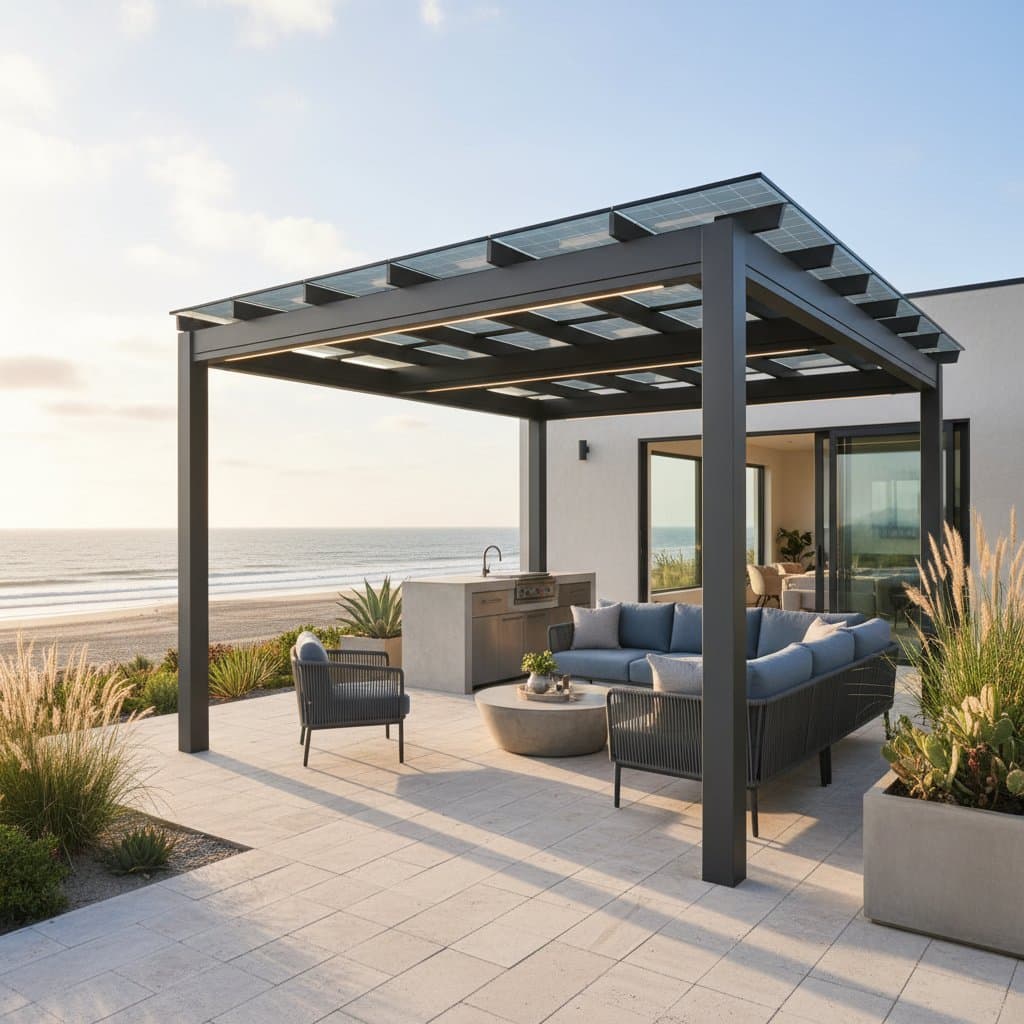
Solar Pergolas: Shade and Power for Coastal Homes
Homeowners in coastal areas often seek ways to maximize outdoor spaces while addressing energy needs. A solar pergola provides an effective solution. This structure offers shaded protection from the sun and generates electricity to offset household consumption, blending functionality with aesthetic appeal in regions abundant with sunlight.
Highlights:
- Integrates outdoor shading with solar energy production
- Suited to coastal environments featuring reliable sunshine
- Lowers electricity expenses and environmental impact
- Allows customization to complement home architecture
- Enhances the utility and market value of exterior areas
Understanding Solar Pergolas
A solar pergola consists of a pergola framework equipped with photovoltaic panels on the roof surface. Beyond simple shade, the panels convert sunlight into usable electricity, which can connect to a home's electrical system or power outdoor features directly. Structures may stand alone or attach to the house, based on site constraints and energy objectives.
In coastal settings, solar pergolas excel by creating inviting outdoor areas and harnessing regional solar resources. The design supports integration with existing patios or decks, ensuring seamless expansion of livable space. Homeowners benefit from reduced reliance on grid power during peak sunlight hours.
Photo: A sleek solar pergola overlooking the ocean, with panels integrated seamlessly into the roofline.
Advantages of Solar Pergolas in Coastal Environments
Coastal locations typically receive steady sunlight and face minimal shading from tall structures, which optimizes solar panel efficiency. However, exposure to salt-laden air, high winds, and moisture requires robust construction. Solar pergolas address these challenges through materials like powder-coated aluminum or pressure-treated lumber, paired with stainless-steel hardware to prevent degradation.
Key advantages for coastal properties:
- Consistent solar exposure: Regions near the sea often log over 2,500 hours of annual sunshine, ideal for energy production.
- Efficient land use: These installations fit compact yards where rooftop solar arrays prove impractical.
- Thermal benefits: Shaded areas minimize heat transfer into homes, easing air conditioning demands.
- Durability against elements: Frames withstand gusts up to 100 mph and resist corrosion from ocean spray.
Select panels with anti-reflective and hydrophobic coatings to maintain performance in humid, salty conditions. Consult local installers familiar with marine-grade specifications to ensure longevity.
Financial and Energy Returns
Initial costs for a solar pergola vary by dimensions, material choices, and panel capacity. A standard 10-by-12-foot model typically ranges from $12,000 to $20,000, including installation and basic electrical tie-in. Premium options with advanced features, such as smart inverters, may exceed $30,000.
Energy production offsets these expenses over time. A mid-sized unit might generate 3,000 to 5,000 kilowatt-hours annually, covering 20 to 40 percent of average household needs in sunny climates. Pair this with federal tax credits, which can rebate 26 percent of costs, and state incentives to accelerate payback periods to five to seven years.
| Feature | Basic Pergola | Solar Pergola |
|---|---|---|
| Shade Provision | Yes | Yes |
| Electricity Generation | No | Yes |
| Annual Savings | None | $500 to $1,500 |
| Property Value Impact | Moderate | Significant (5-10% uplift) |
Photo: A backyard with a solar pergola next to a pool, showing both shade and sunlight reflection on the panels.
Customization Options for Coastal Aesthetics
Tailor solar pergolas to reflect the relaxed vibe of seaside living. Opt for sleek metal frames that echo modern beach houses or warm cedar tones that harmonize with natural dunes. Conceal wiring within posts to preserve clean lines, and incorporate weatherproof elements for year-round use.
Design enhancements to consider:
- LED lighting strips embedded in beams for dusk ambiance
- Motorized shades or louvers under the panels for adjustable coverage
- USB ports and weather-resistant outlets for device charging or appliances
- Complementary flooring, such as composite decking, to unify the space
These additions not only boost usability but also integrate the pergola into daily routines, from al fresco dining to remote work setups.
Photo: A coastal patio with a solar pergola featuring string lights and lounge seating.
Installation and Upkeep Strategies
Professional installation ensures compliance with local building codes and optimal panel orientation, typically facing south at a 20- to 30-degree tilt for maximum yield. Expect the process to take two to four days, involving foundation securing and electrical connections by certified technicians.
Maintenance remains minimal yet essential for performance. Schedule quarterly rinses with a hose to clear salt buildup, and annual inspections for loose fittings or panel efficiency. Prune overhanging branches to avoid shading, and monitor output via connected apps to detect issues early. Such routines extend the system's lifespan to 25 years or more.
Realizing the Full Potential of Your Solar Pergola
Investing in a solar pergola elevates coastal living by merging comfort, economy, and ecology. This addition creates versatile outdoor zones that adapt to daily needs while contributing to energy independence. Homeowners discover enhanced enjoyment of their properties, backed by tangible savings and a lighter environmental footprint.