
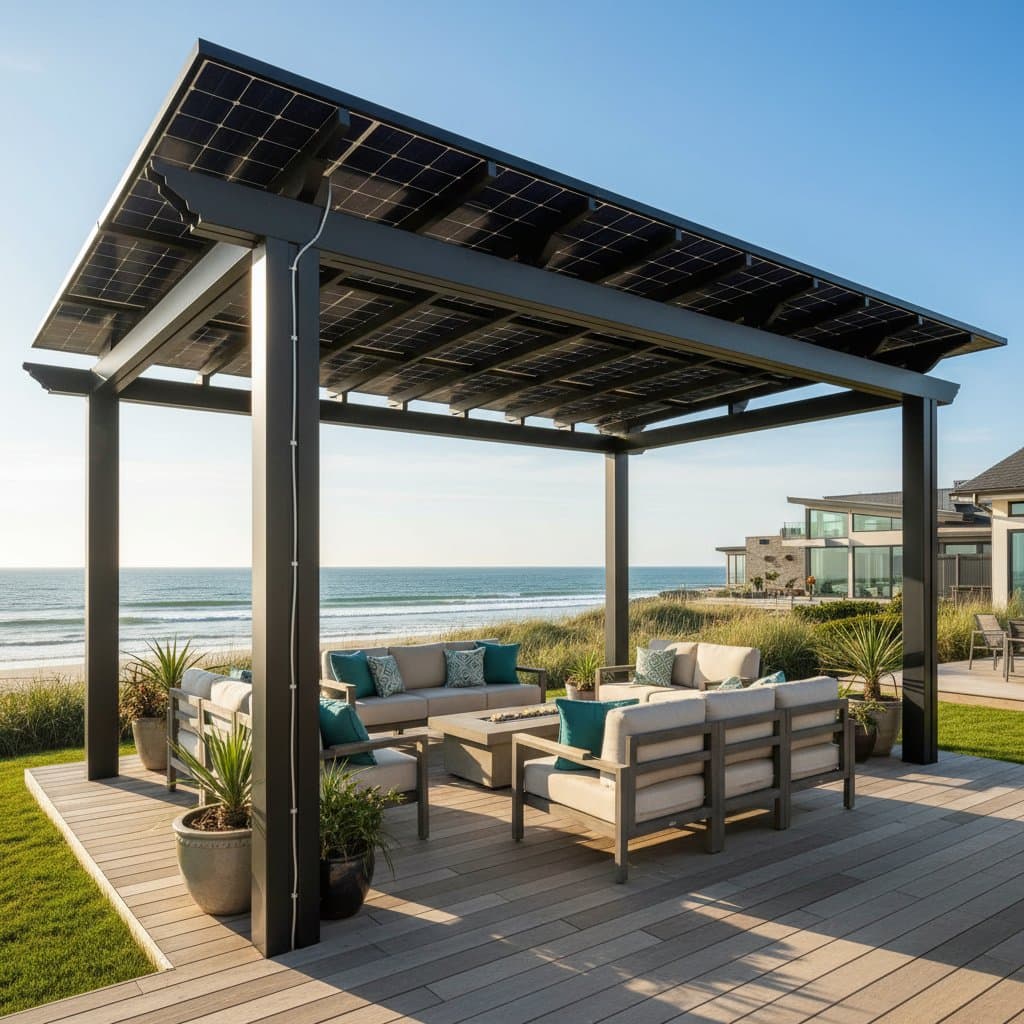
Solar Pergolas: Shade Meets Power in Coastal Yards
Homeowners along the coast often face a unique challenge. They seek to enjoy outdoor spaces comfortably while shielding against intense sunlight. Rising energy prices and sustainability objectives also direct many toward renewable solutions. A solar pergola addresses these needs. It delivers shade and produces clean electricity, transforming an outdoor structure into a practical power source.
The typical solar pergola cost spans from 18,000 to 32,000 dollars, with a national average around 24,000 dollars for a mid-sized installation. This figure covers the pergola framework and integrated solar panels. Although the investment appears substantial, it offsets electricity bills over decades and boosts property value in sun-rich areas such as coastal California.
Average Cost of a Solar Pergola
A solar pergola merges a traditional pergola with a solar power setup. The overall expense hinges on structure dimensions, design intricacy, and solar panel capacity.
| Project Type | Typical Size | Average Cost | Power Output |
|---|---|---|---|
| Small (6x10 ft, 2 kW) | Compact patio shade | 18,000 - 21,000 dollars | 2,000 watts |
| Mid-Range (10x12 ft, 4 kW) | Family seating area | 22,000 - 27,000 dollars | 4,000 watts |
| Large (12x16 ft, 6 kW+) | Outdoor kitchen or deck | 28,000 - 32,000 dollars | 6,000+ watts |
In comparison, a comparable rooftop solar system costs marginally less, yet it fails to expand usable outdoor areas or enhance visual appeal. A solar pergola delivers these combined advantages, offering shade alongside electricity generation.
Cost by Material and Design
The framework accounts for a large portion of the total expense. Materials differ in visual style, upkeep demands, and longevity.
| Material | Cost per Square Foot | Durability | Maintenance | Aesthetic Appeal |
|---|---|---|---|---|
| Wood | 35 - 55 dollars | Moderate | High | Warm and traditional |
| Aluminum | 45 - 60 dollars | High | Low | Sleek and modern |
| Steel | 50 - 70 dollars | Very High | Moderate | Industrial look |
| Vinyl | 25 - 40 dollars | Moderate | Very Low | Clean but limited styles |
In coastal settings, aluminum or powder-coated steel stands out as optimal selections. These options withstand salt air corrosion and demand little maintenance. Wood provides an attractive appearance, though it requires frequent sealing to avert rot and discoloration.
Labor and Installation Costs
Labor constitutes 25 to 35 percent of the total cost. Professional setup encompasses structural erection, electrical connections, and grid linkage.
- Pergola construction labor: 3,000 to 6,000 dollars
- Solar installation and wiring: 4,000 to 8,000 dollars
- Permits and inspection fees: 500 to 1,000 dollars
Engaging a seasoned solar contractor guarantees adherence to local codes and secure electrical incorporation. Coastal residents must verify that materials and fasteners suit marine conditions.
Factors That Influence the Total Cost
Multiple elements can adjust the final expenditure upward or downward.
- System size: Bigger installations yield greater power yet demand higher initial outlays.
- Solar panel efficiency: Advanced panels with superior output per area elevate upfront prices but potentially accelerate payback periods.
- Roof versus standalone configuration: Wall-attached pergolas might lessen material requirements.
- Local building codes and permits: Coastal areas frequently mandate enhanced wind or corrosion protections.
- Electrical distance to the main panel: Extended wiring paths increase labor and supplies.
- Optional features: Integrated lighting, fans, or smart controls raise costs while enhancing practicality.
How to Save Money on a Solar Pergola
Practical strategies exist to lower expenses without sacrificing performance.
- Select the appropriate size. Align system capacity with genuine energy demands rather than exceeding them.
- Opt for efficient panels. Modules with elevated efficiency carry higher per-watt prices but necessitate fewer components.
- Leverage existing structures. Retrofitting a sturdy current pergola can conserve thousands of dollars.
- Pursue incentives. Numerous locales provide solar rebates or tax credits that diminish net costs.
- Obtain multiple bids. Secure at least three comprehensive quotes from certified solar specialists.
- Forego excess add-ons. Ornamental elements such as bespoke wood finishes or embedded audio systems escalate expenses rapidly.
DIY vs. Hiring a Professional: A Cost-Benefit Analysis
A skilled homeowner may consider constructing a solar pergola independently. Feasibility varies by expertise and project scale.
| Task | DIY Feasibility | Cost Benefit | Risk Level |
|---|---|---|---|
| Basic pergola assembly (kit) | Moderate | Saves 2,000 - 3,000 dollars | Low |
| Electrical wiring and solar mounting | Not recommended | Minimal savings | High |
| Structural reinforcement for wind load | Complex | None | High |
Assembling a ready-made pergola kit proves feasible for many. However, solar wiring demands a licensed electrician. Errors risk electrical dangers or warranty invalidation. Professionals deliver safety, regulatory compliance, and optimal functionality for the majority of projects.
Advantages of Solar Pergolas in Coastal Areas
Coastal locales offer abundant sunlight for solar capture, coupled with demands for shade and alfresco enjoyment.
- Dual-purpose construction: Forms a shaded haven while producing renewable energy.
- Energy autonomy: Counters a share of home electricity needs.
- Ecological gains: Lessens dependence on fossil fuels and utility grids.
- Property enhancement: Homes with solar features command premium resale values.
- Reliability: Certain setups incorporate battery storage to sustain outdoor illumination or appliances amid blackouts.
Common Mistakes to Avoid
Well-meaning owners occasionally commit expensive errors.
- Overlooking permit stipulations. Coastal districts typically require engineering endorsements for structures.
- Selecting vulnerable materials. Untreated metals deteriorate swiftly in salty atmospheres.
- Disregarding obstructions like trees or edifices. Partial shadows substantially diminish energy yield.
- Neglecting upkeep. Panels benefit from routine cleaning to preserve output.
- Excess customization at outset. Initiate with essential designs, incorporating enhancements subsequently.
Frequently Asked Questions About Solar Pergolas
Do I need a permit for a solar pergola?
Yes. Local authorities generally mandate building and electrical permits for solar projects. Coastal jurisdictions impose additional rules for wind loads and base stability.
How long does a solar pergola take to install?
A routine installation spans one to two weeks following permit approval. Elaborate layouts or electrical modifications may prolong this duration modestly.
How much power can a solar pergola generate?
A standard mid-sized unit yields 4,000 to 6,000 kilowatt-hours annually, sufficient to cover a notable portion of home usage based on devices and solar access.
What adds the most value to a solar pergola?
High-efficiency panels, robust materials such as aluminum or steel, and architecture-harmonious designs yield the strongest investment returns.
Can I connect my solar pergola to battery storage?
Yes. Numerous owners integrate lithium-ion batteries with solar pergolas. Such pairings enable evening or outage usage and heighten self-sufficiency.
How long do solar pergolas last?
Solar panels sustain robust performance for 25 years or longer. Sturdy pergola frames endure similarly with diligent care.
Are solar pergolas better than rooftop panels?
They fulfill distinct roles. Rooftop arrays optimize energy output, whereas solar pergolas blend generation with outdoor utility and stylistic merit.
Maximizing Benefits from Your Solar Pergola
Once installed, a solar pergola elevates coastal living through sustained shade and power. Regular inspections ensure peak efficiency, while strategic placement captures maximum sunlight. Homeowners discover not only bill reductions but also an inviting extension of indoor comfort, fostering years of eco-conscious enjoyment.