
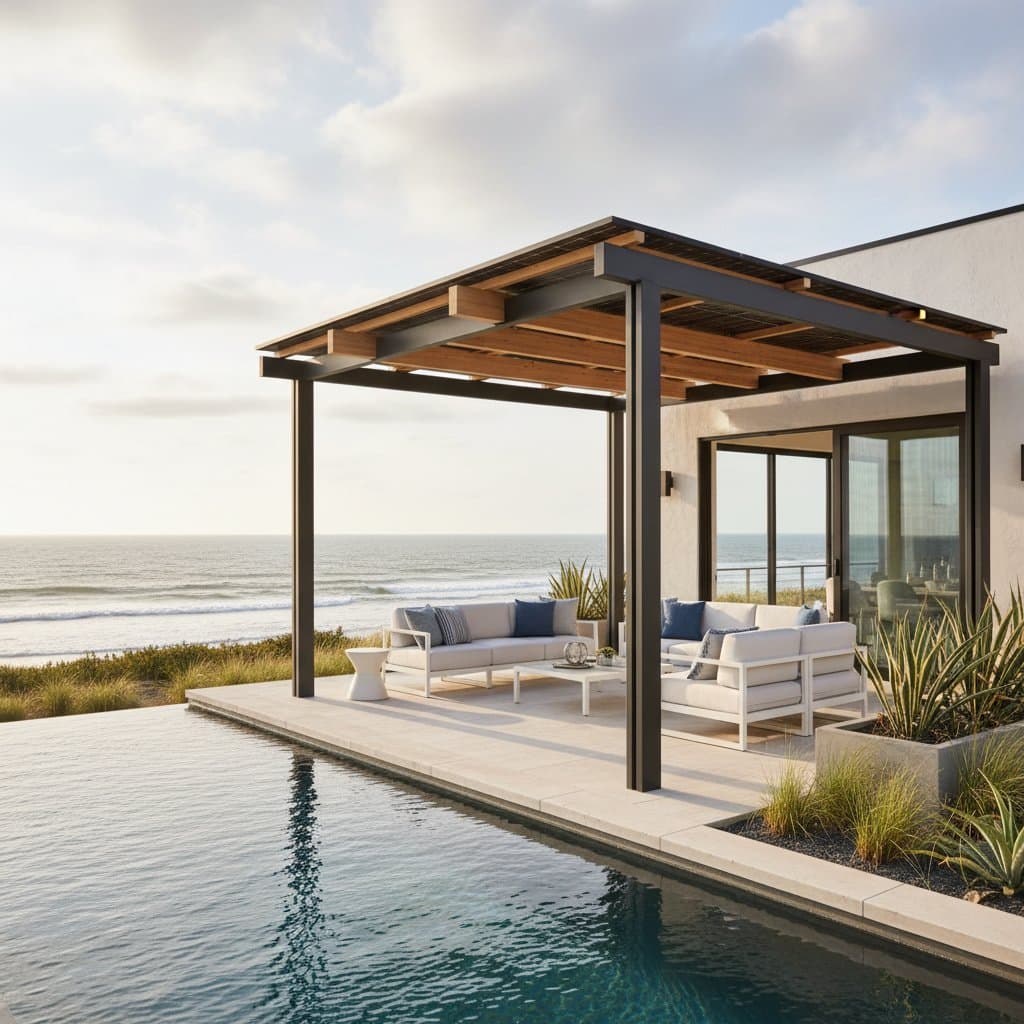
Solar Pergolas: Shade and Power for Coastal Homes
Imagine relaxing on your patio as ocean breezes flow, sipping a refreshing drink beneath a modern pergola. This structure offers shade and generates clean electricity for your residence. A solar pergola merges outdoor leisure with innovative energy solutions. For those living near the coast, it serves as both a lifestyle enhancement and a wise financial choice, capitalizing on plentiful regional sunshine.
This guide provides essential details on solar pergolas, covering cost elements, design varieties, installation approaches, and upkeep strategies. Readers will discover methods to harmonize visual appeal with energy effectiveness and recognize when expert assistance proves valuable. Homeowners typically invest between $12,000 and $30,000 in a full solar pergola system, influenced by dimensions, materials, and power capacity. Obtain estimates from qualified specialists to evaluate choices and select the ideal solution for your site.
Article Overview
- Cost factors
- Types and design options
- DIY versus professional installation
- Strategies to reduce expenses
- Frequently asked questions
Cost Factors
The price of a solar pergola varies based on several key elements. Understanding these helps in budgeting effectively for a coastal installation.
Size plays a primary role. A compact 10-by-10-foot model suits small patios and costs around $12,000, while larger 20-by-20-foot versions for expansive yards reach $30,000 or more.
Materials influence durability and expense. Aluminum frames resist saltwater corrosion and start at $15,000, whereas premium cedar or teak options add $5,000 to $10,000 for a natural aesthetic.
Solar panel quality affects output and longevity. Basic polycrystalline panels keep costs under $20,000, but high-efficiency monocrystalline ones, ideal for variable coastal light, elevate prices to $25,000 plus.
Additional features like integrated lighting or automated shading systems can increase totals by 20 percent. Labor for electrical connections in remote coastal locations may add $2,000 to $4,000.
To estimate accurately, measure your space and consult local suppliers for material quotes tailored to marine conditions.
Types and Design Options
Solar pergolas appear in multiple configurations to match diverse architectural preferences and practical requirements. The following outlines prevalent options suited to coastal residences.
Attached Solar Pergolas
Attached pergolas link directly to the home, projecting from a wall or roof edge. They shelter patios or decks and position the solar array near the residence's power grid.
Ideal for: Compact lots or properties with established outdoor zones.
Advantages: Reduced expenses for cabling, simpler merger with current builds.
Drawbacks: Restricted positioning options.
Freestanding Solar Pergolas
Freestanding units operate independently in the landscape or poolside. They form focal points that also supply electricity.
Ideal for: Spacious estates or those desiring adaptable locations.
Advantages: Suited to open terrains, adjustable alignment for optimal sun capture.
Drawbacks: Elevated fees for cabling and foundations.
Custom Hybrid Pergolas
Hybrid variants integrate conventional roofing with embedded solar panels, yielding a unique appearance that complements seaside designs.
Ideal for: Residents pursuing integrated visuals.
Advantages: Complete personalization, superior aesthetic integration.
Drawbacks: Higher pricing from bespoke fabrication.
DIY Versus Professional Installation
Constructing a basic wooden or aluminum pergola demands intermediate abilities. A solar version incorporates structural and electrical aspects that generally necessitate expert involvement.
DIY Installation:
- Complexity: Advanced
- Duration: Three to five days
- Potential Savings: Fifteen to twenty-five percent with existing equipment and building expertise
- Hazards: Faulty wiring, unstable framework, or invalidated guarantees
Professional Installation:
- Complexity: Overseen by certified builders
- Duration: Two to three days for assembly, plus one day for power linkage
- Expense: Greater initial outlay yet secure and regulation-adherent
- Advantages: Guarantee coverage, precise power merging, expert craftsmanship
Individuals skilled in woodworking might erect the skeleton independently and engage a solar expert for panel setup. This combined method trims costs while safeguarding electrical integrity.
Strategies to Reduce Expenses
Several approaches allow homeowners to lower solar pergola costs without sacrificing quality.
Seek incentives first. Federal tax credits cover thirty percent of installation expenses, while state rebates in sunny coastal areas can subtract $2,000 to $5,000.
Opt for modular kits. Prefabricated aluminum systems from reputable brands reduce labor by fifty percent, starting at $10,000 before panels.
Time purchases wisely. Off-season installations in winter months often yield ten to fifteen percent discounts from contractors.
Combine with home upgrades. Integrating the pergola during patio renovations spreads costs and qualifies for bundled savings.
Compare multiple bids. Contact at least three licensed providers for detailed proposals, focusing on those experienced in coastal builds to avoid hidden fees.
Maintenance and Care
Preserving a solar pergola requires consistent effort to maintain performance. The following steps outline essential practices.
Clean panels every quarter. Employ a soft cloth with gentle soap and water to clear salt residue, debris, and droppings.
Examine frame connections regularly. Secure fasteners and assess for rust, particularly in salty air environments.
Prune adjacent foliage. Avoid shadows that diminish energy yield.
Wash away salt deposits. Periodically rinse the structure to avert erosion from ocean mist.
Evaluate electrical elements. Schedule inspections by qualified technicians biennially.
Consistent maintenance guarantees steady power generation and preserves the pergola's allure over years.
Frequently Asked Questions
How much electricity does a solar pergola produce?
A standard setup generates three to six kilowatts, sufficient to offset much of a modest coastal household's consumption. Results vary by panel type, sun access, and alignment.
Is a permit required for a solar pergola?
Yes. Local authorities mandate approvals for the build and wiring. Professionals manage filings and verifications for adherence.
Can a solar pergola operate off-grid?
Yes, with appropriate configuration. Battery storage enables evening usage, though it raises expenses and demands extra gear.
What materials suit coastal conditions best?
Aluminum excels in corrosion resistance with low maintenance. For organic styles, select treated or coated hardwoods rated for saltwater exposure.
Do solar pergolas justify the cost?
For numerous coastal dwellers, they do. Benefits include shelter, utility bill reductions, and elevated home worth, with savings recouping investments gradually.
Building Your Sustainable Coastal Retreat
With a solar pergola installed, you acquire more than protection from the sun and electricity. You establish a versatile area that promotes al fresco enjoyment and diminishes utility expenses subtly.
Customize the space by adding ambient lighting, comfortable seating, or an outdoor cooking station under the panels. Whether relying fully on experts or handling select tasks, the outcome yields a sun-powered haven. Through diligent upkeep, this addition cools, illuminates, and energizes your home enduringly.