
Smart Glass: Reducing Air Conditioning Costs by Half in Coastal Homes
Coastal homeowners often face the challenge of intense sunlight turning their living spaces into uncomfortably warm areas, even with ocean views just beyond the windows. Smart glass, known as electrochromic glass, addresses this issue by automatically adjusting its tint to block excess heat and glare. This technology lowers air conditioning expenses by up to 50 percent while maintaining clear sightlines to the sea and enhancing overall home efficiency.
Key Advantages
- Automatic tint adjustment blocks intense sunlight, reducing indoor heat buildup.
- Reported savings of up to 50 percent on cooling costs in humid, sunny coastal areas.
- Integration with existing electrical systems or solar power for seamless operation.
- Eliminates the need for blinds or curtains, preserving unobstructed ocean vistas.
- Suited to coastal conditions, resisting humidity, salt exposure, and frequent cleaning demands.
Understanding Smart Glass and Its Mechanism
Smart glass, or electrochromic glass, alters its transparency through an applied electric voltage. Ions shift between specialized coatings within the glass layers, controlling the amount of light and heat that enters the space. This results in the glass tinting during peak sunlight hours and returning to clear when conditions moderate.
Two primary variants exist:
- Manual control options, operated via wall switches or handheld remotes for user-directed adjustments.
- Automated systems, linked to sensors that monitor sunlight intensity or indoor temperature for hands-free performance.
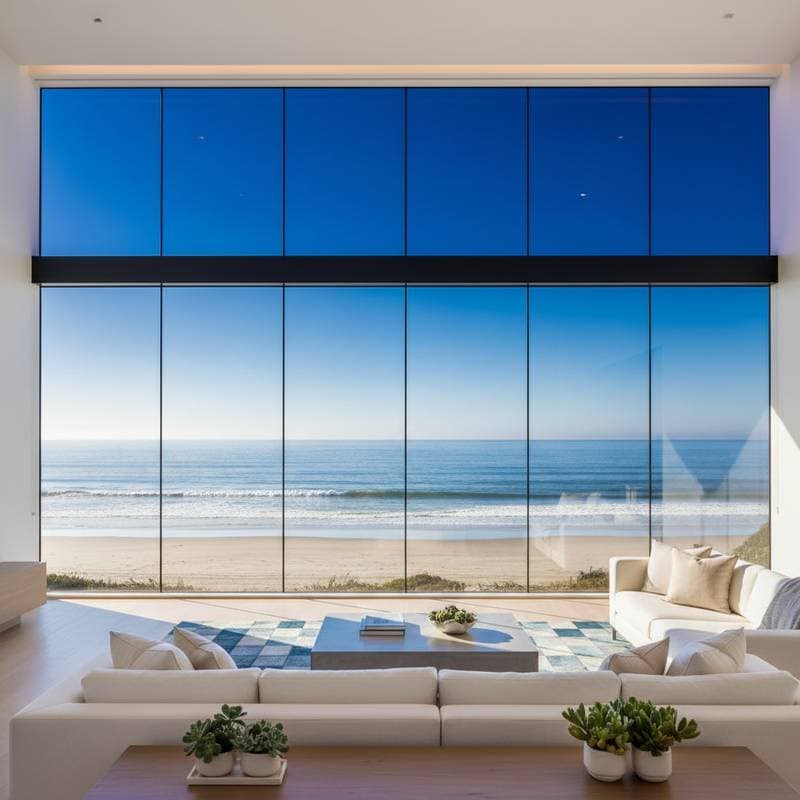
Image description: A coastal living room featuring large electrochromic windows with a subtle tint filtering the afternoon sunlight.
Advantages for Coastal Residences
In coastal environments, sunlight reflects off water surfaces, amplifying glare and heat, while high humidity complicates cooling efforts. Traditional windows fail to adapt to these variables, leading to higher energy use. Electrochromic glass responds dynamically, optimizing light and temperature control throughout the day.
Specific Benefits
- Energy Cost Reduction – By decreasing solar heat gain by as much as 60 percent, the glass minimizes air conditioner runtime and associated expenses.
- Enhanced Comfort Levels – Natural illumination enters without overwhelming warmth, creating a more pleasant indoor atmosphere.
- Uninterrupted Scenic Views – Avoid obstructive coverings that diminish the appeal of waterfront properties.
- Protection from Ultraviolet Rays – Built-in coatings prevent fading of interior fabrics, wood, and surfaces exposed to sun.
- Glare Minimization – Ideal for workspaces or relaxation areas facing the ocean, reducing eye strain during daily activities.
Practical advice: Combine smart glass installation with energy-efficient ceiling fans and pale interior finishes to amplify cooling effects without additional power draw.
Quantifying Energy Savings and Financial Impact
Homeowners frequently inquire whether the investment in smart glass yields tangible financial returns. In coastal settings with prolonged sun exposure, the answer affirms substantial savings over time.
| Aspect | Traditional Windows | Electrochromic Smart Glass |
|---|---|---|
| Solar Heat Gain | High | Low |
| Overall Efficiency | Moderate | High |
| Cooling Savings | Limited | Up to 50 Percent |
| Maintenance | Regular | Low |
| Privacy Features | External Add-ons | Integrated Tinting |
Although upfront costs exceed those of conventional glass, payback occurs within three to five years through reduced utility bills. Additional value comes from increased property appeal and operational simplicity.
Process for Installation and System Integration
Retrofitting or incorporating smart glass suits both new builds and renovations, provided compatibility with existing structures is verified.
Installation Procedures
- Engage a certified specialist experienced in electrochromic installations to evaluate site-specific needs.
- Inspect window frames for structural integrity and size compatibility with smart panels.
- Select control preferences, such as manual toggles or connections to broader smart home networks.
- Incorporate monitoring tools to measure energy use and performance post-installation.
- Plan for periodic inspections annually or biennially to maintain optimal function.
Image description: Installers fitting electrochromic panels into the frames of a contemporary coastal residence with light-colored stucco exteriors.
Aesthetic Integration and Design Possibilities
Electrochromic glass complements coastal architecture by providing a clean, cord-free appearance that harmonizes with natural surroundings. It allows spaces to flood with diffused light, adapting seamlessly to daily light shifts without visual clutter from traditional shades.
Available Configurations
- Tint ranging from clear to subtle blue, evoking the serene tones of nearby waters.
- Privacy frosting activates for selective areas like bathrooms, balancing seclusion with ambient light.
- Versatile dividers that toggle opacity, enabling adaptable room layouts in open floor plans.
This material aligns well with eco-conscious designs, integrating alongside elements such as sustainable wood accents or low-impact stone features to elevate both form and function.
Image description: A bathroom enclosure using frosted smart glass to ensure privacy while admitting soft, natural illumination.
Upkeep and Durability Considerations
The sealed electrochromic components within smart glass shield against corrosive coastal elements like salt-laden air and moisture. Routine care involves gentle wiping with non-abrasive cleaners, avoiding harsh chemicals that could affect the surface.
Expect a lifespan of 20 to 30 years with minimal degradation in performance. The design eliminates mechanical failures common in motorized blinds, reducing long-term repair needs.
Steps to Adopt Smart Glass in Your Home
For coastal residents seeking enhanced livability, smart glass represents a worthwhile upgrade that combines practicality with elegance. Start by soliciting detailed proposals from qualified providers, focusing on customization for your climate and lifestyle.
Homes equipped with existing automation platforms benefit from straightforward connectivity, unlocking further efficiencies. The result is a residence that remains temperate, visually appealing, and attuned to its seaside setting, delivering sustained value through reduced operational costs and refined daily experiences.