
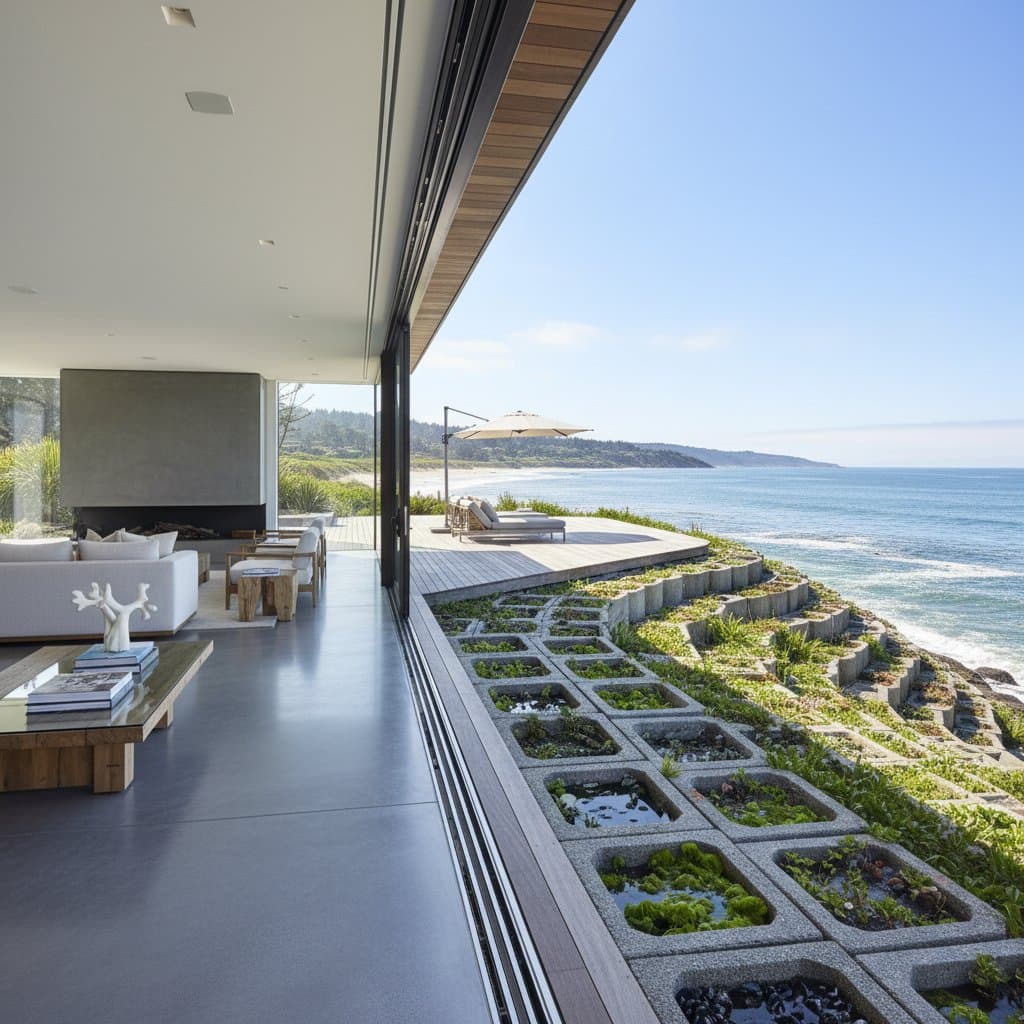
Living Seawalls: Erosion Protection That Enhances Property Value
Coastal property owners confront a persistent threat from the ocean. Waves that provide scenic beauty also erode shorelines over time. Living seawalls address this issue through an innovative approach that safeguards land, promotes marine ecosystems, and elevates real estate worth.
This article details the essentials of living seawalls, including construction costs, comparisons to conventional options, and strategies for effective implementation.
Understanding Living Seawalls
A living seawall serves as a protective barrier engineered for durability and environmental integration. Unlike standard concrete structures, it incorporates textured surfaces, modular elements, or habitat features that attract marine species like oysters, mussels, and algae. These organisms attach to the wall, forming a natural layer that reinforces stability, purifies water, and develops a localized habitat.
The design absorbs wave energy rather than reflecting it, which lessens soil scouring and erosion. This process improves overall coastal health while maintaining structural integrity.
Cost Overview for Living Seawalls
Installation costs for living seawalls generally fall between $450 and $900 per linear foot. Factors such as material selection, project intricacy, and site-specific challenges determine the final price. For a 100-foot residential shoreline, expect totals from $45,000 to $90,000; expansive commercial setups may surpass $150,000.
Traditional concrete seawalls range from $400 to $700 per linear foot. Although initial expenses for living versions appear higher, they yield savings through reduced upkeep and enhanced asset appreciation.
Costs by Project Scale
| Project Size | Typical Length | Estimated Cost Range | Description |
|---|---|---|---|
| Small | 50-80 feet | $25,000 - $60,000 | Suitable for individual homes or compact bays |
| Medium | 100-200 feet | $45,000 - $140,000 | Appropriate for sizable properties or shared community spaces |
| Large | 300+ feet | $135,000 - $270,000+ | Designed for broad estates or docking facilities |
Material Options and Associated Costs
Material choices affect both expense and functionality. Select based on local conditions and sustainability objectives.
| Material Type | Cost per Linear Foot | Durability | Ecological Benefit | Maintenance |
|---|---|---|---|---|
| Textured Concrete Panels | $500 - $850 | High | Supports robust marine attachment | Low |
| Reinforced Concrete with Habitat Modules | $600 - $900 | Very High | Promotes diverse species growth | Low |
| Precast Eco-Blocks | $450 - $700 | Moderate | Provides basic habitat support | Moderate |
| Hybrid Rock and Concrete | $400 - $800 | High | Offers a seamless natural look | Moderate |
Customization options include etched channels or embedded niches to replicate tidal pools, enhancing biological activity.
Labor and Installation Expenses
Labor constitutes 40 to 60 percent of the budget. Marine specialists bill $100 to $150 hourly or apply rates per linear foot. Processes encompass site assessment, digging, anchoring, assembly, and surface treatment.
Challenging access or tidal constraints increase expenses. Regulatory approvals and oversight add $2,000 to $10,000, varying by jurisdiction.
Key Cost-Influencing Factors
Multiple variables shape project expenses:
- Shoreline characteristics, including gradient, ground firmness, and wave intensity
- Material specifications and habitat integration levels
- Equipment maneuverability and material transport logistics
- Compliance with permits and ecological evaluations
- Coordination with surrounding greenery or dock features
- Ongoing care protocols for debris removal and organism health
Assess these elements during initial consultations to refine estimates.
Advantages Extending Past Protection
Living seawalls provide multifaceted value. They filter pollutants via attached algae and shellfish, fostering cleaner waters. Enhanced habitats support fish and invertebrates, bolstering regional biodiversity.
The organic appearance integrates with landscapes, adding visual charm. Energy dissipation curbs adjacent erosion, preserving neighboring areas. Appraisers often note that such upgrades command premium prices in eco-aware markets.
Strategies to Control Expenses
Effective budgeting ensures affordability. Consider these approaches:
- Collaborate with adjacent owners to distribute shared costs for equipment and workforce.
- Opt for prefabricated components to avoid bespoke manufacturing fees.
- Source materials regionally to lower shipping charges.
- Align construction with favorable seasonal weather to prevent disruptions.
- Implement in stages, prioritizing core defenses before ecological enhancements.
Professional Installation Versus Self-Management
These structures demand expertise due to interactions with water dynamics and biology. Limit personal involvement to upkeep tasks; delegate building to qualified experts.
| Task | DIY Feasibility | Professional Required | Risk Level if DIY |
|---|---|---|---|
| Routine inspection | Yes | No | Low |
| Cleaning algae buildup | Yes | No | Low |
| Replacing panels | No | Yes | High |
| Structural design | No | Yes | Very High |
| Permit application | Partial | Yes | Moderate |
Amateur construction risks swift deterioration and expensive fixes. Engage licensed engineers for safety and compliance.
Pitfalls to Sidestep
Steer clear of these errors to ensure success:
- Neglecting regulatory approvals, which delay projects and incur fines.
- Selecting untextured surfaces that repel growth and amplify wave rebound.
- Dismissing routine checks, allowing minor issues to escalate.
- Bypassing expert planning, leading to premature structural weaknesses.
- Disregarding visual harmony with property features.
Frequently Asked Questions
Do permits apply to living seawall projects?
Yes, shoreline alterations typically require structural and environmental clearances. Submit detailed blueprints outlining components, layout, and habitat effects.
What is the lifespan of a living seawall?
Well-constructed units endure 40 to 75 years with proper care. Attached biology reinforces the framework, often outlasting rigid alternatives.
Can living seawalls withstand severe storms?
Yes, when properly designed. Irregular textures and adaptive elements absorb impacts better than flat barriers, mitigating surge damage.
What upkeep do they demand?
Annual reviews, debris clearance, and integrity assessments suffice. Colonizing species contribute to self-sustainment.
In what ways do they elevate property worth?
Sustainable features attract discerning purchasers, improve aesthetics, and secure long-term site viability.
Are repairs costlier for living seawalls?
No, they often run 10 to 20 percent lower. Replaceable sections and natural supports minimize extensive overhauls.
Sustaining Long-Term Performance
Regular monitoring preserves the seawall's effectiveness. Schedule professional evaluations every 12 months to detect wear or biological shifts. Clear accumulated sediment gently to protect habitats without disrupting ecosystems.
Integrate the structure into broader property care, such as planting native vegetation along the upper edge for added erosion resistance. These steps maximize protection, ecological contributions, and investment returns over decades.