
9 Solar Pergola Ideas for Energy-Efficient Outdoor Living
Homeowners often seek outdoor spaces that provide comfort, aesthetics, and practical benefits. A solar pergola addresses these needs by integrating renewable energy generation with traditional shade structures. These installations offer protection from the sun while producing electricity to offset household energy costs, enhancing both functionality and environmental responsibility.
Solar pergolas appeal to residents in regions with abundant sunlight, such as Southern California. They transform patios into multifunctional areas capable of powering devices, lighting, or even larger appliances. This guide presents nine distinct ideas, each combining design innovation with energy efficiency to inspire your project.
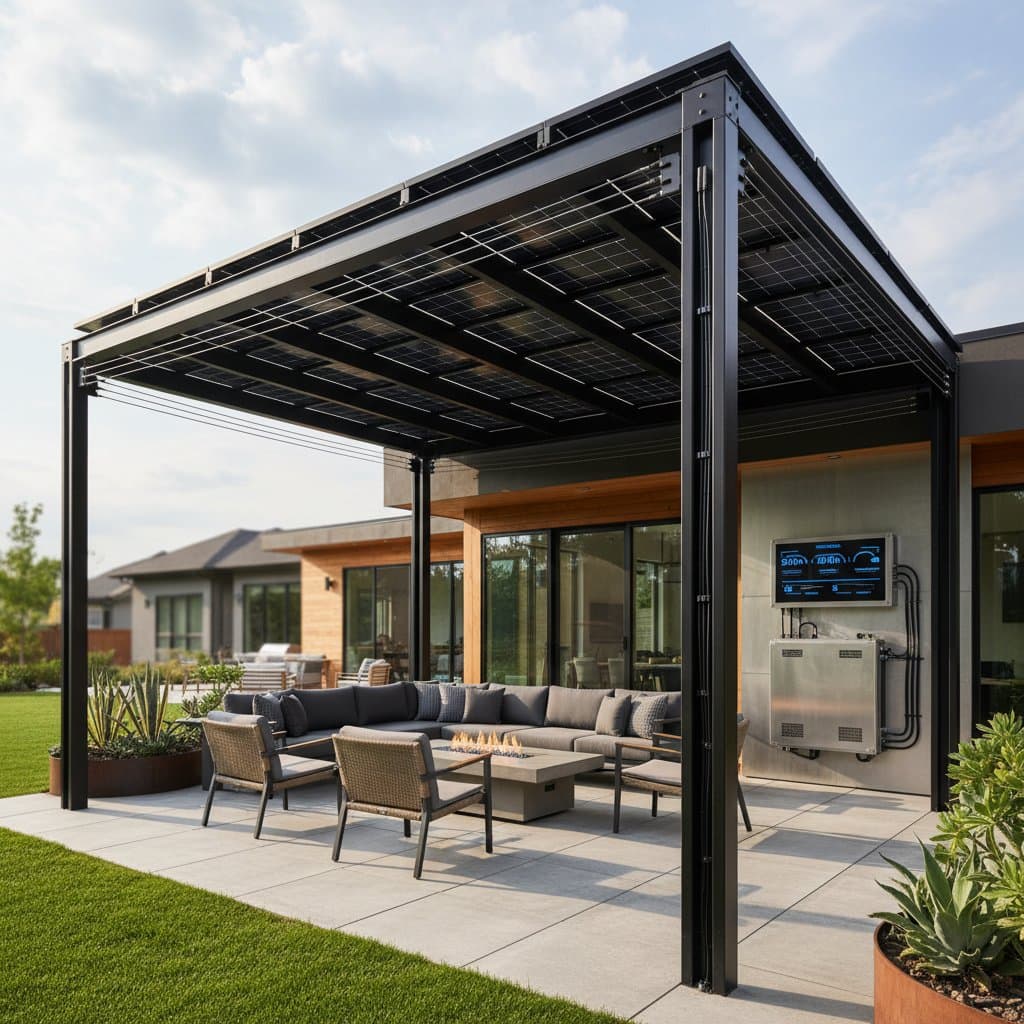
[Image: A sleek solar pergola providing shade over a modern patio seating area]
Integrated Solar Panel Designs
1. Fully Integrated Monocrystalline Panels
Monocrystalline solar panels represent a high-efficiency option for seamless integration into pergola roofs. These panels achieve up to 22 percent efficiency, converting more sunlight into usable electricity compared to other types. Position them at a 30-degree angle to optimize energy capture in most latitudes.
Select panels with a black-on-black finish to minimize visual disruption. This design suits homeowners prioritizing maximum output in limited spaces. Professional installation ensures secure mounting and wiring compliance with electrical codes.
2. Retractable Canopy with Flexible Solar Cells
Flexible solar cells allow for a retractable canopy that adjusts to weather conditions. These thin-film panels bend to fit curved or folding structures, providing shade when deployed and full sun exposure for plants when retracted. Output typically ranges from 100 to 300 watts per square meter.
Incorporate automation via sensors that respond to temperature or wind. This versatility makes the pergola ideal for variable climates. Maintenance involves occasional cleaning to preserve cell performance.
3. Bifacial Panels for Dual-Side Energy Capture
Bifacial panels generate power from both sides, capturing reflected light from the ground or nearby surfaces. This increases yield by 10 to 30 percent over standard panels. Install them on pergolas with light-colored flooring, such as white gravel, to enhance reflection.
The design adds a modern edge to traditional pergolas. Expect annual energy production of 1,200 to 1,800 kilowatt-hours per kilowatt installed, depending on location. Consult an engineer for wind load assessments.
Design and Aesthetic Enhancements
4. Natural Wood Frames with Modern Solar Panels
Blending natural materials with advanced technology creates a timeless outdoor look. A cedar or redwood pergola paired with slim solar panels offers warmth and sophistication. The contrast between organic texture and sleek glass surfaces feels balanced and stylish.
For durability, choose treated or sealed wood that withstands moisture and sun exposure. This combination works beautifully for rustic or transitional homes that seek a modern upgrade without losing character.
[Image: Wooden pergola with solar panels integrated on top]
5. Sleek Aluminum Structures for Minimalist Patios
An aluminum-frame solar pergola provides a clean, low-maintenance design. The lightweight metal resists corrosion and pairs well with contemporary landscaping. It supports the weight of solar panels efficiently and installs with relative ease.
Choose neutral tones like charcoal, silver, or matte white to match modern patio furniture. This type of pergola complements minimalist gardens or urban outdoor spaces perfectly.
Difficulty Level: Intermediate, often requiring professional installation for structural stability.
6. Solar Pergolas with Ambient Lighting
Extend the usability of your pergola into the evening with integrated lighting. Install solar-powered LED strips or hanging fixtures that charge during the day and activate automatically at night. This setup eliminates reliance on grid power for illumination.
Create a soft glow for dinner parties or brighter lighting for reading. Energy from the panels powers the system directly, reducing operational costs.
Pro Tip: Warm white LEDs at 2700K produce a cozy atmosphere.
Advanced Functionality Ideas
7. Smart Energy Monitoring and Control Systems
Incorporate IoT-enabled monitors to track energy production and consumption in real time. Apps connect to your smartphone, displaying data on panel output, battery levels, and usage patterns. This allows adjustments to optimize efficiency, such as prioritizing outdoor appliance power during peak sun hours.
Pair with automated shades that deploy based on weather forecasts. The system enhances user control and can integrate with home energy management for whole-property savings.
8. Off-Grid Battery Storage Integration
Achieve energy independence by adding battery storage beneath the pergola. Lithium-ion batteries store excess daytime production for nighttime or cloudy-day use. A typical 5-kilowatt-hour system powers essentials like fans, refrigerators, or charging stations off-grid.
Design the enclosure to blend with the structure, using ventilated panels for safety. This setup proves valuable during outages and reduces utility bills year-round.
9. Multifunctional Pergolas with EV Charging
Equip your solar pergola with an electric vehicle charging port powered by on-site generation. Level 2 chargers deliver up to 7.7 kilowatts, sufficient for overnight charging of most EVs. Route wiring through the frame for a tidy installation.
This idea appeals to eco-conscious homeowners with electric vehicles. It turns the pergola into a central hub for sustainable transportation and outdoor living.
Planning Advice for a Successful Solar Pergola
Successful projects begin with thorough preparation. Assess your site's sunlight exposure using tools like solar pathfinders to predict annual yield. Budget for initial costs, which range from $5,000 to $20,000 depending on size and features, offset by tax incentives.
Collaborate with experts early. A structural engineer evaluates load-bearing capacity, while a solar specialist handles panel selection and grid connection if desired.
Consider these key steps:
- Verify local zoning laws and obtain necessary permits for solar installations.
- Orient the structure south for optimal solar gain, avoiding shading from trees or buildings.
- Select components certified for outdoor use to ensure longevity.
- Plan wiring routes to minimize visible cabling and comply with National Electrical Code standards.
Maintenance involves annual inspections of panels for debris and connections for corrosion. Clean panels quarterly to maintain efficiency.
Frequently Asked Questions
How much power can a solar pergola generate?
Power output varies by panel size, efficiency, and location. Residential models typically produce 2 to 10 kilowatts, enough to offset lighting, appliances, or contribute significantly to home electricity needs.
Can I add solar panels to my existing pergola?
Yes, provided the structure supports the added weight of 3 to 4 pounds per square foot. Hire a professional to assess and reinforce as needed, ensuring safe integration.
What is the return on investment for a solar pergola?
Payback periods range from 5 to 10 years through energy savings and incentives. Long-term benefits include reduced carbon footprint and increased property value.
Maximizing Benefits from Your Solar Pergola
Once installed, your solar pergola delivers ongoing value through shade, power, and style. Monitor performance to refine usage and expand as needs evolve. This investment elevates outdoor living while advancing sustainability goals for your home.