
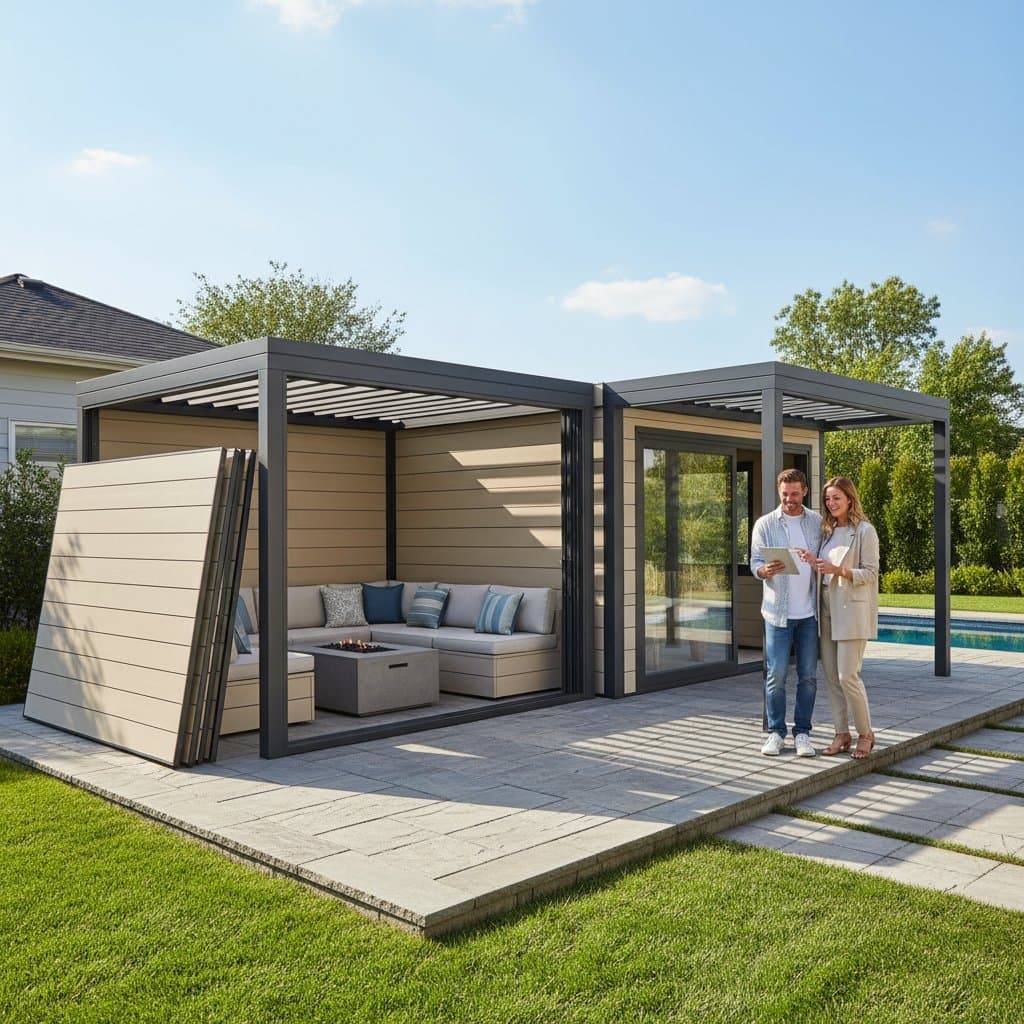
Snap-Together Outdoor Rooms Cut Costs by 20%
Transform your backyard into a luxurious retreat without breaking the bank. Snap-together outdoor rooms offer a modular approach to creating versatile spaces that rival custom builds. These systems assemble quickly, often in a weekend, and deliver significant savings through efficient design and materials.
What Are Snap-Together Outdoor Rooms?
Snap-together outdoor rooms consist of prefabricated panels, frames, and components that connect via interlocking mechanisms. Manufacturers design these kits to mimic high-end structures like pergolas, pavilions, or enclosed patios. The result provides shade, privacy, and functionality while adapting to various yard sizes and styles.
Homeowners appreciate the simplicity of these systems. Installation requires minimal tools, such as a drill and level, making them accessible for beginners. Professional contractors also favor them for their speed, which reduces labor expenses.
The Cost-Saving Advantage
Traditional outdoor constructions often exceed budgets due to custom engineering and extended timelines. Snap-together options cut costs by 20 percent on average by streamlining production and assembly. For instance, a basic 200-square-foot setup might cost $5,000 to $8,000, compared to $7,000 to $12,000 for comparable site-built versions.
Savings stem from several factors. Standardized components lower material prices through bulk manufacturing. Reduced on-site labor further decreases expenses, as assembly takes days instead of weeks. Long-term benefits include durable materials that resist weather, minimizing repair needs.
Essential Materials and Components
Quality snap-together kits feature weather-resistant aluminum frames or powder-coated steel for structural integrity. Panels typically include UV-protected polycarbonate for roofs, offering light diffusion without full enclosure. Walls use interlocking vinyl or wood-look composites that withstand moisture and fading.
Foundations play a key role in stability. Many kits anchor to concrete pads or gravel bases, which you can prepare affordably. Accessories such as screens, fans, or lighting integrate seamlessly, enhancing comfort without added complexity.
Select materials based on your climate. In sunny regions, prioritize UV blockers; in rainy areas, opt for sloped roofs with drainage channels. Reputable brands provide warranties of 10 to 25 years, ensuring value over time.
Planning Your Design
Start with site assessment to determine space and purpose. Measure your yard to fit the kit dimensions, typically ranging from 10 by 10 feet to 20 by 20 feet. Consider traffic flow, views, and proximity to the house for seamless integration.
Sketch a layout using simple tools like graph paper. Position the structure to capture breezes or shade specific areas. Factor in utilities, such as electrical outlets for lighting or heaters, to avoid retrofits.
Budget allocation helps maintain control. Allocate 60 percent to the kit, 20 percent to foundation work, and 20 percent to finishes like flooring or decor. This approach ensures a balanced project that aligns with financial goals.
Step-by-Step Installation Guide
Preparation Phase
- Clear the site and level the ground to within one inch across the area.
- Pour a concrete slab or install gravel base, allowing 24 to 48 hours for curing if needed.
- Unpack components and organize them by assembly sequence, following the manufacturer's manual.
Assembly Process
- Erect the corner posts and secure them to anchors using provided bolts.
- Attach horizontal beams to form the frame, snapping connectors into place for a tight fit.
- Install roof panels by sliding them into tracks and fastening with clips.
Finishing Touches
- Add side panels or screens, ensuring even alignment.
- Integrate accessories like ceiling fans or drapes for personalization.
- Test stability and make adjustments before final cleanup.
Most installations complete in two to four days with a small team. If opting for professional help, expect quotes around $1,000 to $2,000 for labor.
DIY Versus Professional Builds
DIY suits handy individuals with basic skills. Kits include detailed instructions and video tutorials, reducing errors. Complete the project yourself to maximize savings, potentially halving installation costs.
Hire professionals for complex sites or larger structures. They handle permits, engineering, and custom integrations efficiently. This choice ensures compliance with local codes, particularly in areas with wind or seismic requirements.
Compare options by reviewing kit specifications and user reviews. Balance your skill level with project scale to achieve optimal results.
Customization for a High-End Look
Elevate the basic kit with thoughtful additions. Choose finishes like faux wood grains or metallic accents to match your home's aesthetic. Flooring options, such as interlocking deck tiles or pavers, add warmth and definition.
Incorporate functional elements for year-round use. Install retractable awnings for adjustable shade or heaters for cooler evenings. Lighting strands or recessed fixtures create ambiance without permanent wiring.
Personal touches define the space. Add seating, planters, or outdoor rugs to foster relaxation. These enhancements turn a functional room into a personalized oasis.
Maximizing Long-Term Value
Maintain your outdoor room with simple routines. Clean panels annually with mild soap to preserve appearance. Inspect connections seasonally to tighten any loose fittings.
These structures boost property appeal, potentially increasing home value by 5 to 10 percent. Enjoy the space daily while knowing it serves as a smart investment. With snap-together efficiency, luxury outdoor living becomes attainable for every homeowner.