
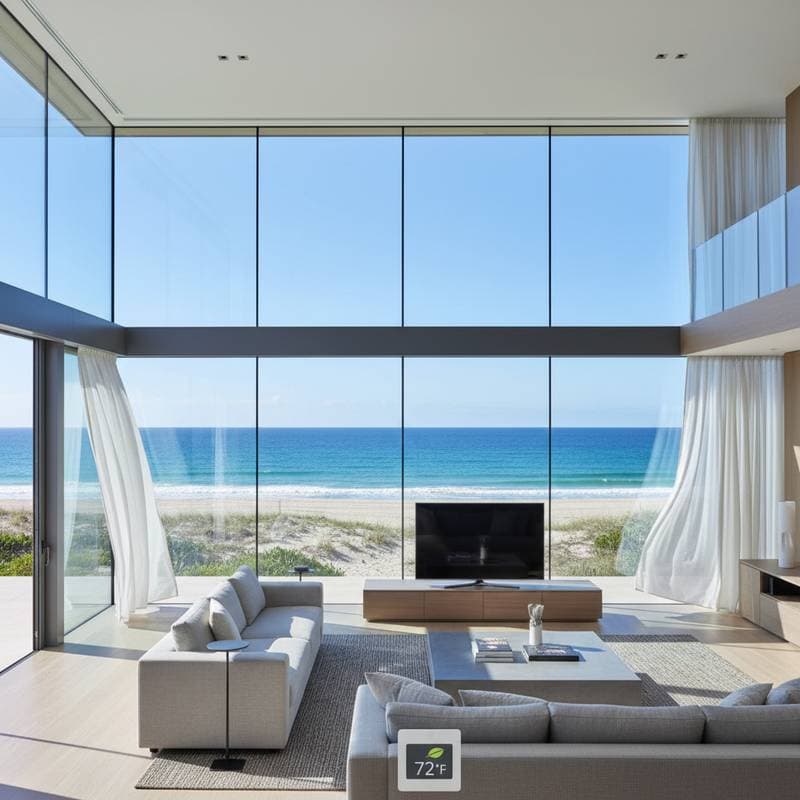
Understanding Smart Glass for Coastal Homes
Beach houses face intense sun exposure, driving up air conditioning demands and costs. Smart glass, or electrochromic windows, addresses this challenge by electronically adjusting tint levels to control light and heat entry. This technology maintains clear views while optimizing indoor temperatures, leading to substantial energy reductions.
Homeowners in sunny regions like San Diego report average cooling savings of 50 percent after installation. The system responds to sensors or manual inputs, darkening during peak sun hours and clearing for evening ambiance. Beyond efficiency, it minimizes glare on screens and surfaces, enhancing daily comfort without traditional shades.
Comparing Smart Glass with Traditional Window Options
Selecting the right windows involves balancing cost, performance, and suitability for coastal environments. The table below outlines key differences among popular choices.
| Window Type | Cost per Sq. Ft. Installed | Energy Efficiency | Maintenance | Light Control | Ideal Use |
|---|---|---|---|---|---|
| Standard double-pane | $25 - $40 | Moderate | Low | Fixed | General residential |
| Low-E coated glass | $40 - $60 | High | Low | Fixed | Hot sunny climates |
| Tint film retrofit | $10 - $20 | Moderate | Medium | Semi-adjustable | Budget upgrades |
| Smart glass (electrochromic) | $100 - $150 | Very high | Low | Fully adjustable | Coastal and luxury homes |
Smart glass stands out for its superior adaptability in variable weather. While initial expenses exceed alternatives, long-term benefits in energy control and user satisfaction justify the investment, particularly where summer cooling dominates household budgets.
Strategies to Reduce Smart Glass Installation Expenses
High upfront costs deter some homeowners, yet targeted approaches make adoption feasible. Focus on high-impact areas to maximize returns without overhauling every window.
- Prioritize South-Facing Windows: These surfaces receive maximum solar gain, yielding the highest energy payback.
- Hybridize with Standard Glass: Apply smart glass to sun-drenched rooms and low-E options to less exposed ones for balanced spending.
- Implement Zoning Systems: Divide windows into zones for selective tinting, conserving power in shaded sections.
- Time Installations for Off-Peak Seasons: Winter scheduling often secures discounted labor rates from contractors.
- Pursue Utility Incentives: Many providers reimburse portions of costs for qualifying efficient upgrades; verify local programs.
- Solicit Multiple Bids: Obtain three or more comprehensive quotes covering materials, labor, and electrical work to ensure competitive pricing.
These tactics can lower total outlay by 20 to 30 percent while preserving full functionality.
DIY Installation Versus Professional Services: Weighing Options
Window upgrades tempt DIY enthusiasts with perceived savings, but smart glass demands technical precision. Errors in wiring or alignment can lead to inefficiencies or safety hazards.
| Task | DIY Feasibility | Risk Level | Professional Advantage |
|---|---|---|---|
| Window removal and replacement | Moderate | Medium | Secures airtight seals to prevent water intrusion |
| Electrical wiring and controls | Low | High | Complies with codes for safe, reliable operation |
| System calibration | Low | High | Fine-tunes response for optimal performance |
| Automation integration | Low | High | Seamlessly links with home systems to avoid errors |
Attempting DIY may cut labor fees by 10 to 15 percent, yet potential warranty invalidation and repair costs often outweigh gains. Professionals deliver durable results, backed by expertise and guarantees, offering superior long-term security.
Pitfalls to Sidestep During Smart Glass Projects
Even informed decisions carry risks if overlooked. Awareness of frequent errors helps ensure smooth execution.
- Neglecting Permit Requirements: Local codes mandate approvals for electrical modifications; bypassing them invites fines or rework.
- Selecting Incompatible Controls: Verify system compatibility upfront to prevent operational failures.
- Overlooking Frame Condition: Inspect existing frames for damage; replacements add unforeseen expenses.
- Underplanning Electrical Infrastructure: Allocate space for low-voltage wiring to support consistent functionality.
- Prioritizing Low Bids Alone: Opt for reputable providers with strong warranties over the lowest price to safeguard quality.
Addressing these issues early minimizes disruptions and protects investments.
Frequently Asked Questions on Smart Glass Windows
Do smart glass windows require electricity?
Electrochromic panels rely on a low-voltage current to switch states. Usage remains efficient, typically under one watt per square foot for changes, and approaches zero when static.
How does smart glass perform without power?
Systems retain the final tint setting during outages. Advanced units feature battery reserves or manual toggles for basic adjustments.
What is the timeline for installation?
Single-room projects span two to three days. Whole-home retrofits extend to one or two weeks, influenced by wiring scope and window count.
What maintenance does smart glass involve?
Care is straightforward: use mild cleaners on surfaces and avoid abrasives. Sealed electronics need no routine attention, with lifespans exceeding 20 years.
Does smart glass block UV rays?
These windows filter up to 99 percent of harmful ultraviolet light, safeguarding interiors from sun-induced degradation.
Can smart glass integrate with other efficiency measures?
Integration enhances outcomes. Combine with thermal frames, automated climate controls, and upgraded HVAC for compounded reductions in energy use.
Does smart glass increase property value?
Energy-efficient features appeal to buyers, often boosting resale prices by 5 to 10 percent. Appraisers recognize the premium for modern, sustainable tech in coastal markets.
Steps to Upgrade Your Beach House Today
Transitioning to smart glass begins with assessment. Evaluate your home's sun patterns and cooling bills to identify priority zones. Consult certified installers for site-specific advice, then apply savings strategies to fit your budget.
The result extends beyond lower utility statements: enjoy cooler, brighter spaces year-round. This upgrade not only cuts costs but also aligns with eco-conscious living, securing comfort for seasons ahead.