
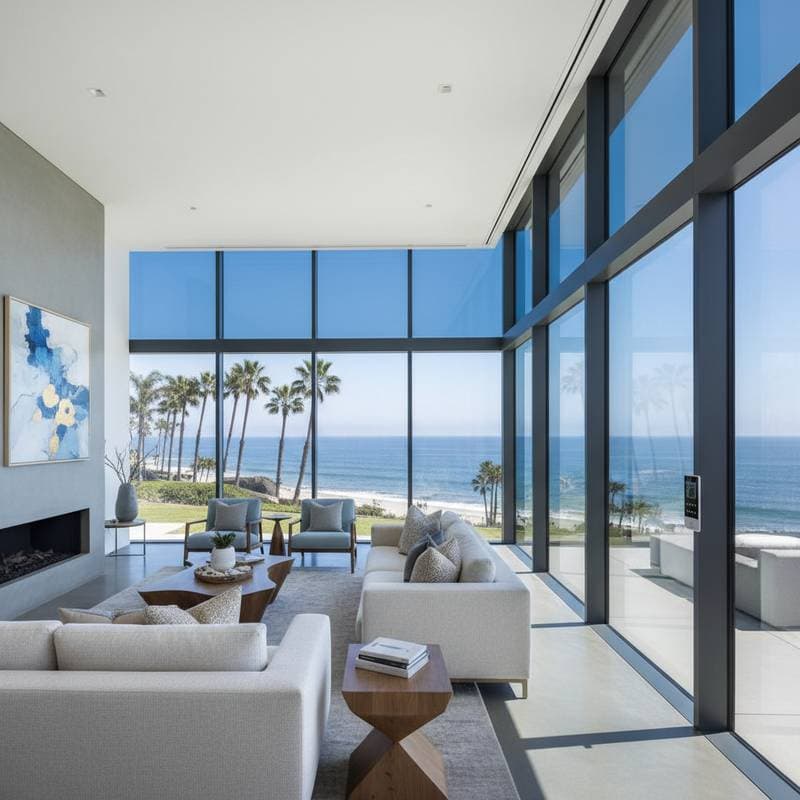
Electrochromic Glass: Revolutionizing Coastal Remodels
Picture yourself in an oceanfront living room as the midday sun intensifies over the Pacific. Rather than reaching for shades, you activate an app on your smartphone, and the windows subtly tint to reduce heat while keeping the scenic vista intact. This capability defines electrochromic glass, an advanced technology reshaping coastal remodels in San Diego.
These windows adjust tint levels electronically to manage glare and solar heat gain, allowing residents to relish daylight and sea panoramas without compromising indoor climate or power use. Installation expenses typically fall between $700 and $1,200 per window, varying by dimensions and automation features. Although pricier than conventional options, the enduring reductions in energy consumption and refined visual appeal position electrochromic glass as a worthwhile choice for seaside properties.
For seamless integration, consult experienced professionals specializing in smart glazing. They handle essential tasks such as electrical setup, system synchronization, and weatherproofing, which prove vital in humid, salty coastal conditions.
Factors Influencing Costs
Electrochromic glass windows generally cost $700 to $1,200 per unit. Expansive setups, like those spanning entire walls, may exceed $20,000. A typical mid-sized residential upgrade averages $8,000.
Key elements that determine overall expenses include:
- Size and configuration of the glass – Bespoke dimensions or non-standard shapes elevate production and transport fees.
- Automation controls – Basic manual panels incur lower charges compared to app-enabled or voice-activated variants.
- Electrical infrastructure – Linking to existing home networks demands additional wiring and technician hours.
- Environmental safeguards – Coatings resistant to salt spray and humidity are crucial; robust frames and gaskets raise prices but enhance durability.
- Regulatory and labor requirements – Permits for electrical alterations and expert fitting may apply, particularly in seismic zones.
Initial outlays surpass those of ordinary windows, but owners recoup value via diminished air conditioning demands and preservation of interiors against ultraviolet damage. Over a decade, these benefits often offset the premium.
Professional Installation Versus DIY Approaches
Electrochromic glass demands specialized skills beyond standard window replacement, involving circuit integration, moisture barriers, and tint calibration. While DIY options suit minor indoor applications, exterior coastal installations contend with corrosive elements and load-bearing concerns that necessitate professional intervention.
Opting for expert installers guarantees secure framing and reliable power links. Projects usually span one to three days, scaled to the extent of work. During broader renovations, align window specifications with overall electrical planning to streamline the process.
Homeowners inclined toward hands-on involvement might assist by measuring apertures, installing preliminary conduits, or applying cosmetic finishes, thereby trimming labor expenses without risking system integrity.
Upkeep and Expected Durability
Seaside settings test window resilience through persistent salt deposition, elevated moisture, and intense solar radiation. Electrochromic glass thrives under regular care and assessments to sustain optimal function.
- Apply gentle soap solutions with microfiber cloths for cleaning, preventing damage to embedded conductive films.
- Examine gaskets and enclosures annually for signs of degradation or leaks.
- Test power interfaces if tint activation lags or varies inconsistently.
Well-maintained units endure 20 years or longer. Components like tint layers or controllers often permit targeted replacements, facilitating updates without comprehensive overhauls.
Frequently Asked Questions
How quickly does the tinting mechanism respond?
Windows shift from transparent to opaque in 30 seconds to a few minutes, influenced by panel area and ambient conditions. The progressive darkening ensures a smooth transition without abrupt light changes.
Does the system consume power continuously?
Power activates solely during state changes. In steady clear or tinted modes, no electricity flows, resulting in minimal ongoing expenses.
Is it suitable for exposure to salt and strong winds?
Yes, provided coastal-grade specifications. Employ corrosion-resistant enclosures and sealed conduits to counter marine influences effectively.
Does it obviate the need for traditional shades?
Generally, it does. These windows manage light, privacy, and heat independently, freeing spaces from cumbersome coverings.
Can integration occur with solar energy setups?
Yes. Systems pair readily with photovoltaic installations, enabling tint adjustments tied to solar output and irradiance patterns.
Steps to Implement Your Upgrade
Transitioning to electrochromic glass elevates a coastal residence to a sophisticated, efficient haven. Residents secure expansive vistas, moderated energy costs, and adaptive aesthetics attuned to coastal rhythms.
Assess solar patterns and local climate first, then secure assessments from qualified specialists. Thoughtful preparation ensures your San Diego enhancement delivers both visual allure and practical sustainability.