
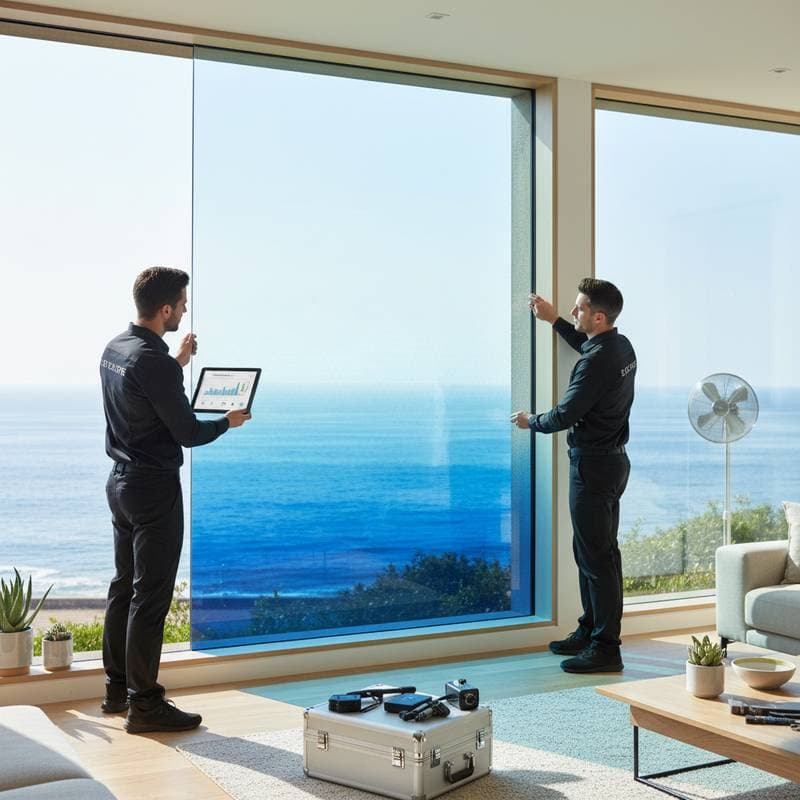
Smart Windows Reduce Coastal Cooling Costs by Up to 35 Percent
Coastal homes face constant sun exposure, humidity, and salt air that drive up air conditioning expenses. Smart windows equipped with electrochromic glass address these conditions by adjusting tint levels automatically. This technology reduces cooling costs by as much as 35 percent while maintaining views and comfort.
Core Advantages for Seaside Properties
- Electrochromic glass blocks infrared heat to lower air conditioning demand.
- Automatic tinting reduces glare on ocean facing rooms without blocking light.
- Integrated UV filtering protects interior surfaces from fading.
- Marine grade frames resist corrosion in salty environments.
- Integration with home automation systems allows scheduled or sensor based control.
Technology Overview
Electrochromic glass uses thin layers of materials that shift ions when a low voltage current is applied. The change alters light transmission from clear to tinted within minutes. Power consumption occurs only during transitions, so ongoing energy use remains minimal.
Homeowners control settings through wall switches, smartphone apps, or integration with existing thermostats. The system operates silently and holds its tint state without continuous electricity.
Coastal Performance Factors
Bright sunlight and shifting humidity create specific demands on window performance. Smart glass manages solar heat gain during peak afternoon hours when cooling loads are highest. Reduced glare improves visibility across water views during midday.
Salt air accelerates wear on standard hardware. Selecting models with stainless steel components and sealed edges extends service life in beach locations. Daytime privacy increases as tint deepens, yet outward visibility stays intact.
Investment and Return Analysis
| Window Type | Cost per Square Foot | Cooling Reduction | Expected Lifespan |
|---|---|---|---|
| Standard Double Pane | 10 to 15 dollars | Minimal | 15 to 20 years |
| Low Emissivity Glass | 15 to 25 dollars | 10 to 15 percent | 20 years |
| Electrochromic Smart Glass | 35 to 50 dollars | Up to 35 percent | 20 plus years |
A typical three bedroom coastal residence may recover the premium through lower utility bills within seven to ten years. Larger glass areas facing south or west produce faster payback.
Installation Process
- Evaluate sun exposure patterns on each elevation of the home.
- Select a contractor experienced with low voltage wiring for glass systems.
- Verify compatibility with existing smart home hubs or plan for added controls.
- Confirm marine rated seals and fasteners for all exterior applications.
- Schedule phased installation to limit disruption in occupied spaces.
Proper sealing prevents moisture intrusion that can affect both glass performance and wall integrity.
Practical Limitations
| Benefits | Considerations |
|---|---|
| Lower energy use and glare | Higher initial material cost |
| Modern appearance and privacy | Professional installation required |
| UV protection for furnishings | Limited tint color selections |
| Long service life | Slower response in high humidity |
Transition speed may extend slightly during periods of elevated moisture. Color options remain primarily neutral grays and blues suited to coastal aesthetics.
Maintenance Requirements
Clean surfaces with standard glass solutions and soft cloths. Inspect electrical connections annually for corrosion or loose fittings. Schedule professional seal checks every three to five years in high salt environments.
Common Questions
How much savings occur in practice?
Actual reductions depend on window to wall ratio and existing insulation. Properties with extensive south facing glass record the largest drops in summer utility charges.
Do these windows function in humid coastal air?
Yes. Electrochromic systems are sealed against moisture. Performance remains stable provided frames include proper marine coatings.
Can existing frames accept smart glass retrofits?
Most installations require full frame replacement to accommodate wiring channels and seals. Custom retrofit kits exist for certain aluminum systems but add complexity.
How does integration with other smart devices work?
Systems connect through standard protocols to thermostats, lighting controls, and voice assistants for unified scheduling.
Daily Comfort Improvements
Residents gain consistent indoor temperatures without constant blind adjustments. Natural light levels stay balanced throughout the day, supporting better visibility for reading and tasks. Reduced air conditioning runtime also lowers background noise from mechanical systems.